Public Library Website Accessibility: Catalogs, Event Calendars and the Vendors Behind Them | How-to Guide
A public library's website is mostly other companies' software: the catalog, ebook apps, event calendars, room booking and databases. How ADA Title II treats that content, what to ask each vendor, and what the library itself must fix.
Most of what a patron does on a public library's website happens in software the library did not write: searching the catalog, placing a hold, borrowing an ebook, signing up for storytime, booking a study room, opening a research database. The library's own pages are often the smallest part. Under the Department of Justice's ADA Title II web rule, much of that vendor software still counts as the library's content. This guide sorts out what the library owns, what it buys, what really is third-party, and how to make progress on each. It is general information, not legal advice.
Is your library covered, and when
ADA.gov's fact sheet lists public libraries among the state and local government bodies the rule covers. For the deadline, a library that does not have its own population figure uses the population of the government it belongs to; the fact sheet gives a city library as its example. So a branch system run by a city of 120,000 is on the April 26, 2027 date, and a town library serving 9,000 people is on April 26, 2028. Those are the dates set by the DOJ's April 20, 2026 interim final rule.
Library districts and cooperatives are less clear-cut. Some are special districts in their own right, which moves them to the 2028 date regardless of size; others are created by a city or county. Check how yours was established. If you cannot get a firm answer, plan for the earlier date. The full rule timeline and exceptions are in our ADA Title II deadline guide.
Private, nonprofit libraries open to the public are a different case, generally under Title III rather than this rule. See Section 508 vs ADA Title II vs WCAG if you are unsure which applies.
The four kinds of content on a library site
Sorting content by who controls it tells you who has to fix it and how. The rule's third-party exception is narrower than many libraries assume: it covers content posted by members of the public or others who are not controlled by or acting for the government. Content a contractor provides for you is not third-party content, and neither is third-party material the library itself chooses to post.
| Kind | Examples | Who fixes it | Excepted? |
|---|---|---|---|
| 1. Library-made pages | Hours, locations, news, policies, card sign-up page, programme descriptions, staff reading lists | The library | No |
| 2. Vendor software provided for the library | Catalog and patron account, event calendar, room booking, payment of fines, newsletter sign-up, chat reference widget | The vendor, under pressure from the library | No. Content provided through a contract or licence is still the library's |
| 3. Licensed resources patrons reach through the library | Ebook and audiobook apps, research databases, streaming services, language-learning tools | The vendor | Treat as covered when the library provides or makes it available; get advice on edge cases |
| 4. Content from the public | Patron reviews and tags in the catalog, comments on a blog, community event submissions | The person who posted it | Generally yes, if the library did not post or commission it |
Row 3 is the one to discuss with counsel. The rule reaches content the entity provides "through contractual, licensing, or other arrangements", and a database the library licenses for its patrons looks a lot like that. The practical answer is the same either way: buy accessible products and press the vendors who are not.
The catalog: what to test and what to ask
The catalog is the library's core service, so it deserves its own test plan. Run these tasks with a keyboard only, then with a screen reader, then on a phone at 200% zoom:
- Search for a title by keyword and by author.
- Narrow the results with a filter (format, branch, availability).
- Open a record and find out whether a copy is on the shelf and where.
- Sign in to a patron account.
- Place a hold and choose a pickup branch.
- Renew an item and see the new due date.
- Pay a fine or fee, if your library charges them.
Write down where each task fails and send the list to the vendor with a request for a dated fix plan. Typical problems: filter checkboxes that are not reachable by keyboard, availability shown only as a coloured dot, cover images with the file name as their description, a sign-in that times out without warning, and hold dialogs that trap focus. These are the vendor's to fix, but they are your patrons' barriers, so keep the list and ask again at renewal.
Event calendars and programme sign-ups
Events are where a library meets families, older adults and job seekers, and the calendar is often a separate tool. Things to check:
- Can a keyboard user move between months and open an event?
- Is the event information (date, time, branch, age group, whether registration is needed) written in text, not only shown by icons or colours?
- Does the registration form have labels, clear errors and no short time limit?
- Are event flyers posted as images? Put the flyer text in the event description as well.
- Does every event listing say how to request an accommodation, such as an ASL interpreter or large-print materials, and by when?
The last point is not a WCAG requirement, but it is the most useful line a library calendar can carry. The web rule covers the site. The programme itself still has to be accessible, and the calendar is where people find out how.
Ebooks, databases and other licensed resources
Libraries rarely have leverage over a large database publisher alone. They do have it together. Practical steps:
- Ask the same questions every time. Has the product been tested against WCAG 2.1 AA? Can we see the report, including failures? What is the fix date for each failure? Who do we contact when a patron is blocked?
- Buy through your consortium. Consortium contracts can carry accessibility terms that a single branch could never negotiate.
- Prefer the accessible format when offering both. If an ebook platform offers EPUB and PDF, feature the format that reflows and works with screen readers.
- Keep an alternative route. A patron who cannot use a database should be able to ask a librarian for the article or the information. Say so on the resource page.
The procurement checklist has accessibility questions you can drop into an RFP or a renewal.
The library's own pages
This is the part you control fully, and it tends to be the quickest win. Library-specific patterns to get right:
| Page | Common problem | Better pattern |
|---|---|---|
| Hours and locations | Hours in an image, branch map with no text | A table of hours per branch with header cells, and the address written out under every map |
| Closures | A red banner image saying "Closed today" | A text alert at the top of the page that a screen reader announces as a heading or alert |
| Reading lists | Cover-image carousels that auto-advance | A plain list of titles with author and a catalog link; any carousel can be paused and has real alt text |
| Card sign-up | A PDF form to print and bring in | An online form with labels, plus the printed option for those who want it |
| Policies | Board-approved policies as scanned PDFs | Policies as web pages, with the approval date at the top |
| Local history and digital collections | Scanned photos and documents with no description | Describe items people use now; label older material as an archive if it meets the archive conditions |
| Video and podcasts | Storytime and author talks without captions | Captions on recorded video and transcripts for audio |
Local history collections deserve a careful decision. The rule's archived-content exception applies only to content created before your compliance date, kept only for reference, research or recordkeeping, held in a separate archive area and not changed since. A digitised collection the library is actively adding to does not fit. Prioritise describing the items people request most, and offer descriptions on request for the rest.
Branch sites, friends groups and the foundation
Larger systems often have a site per branch, plus separate sites for the Friends of the Library and the library foundation. Two rules of thumb:
- Branch pages belong in the main site unless the branch runs genuinely separate services. One set of templates, one navigation, one place to fix problems. Our guide to department microsites has a test for when a separate site is justified.
- Friends groups and foundations are usually separate organisations. Whether their sites fall under the library's Title II duty depends on the relationship, so ask counsel. If the library links to their donation page as the way to support the library, make sure it works for everyone anyway.
A twelve-step plan for a library with a small web team
- Name one person accountable for the website and one for vendor accessibility.
- List every tool patrons use, sorted into the four kinds above.
- Run the seven catalog tasks and record failures.
- Ask every vendor in kinds 2 and 3 for test results and fix dates, in writing.
- Fix the shared page template: skip link, headings, menu, footer, contrast.
- Rebuild the top ten library-made pages by traffic.
- Turn the card sign-up, room request and policies into web pages.
- Caption and transcribe new recorded programmes; add an accommodation line to every event.
- Decide what in local history is a true archive and label that area.
- Train everyone who posts, including branch staff who add events.
- Add a review step before new pages and events go live.
- Publish an accessibility statement with a phone number and email a person answers, and retest before your date.
Where We.Inc fits, and where it does not
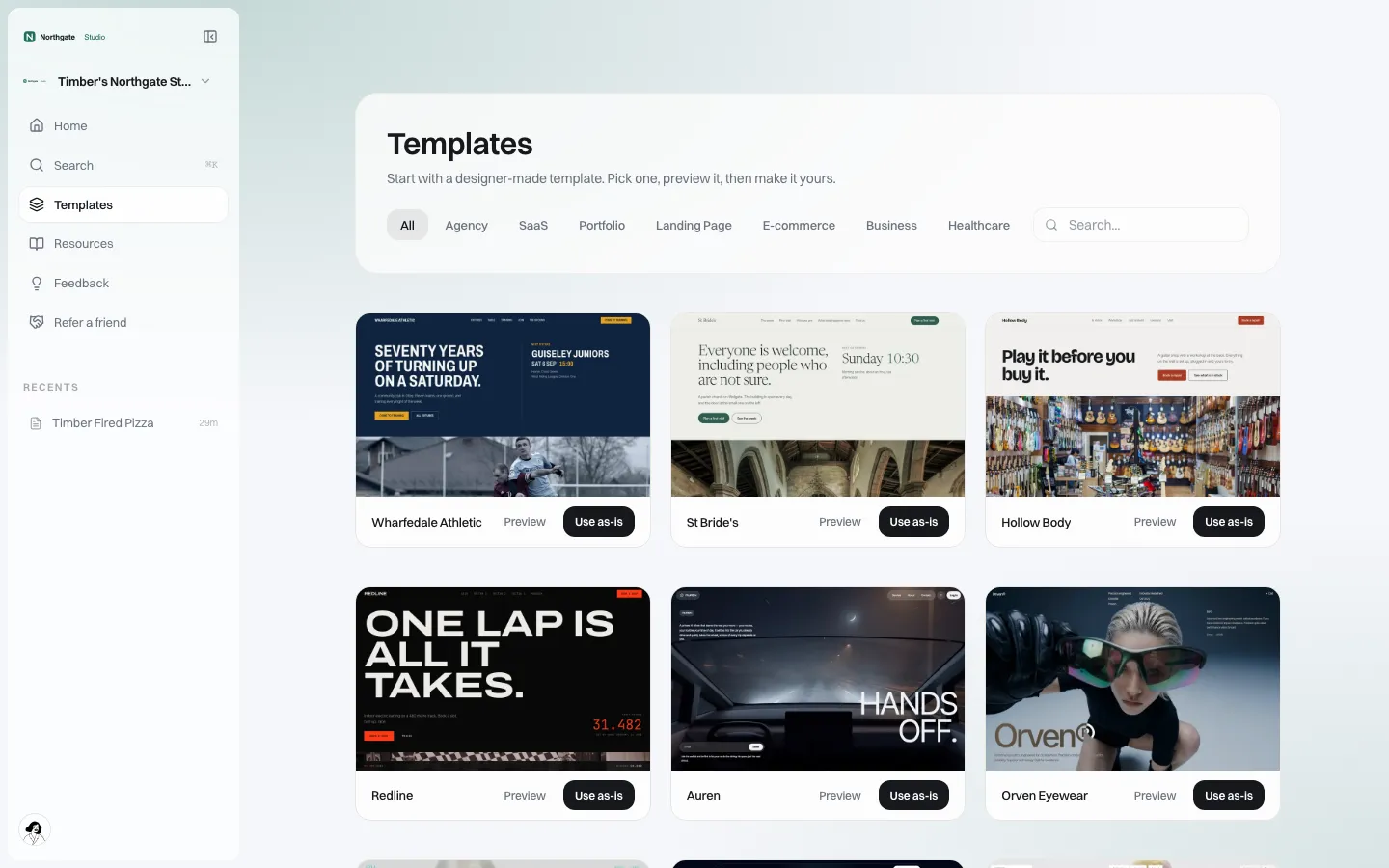
We.Inc is a white-label website platform. It can host the library's own pages: the system site and, if you need them, separate branch or programme sites under the library's brand. It does not replace your catalog, ebook platform or databases; those stay with their vendors and you link or embed them. What the platform gives a library web team today:
- Templates and a visual editor, so branch staff edit text and images without code.
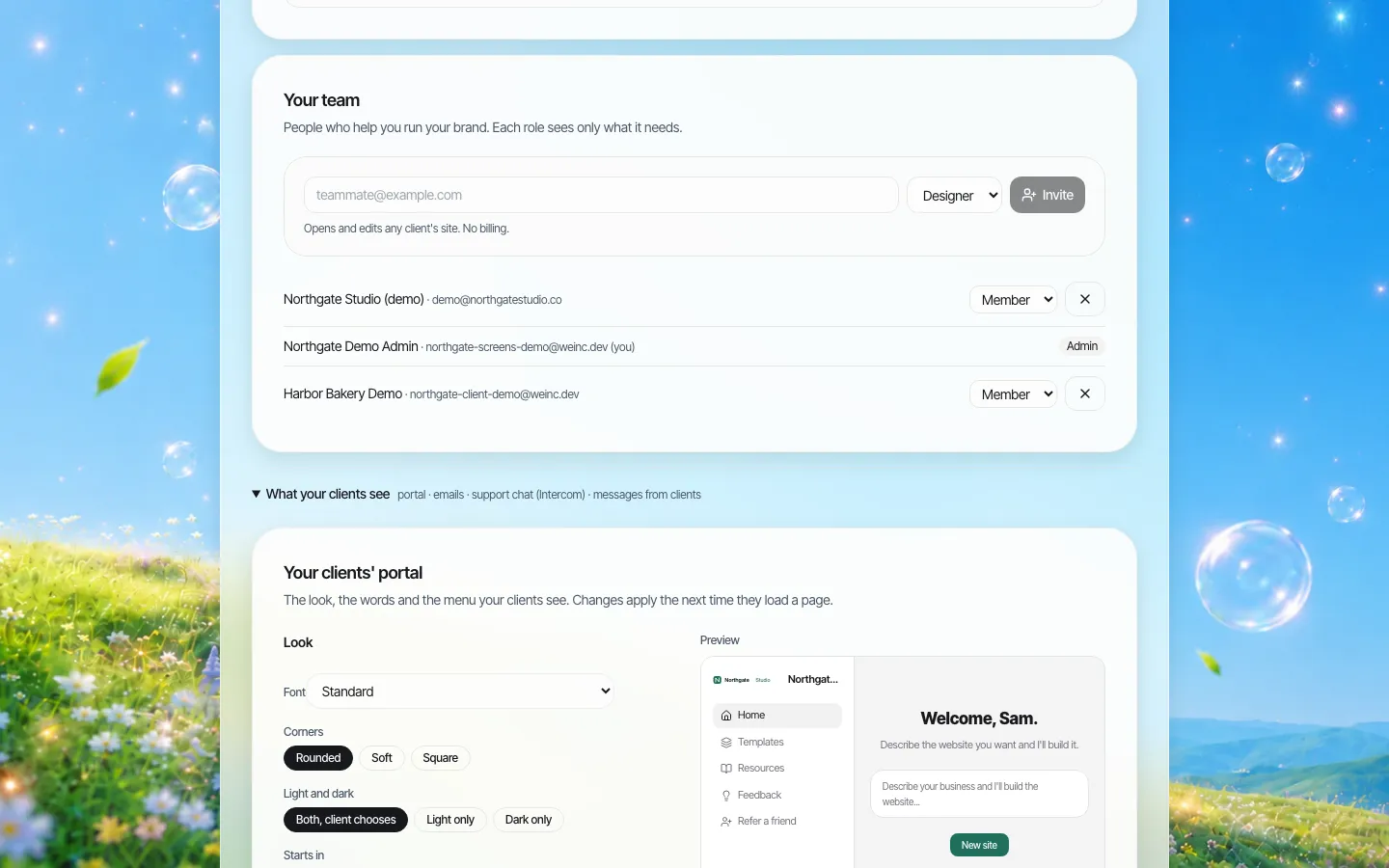
- Owner, admin and member roles, and per-site switches for publishing, forms, blog and domains.
- An optional single-step approval before a site goes live.
- An audit log of organisation actions, and full code download if you ever move.
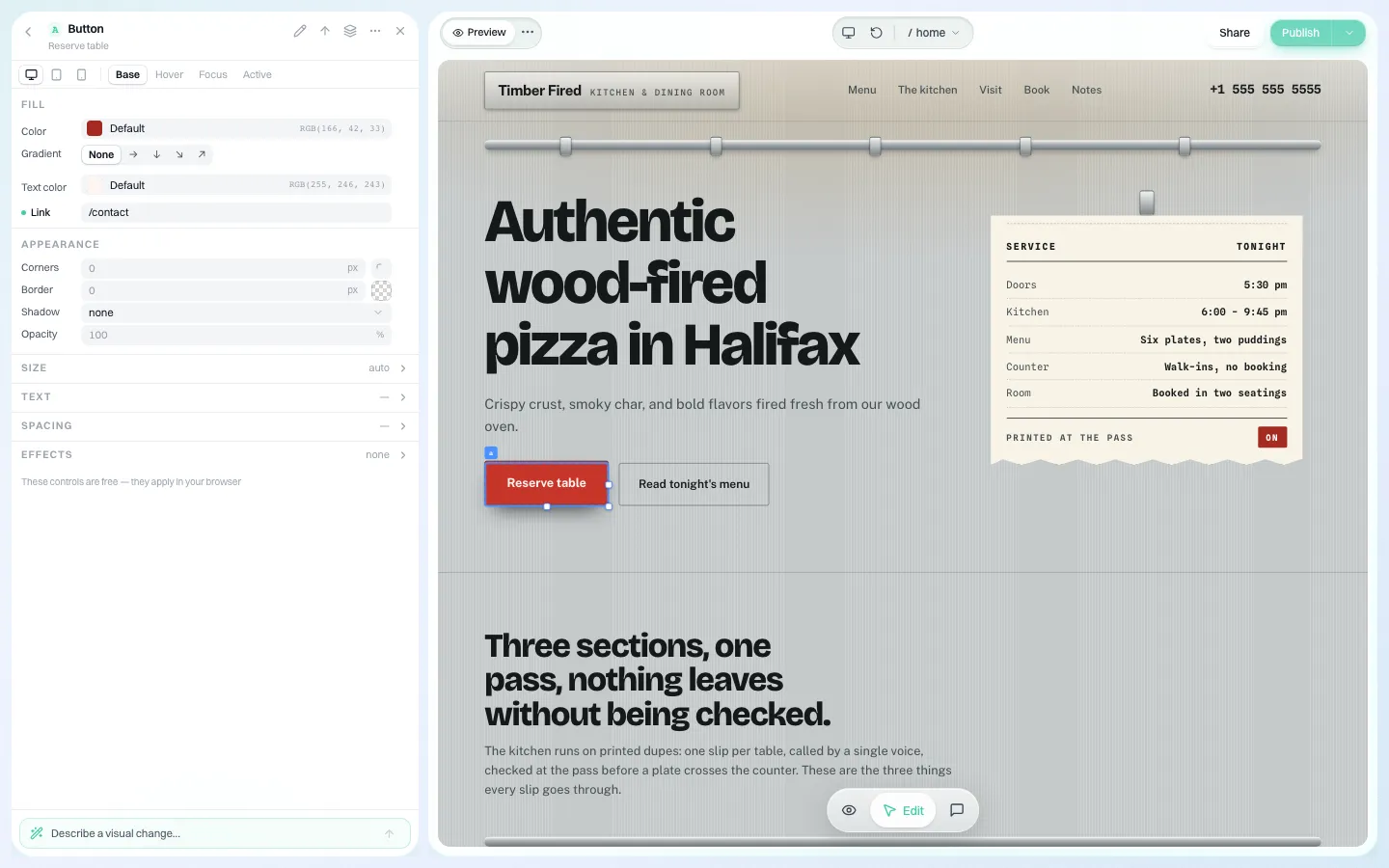
Sites are built with AI from templates and prompts. We do not claim any site built on the platform conforms to WCAG 2.1 AA, and your team must test what you publish. To see how a library system and its branches would be set up, book a demo, or read the overview for government agencies.
Sources
Last checked 2026-10-25.
- ADA.gov, Fact Sheet: New Rule on the Accessibility of Web Content and Mobile Apps Provided by State and Local Governments (libraries, third-party content, contractors, population for a city library, archived content).
- ADA.gov, First Steps Toward Complying with the Title II Web and Mobile Application Accessibility Rule (vendor and contractor content).
- Federal Register, Extension of Compliance Dates, interim final rule, April 20, 2026 (91 FR 20902).
- W3C, Web Content Accessibility Guidelines (WCAG) 2.1.
This guide is general information, not legal advice. Whether a particular licensed resource or partner site is covered depends on your arrangements; ask your own counsel.
Frequently asked questions
Does ADA Title II apply to public library websites?
Yes. ADA.gov lists public libraries among the state and local government entities covered by the web rule. A library without its own population figure uses the population of the government it belongs to when working out its compliance date.
Is the library catalog the vendor's responsibility or the library's?
Both, in practice. Content a library provides through a contract or licence is still the library's under the rule, so the library must press the vendor to fix problems, while the vendor does the fixing.
Are patron reviews and comments covered?
Content posted by members of the public who are not acting for the library generally falls under the third-party exception. Material the library posts or commissions does not.
Do digitised local history collections have to be accessible?
Only content that meets all of the archive conditions is excepted: created before the compliance date, kept only for reference, held in a separate archive area and unchanged since. Active collections do not qualify.
Can We.Inc replace our library catalog?
No. We.Inc can host the library's own pages and branch sites under its brand. The catalog, ebook platform and databases stay with their vendors.
More in Guides
- Rate Limiting: How It Works, With a Live Simulator
- React Chart Libraries Compared: One Chart, Six Libraries
- React Cookie Consent: A Banner That Actually Blocks Scripts
- React Drag and Drop: Sortable List and Kanban Board
- React Hook Form Examples, Tested and Live
- React Hooks Cheat Sheet: Every Hook With a Live Example | How-to Guide
- Internationalise a React or Next.js Site
- React Icons: How to Use Icons in React
Website builders for the businesses in this article
Related guides and tools
Start building
We.Inc is an AI-powered website builder you can resell under your own brand. Launch a branded client dashboard, bill on Stripe Connect, and deliver AI-generated websites in minutes. White-label pricing is tailored to your volume and setup: book a 30-minute demo for a quote.
Product
- AI Website Builder: Describe a site in plain English; it's live in minutes
- White Label Platform: Your brand, your domain, your margin
- Enterprise: SSO, custom SLAs, and dedicated support
- Developer API: Embed site generation into your SaaS
Who It's For
- For Agencies: Resell under your brand
- For Freelancers: Your own branded builder
- For Hosting Providers: Add a builder to your stack
- For SaaS Platforms: Embed site creation via API
- For Startups
- For Financial Services
- For Healthcare
Features
- Drag & Drop Editor
- Built-in SEO Tools
- Custom Branding
- Client Dashboard
- Reseller Billing (Stripe Connect)
Resources
- Blog
- Help Center
- Free Business Tools
- Free UI Components
- Website Templates
- Template Collections
- Website Examples
- Guides
- Comparisons
- Alternatives
- Best Lists
- Reviews
- Pricing Guides
- Use Cases
- Glossary & Guides
- Integrations
- Developers
- Benchmark
- Windows App