The website builder made for physical therapy clinics.
Tell us what you do and our AI writes and builds your physical therapy site around it.
Build My Physical Therapy Site - Free
15,000+businesses trust us
4.7
from 1,200+ reviews
No credit card required
Free plan: 3 template sites · AI building from $20/mo · Cancel anytime
anchorpointphysicaltherapy.com
The website builder made for physical therapy clinics.
A physical therapy website should tell a prospective patient which conditions you treat, whether they need a referral in your area, which insurance plans you work with and how to request a first appointment. Therapist bios, a what-to-expect page for the first visit and clear location details matter more than stock photos. We.inc's AI builds those pages and an appointment request form, but the form should collect contact details only, not medical history.
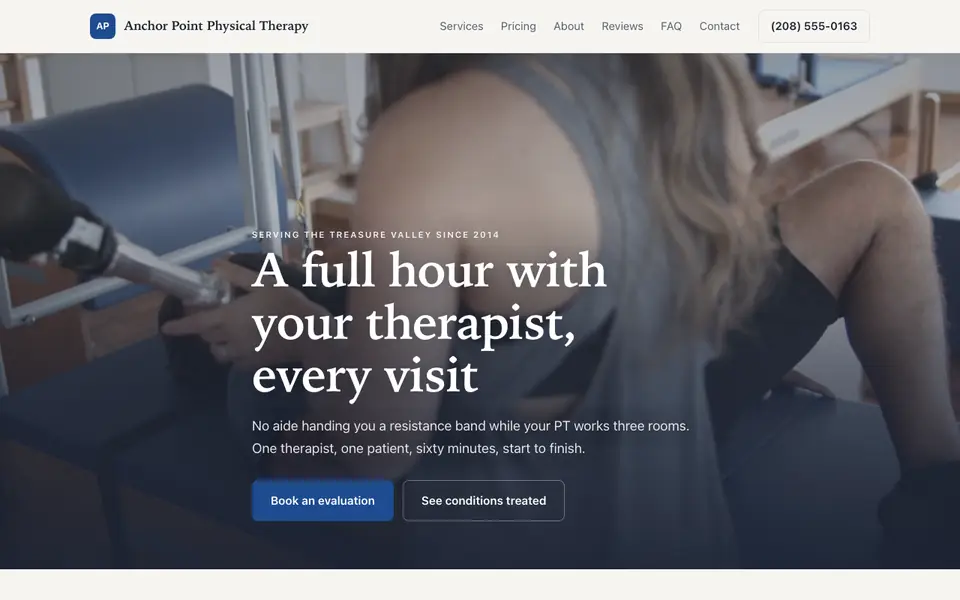
Anchor Point Physical Therapy: an example site for physical therapy clinics, made with We.Inc.
Pages every physical therapy website needs
Home: States your specialties, locations and a request-appointment button, because patients arrive with a specific injury or post-surgery need.
Conditions We Treat: Pages for back and neck pain, sports injuries, post-surgical rehab, vestibular issues or pelvic health match how people search.
Your First Visit: Explains how long the evaluation takes, what to wear, what to bring and what happens next, which reduces no-shows and nerves.
Insurance & Payment: Lists plans you are in network with, self-pay rates and whether a referral is needed, the most common front-desk question.
Our Therapists: Credentials, specialty certifications and treatment interests help patients choose a clinician.
Request an Appointment: A short form for name, phone, preferred location and times lets your front desk call back, without collecting clinical details online.
Try this prompt
Build a website for Summit Motion Physical Therapy, an outpatient clinic in Denver, Colorado with two locations. We focus on sports injuries, ACL and post-surgical rehab, and running gait analysis. Include condition pages, a first visit page, an insurance page listing the plans we accept and our self-pay rate, therapist bios, directions for both clinics, and a simple appointment request form that asks only for name, phone, location and preferred times.
Three designs that suit a physical therapy website.
Blue-Teal Physiotherapy Clinic
Text-First Chiropractic Clinic
Green Family Medical Practice
About physical therapy website design on we.inc
Physical Therapy website design without the agency retainer. Describe the business in plain English and the AI writes and builds the pages around it: your services, your prices, your words.
Who this physical therapy website design suits
Physical therapy clinics
Sports rehab
Post-surgical recovery
What makes a physical therapy website work
Keep medical details off web forms
Do not collect diagnoses, surgery details, medications or insurance ID numbers through a website form. Use the form for contact and scheduling preferences only, and gather clinical intake through your practice management or EHR system. We.inc is not a compliance tool and is not designed to hold protected health information.
Direct access and referrals
Rules on whether patients can see a physical therapist without a physician referral differ by state or country and by insurance plan. Explain your situation in plain words and check your licensing board before stating it.
Home exercise content
An exercise library can be a helpful public resource, but frame it as general education, not individual treatment advice, and point readers to an evaluation. Link patient-specific programs from the exercise app you already use rather than posting them publicly.
Scheduling and portals are separate
We.inc does not provide live appointment scheduling, patient logins or intake portals. Link your practice software's scheduling or intake page if it has one, and let the website handle the explaining.
What it costs
Clinics can publish a free template site on a we.inc address (up to three) with no AI. For the AI to write your condition, insurance and first-visit pages, Starter is $20 a month, and a clinic domain requires a paid plan plus the domain registration, typically $10-20 a year.
Free for 3 template sites, without AI; AI building from $20 a month. Compare plans
Frequently asked questions
Can patients fill out intake paperwork on the site?
We recommend against it. We.inc forms email the owner and are not built for health records. Use your practice management system's secure intake, and link to it from the site if it offers an online form.
Can patients book an appointment online?
The AI builds an appointment request form that emails your front desk to call back. For live scheduling, link your practice software's booking page.
Can I list the insurance plans we accept?
Yes, and keep it current. You can update the list by chat whenever a contract changes.
Can I publish patient testimonials?
Only with written patient permission and within your board's advertising rules. Never invent or edit testimonials; we.inc will not generate fake reviews.
Is the site compliant with healthcare privacy rules?
We.inc is a website builder, not a compliance product. Keep protected health information off the site and check your regulator's requirements for your practice.