Plain Language for Government Websites: Rules, Before-and-After Rewrites and a Review Checklist | How-to Guide
How public bodies write web pages people understand the first time: what the Plain Writing Act requires of US federal agencies, twelve working rules, real-style before-and-after rewrites of typical council and agency pages, how to test plain language, and how to keep it up across many editors.
Government web pages are often accurate and unreadable at the same time. They are written by experts, checked by lawyers, and published for people who are tired, in a hurry, reading on a phone, reading in their second language or worried about a bill. Plain language is not dumbing down. It is writing so the reader can find what they need, understand it and act on it the first time. This guide covers the rules, shows them applied to pages every public body has, and explains how to keep them in force when dozens of people publish.
What the law says (US federal)
The Plain Writing Act of 2010 requires US federal agencies to use clear communication that the public can understand and use. It covers documents about getting a federal benefit or service or filing taxes, documents that give information about those benefits or services, and documents explaining how to comply with a requirement the agency administers. That includes letters, publications, forms, notices and instructions, on paper or online. It does not cover regulations, which are addressed by separate executive orders.
Agencies must name senior officials to oversee the Act, train staff, set up a compliance process and keep a plain writing section on their website, linked from the home page, with a way for the public to give feedback. The Act does not create rights that can be enforced in court.
State and local governments are not covered by the federal Act, though many have their own plain language laws, policies or style guides. Even where nothing requires it, plain language supports accessibility (people with cognitive disabilities benefit most) and reduces calls, complaints and errors on forms.
Twelve working rules
| # | Rule | In practice |
|---|---|---|
| 1 | Start with what the reader needs to do | Lead with the action or answer; background goes last or nowhere |
| 2 | Write for one reader | "You" for the reader, "we" for the organisation |
| 3 | Use the reader's words | Check site search logs: people search "bin", not "solid waste collection" |
| 4 | Short sentences | Aim for an average under 20 words; split any over 30 |
| 5 | Active voice | "We will send you a letter", not "A letter will be sent" |
| 6 | Headings that say something | "How to apply" or "What it costs", not "Overview" or "General information" |
| 7 | Lists for steps and conditions | Number steps; bullet conditions; one idea per item |
| 8 | Define or drop jargon and acronyms | Spell out on first use; better, use the plain term throughout |
| 9 | Numbers as numerals | "Apply within 30 days", with the actual date where possible |
| 10 | Links that describe where they go | "Apply for a parking permit", not "Click here" |
| 11 | Tables for comparisons | Fees by type, deadlines by category |
| 12 | Cut what nobody needs | Mission statements, history and welcome messages rarely help a task |
Before and after: four pages every public body has
1. A service page
Before: "The Department of Public Works, in accordance with Municipal Code Section 12-204, provides for the collection of bulky refuse items from eligible residential properties upon submission of a request through the appropriate channels, subject to applicable fees as set forth in the current fee schedule."
After:
- Heading: Get a large item picked up
- "We collect furniture, mattresses and appliances from houses and apartments. Book a pickup online or call 311. It costs $25 for up to 3 items."
Fees and codes in these examples are illustrative.
2. Eligibility rules
Before: "Applicants who are not residents of the County but who are employed within the County for a minimum of twenty (20) hours per week, or who are enrolled as full-time students at an accredited institution located within the County, shall also be deemed eligible."
After: "You can apply if you:
- live in the county, or
- work in the county at least 20 hours a week, or
- study full time at a college in the county."
3. A deadline notice
Before: "Failure to remit payment prior to the expiration of the statutory period may result in the imposition of penalties and interest."
After: "Pay by March 31. If you pay late, we add a 10% penalty and interest each month."
4. An error message on a form
Before: "Invalid input. Validation error code 4012."
After: "Enter your account number. It is the 10-digit number at the top of your water bill."
Structure a page for scanning
Most people scan before they read. A dependable order for service pages:
- Title as a task: "Apply for...", "Pay...", "Report..."
- One-sentence summary: who it is for, what it costs, how long it takes.
- The action: the button or link to start.
- What you need before you start.
- Steps.
- What happens next and how long it takes.
- Help: who to contact, when.
Avoid putting the main content of a service in a PDF. Our PDF alternatives guide explains why and what to do instead.
Plain language and legal accuracy
The most common objection is "legal won't approve it". Practical answers:
- Separate the page from the law. The page explains; it links to the ordinance or regulation for the exact text.
- Show lawyers both versions side by side and ask what the plain version gets wrong, not whether it sounds formal enough.
- Keep conditions complete. Plain does not mean leaving out exceptions; it means listing them clearly.
- Agree a review standard: legal checks accuracy, the content team owns wording.
Test it
Readability formulas give a rough signal but miss most of what matters (structure, word choice, whether the answer is there at all). Better tests:
- Five-second test: show the page for five seconds; ask what it is for and what to do next.
- Task test: ask three to five people to find a specific answer on the page and say it in their own words.
- Highlighter test: give a printout; green for clear, pink for confusing.
- Calls and emails: if a topic still generates the same questions after a rewrite, the page is not answering them.
Include people who read English as a second language and people with cognitive or learning disabilities. Pages that work for them work for everyone.
Keeping it up across many editors
Plain language usually fails after launch, when forty department editors start publishing again. What works:
- A one-page style guide with your twelve rules, a word list ("use / instead of") and two before-and-after examples from your own site.
- Training with editors' own pages, not generic examples.
- A review before new pages go live for high-traffic topics.
- A yearly review date on every page, with the owner confirming it is current and clear.
Use this checklist in review:
| Check | Yes / No |
|---|---|
| The title is a task or a clear topic in the reader's words | |
| The first sentence says who this is for and what they can do | |
| The main action is visible without scrolling on a phone | |
| Headings describe their sections | |
| Steps are numbered; conditions are bulleted | |
| No sentence over 30 words | |
| Acronyms spelled out or removed | |
| Dates, fees and deadlines are specific | |
| Links describe their destination | |
| Contact details and response times are given | |
| Nothing essential is only in a PDF |
Where the platform helps (and where it does not)
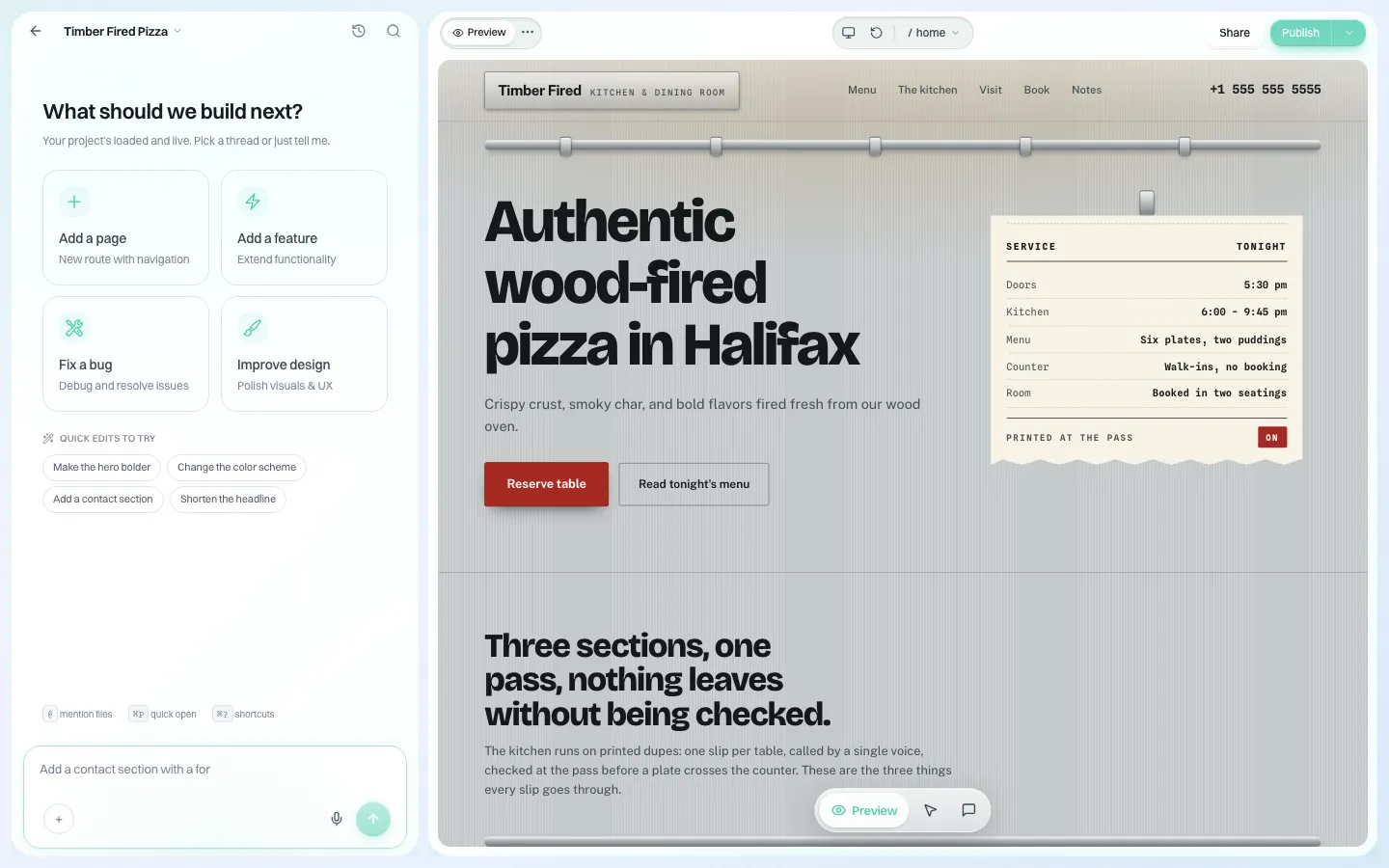
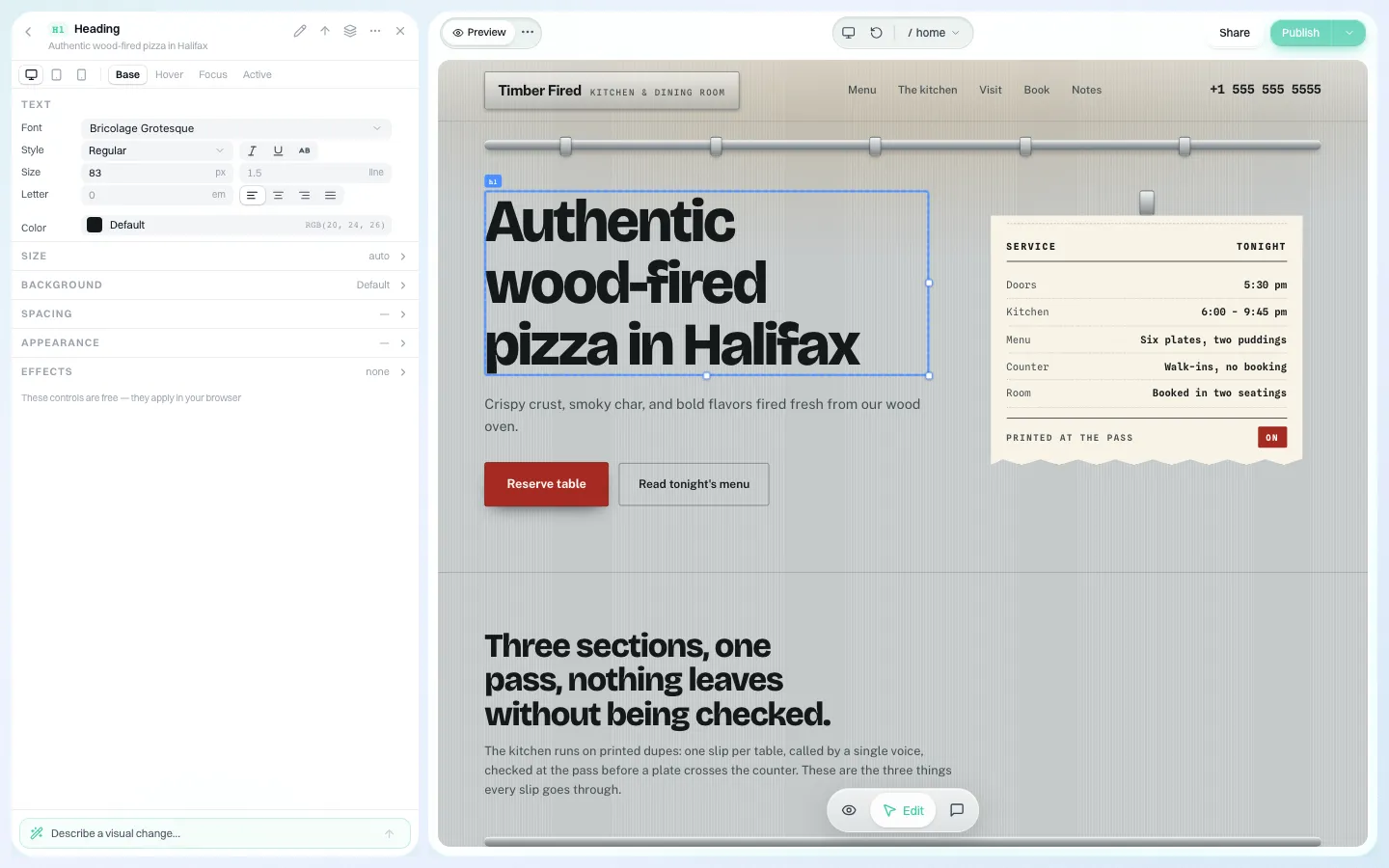
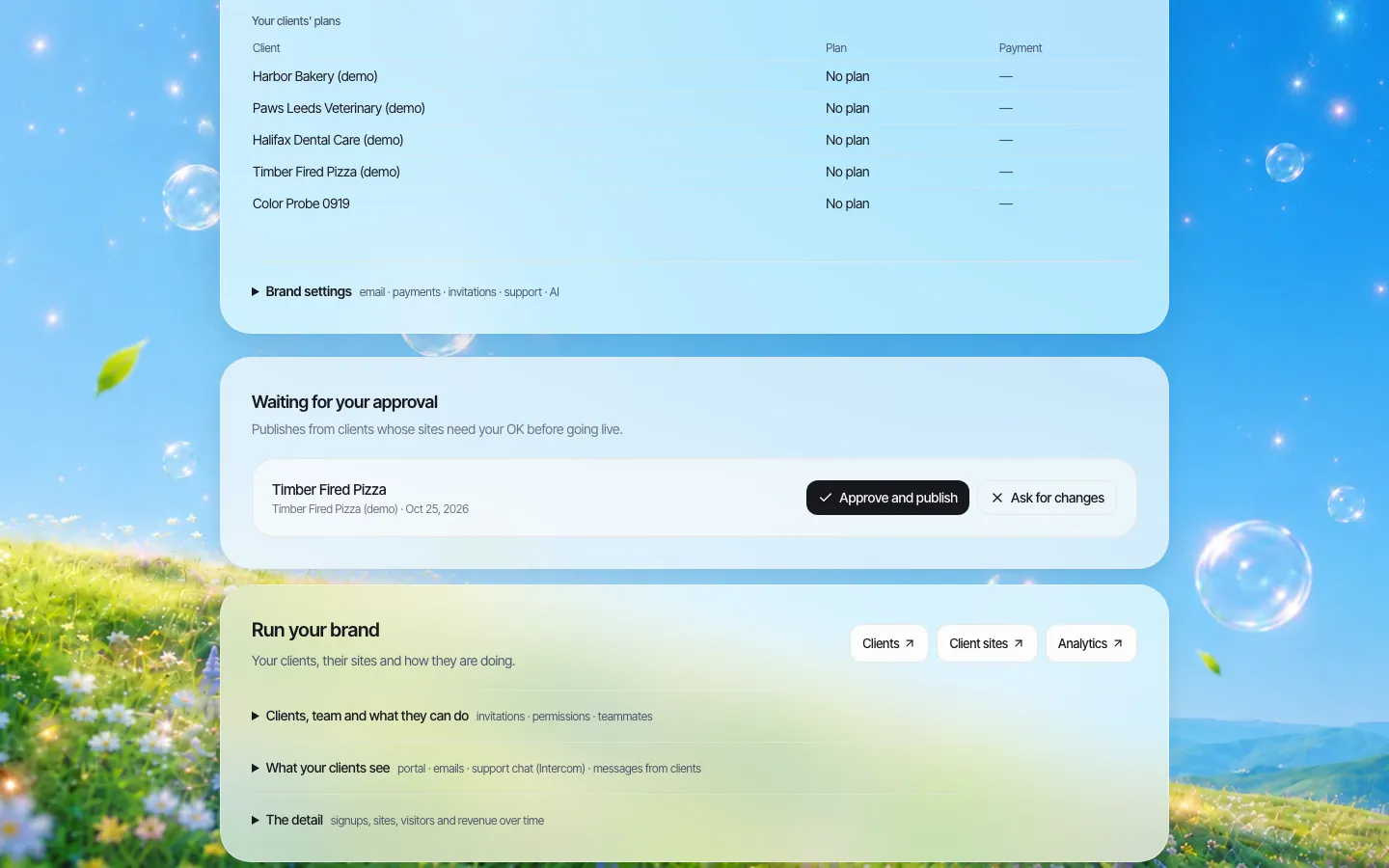
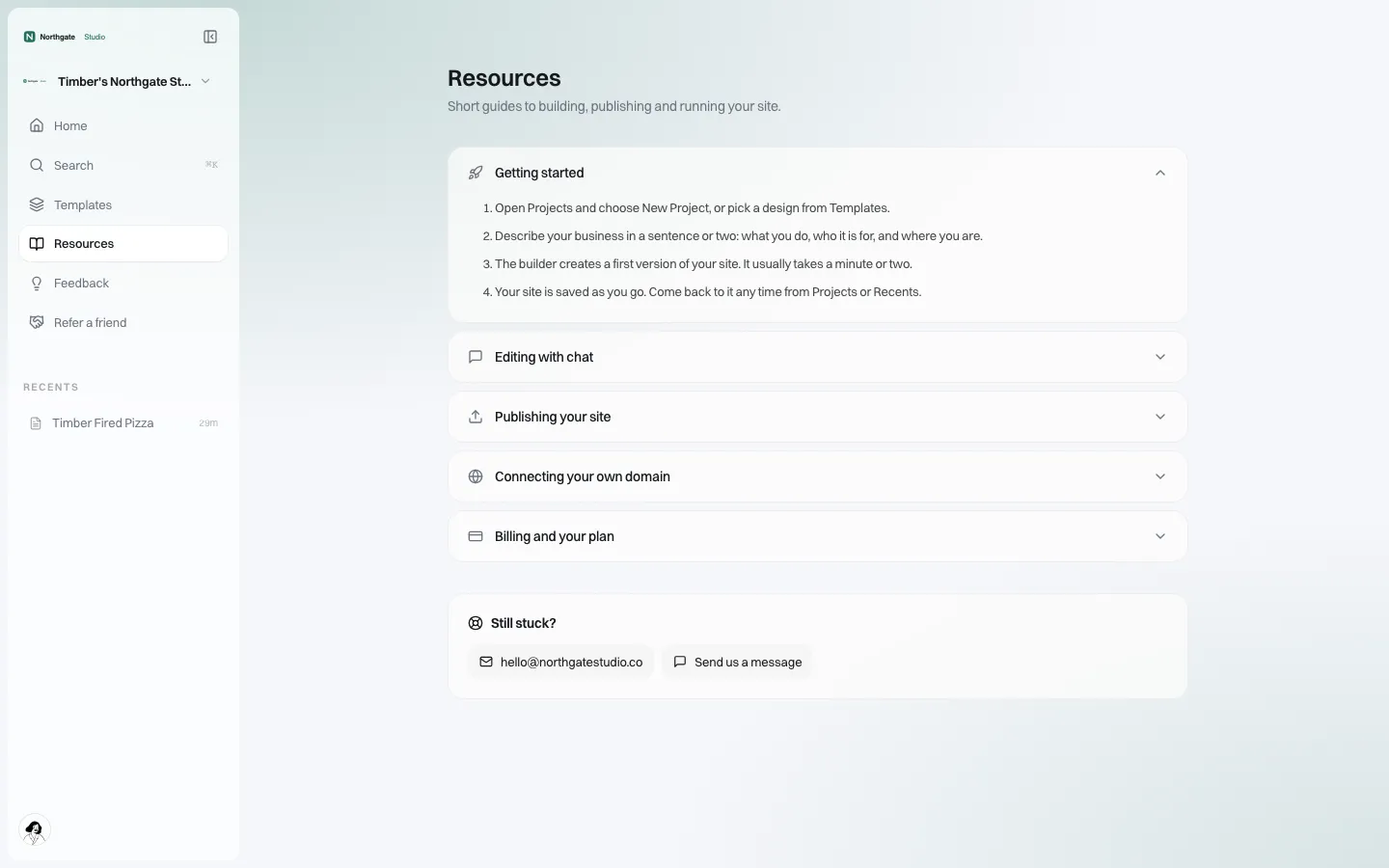
No platform writes plain language for you. The platform matters in two places: making it easy for editors to use real headings, lists and tables rather than bold text and screenshots, and putting a review step before pages go live. On We.Inc, editors change text and structure in a visual editor or by asking the built-in AI assistant, which can help draft a plainer version for a person to check; an organisation can also require a single-step approval before a site goes live. Screenshots from our demo brand:
If you run many sites and want a review step for all of them, book a demo.
Sources
Last checked 2026-10-25.
- Public Law 111-274, Plain Writing Act of 2010 (govinfo.gov).
- plainlanguage.gov, Law and requirements.
- digital.gov, Plain language guide.
This guide is general information, not legal advice.
Frequently asked questions
What does the Plain Writing Act of 2010 require?
US federal agencies must write documents about benefits, services, tax filing and compliance clearly, train staff, name senior officials to oversee it, and keep a plain writing section on their website. It does not cover regulations and cannot be enforced in court.
Does the Plain Writing Act apply to state and local governments?
No, it applies to federal agencies. Many states and cities have their own plain language laws, policies or style guides.
Is plain language less legally accurate?
It does not have to be. Keep every condition and exception, list them clearly, and link to the ordinance or regulation for the exact legal text.
How do you test whether a page is in plain language?
Use task tests, five-second tests and highlighter tests with real readers, and watch whether calls and emails on the topic fall. Readability scores are only a rough signal.
Can We.Inc write plain language for us?
Its built-in AI assistant can help draft a plainer version, but a person must check it against your style guide. An organisation can also require a single-step approval before a site goes live.
More in Guides
- Playwright MCP Server: Let an Assistant Drive a Real Browser
- Plumber SEO: A Practical Local SEO Checklist
- pnpm vs npm: What Actually Differs
- Website Portfolio Examples: Photographers, Designers and Architects | How-to Guide
- Respecting prefers-reduced-motion
- How to Build a Print-on-Demand Website
- Ecommerce Product Page Design: Anatomy and Examples
- How to Turn Your Website into a Progressive Web App
Website builders for the businesses in this article
Related guides and tools
Start building
We.Inc is an AI-powered website builder you can resell under your own brand. Launch a branded client dashboard, bill on Stripe Connect, and deliver AI-generated websites in minutes. White-label pricing is tailored to your volume and setup: book a 30-minute demo for a quote.
Product
- AI Website Builder: Describe a site in plain English; it's live in minutes
- White Label Platform: Your brand, your domain, your margin
- Enterprise: SSO, custom SLAs, and dedicated support
- Developer API: Embed site generation into your SaaS
Who It's For
- For Agencies: Resell under your brand
- For Freelancers: Your own branded builder
- For Hosting Providers: Add a builder to your stack
- For SaaS Platforms: Embed site creation via API
- For Startups
- For Financial Services
- For Healthcare
Features
- Drag & Drop Editor
- Built-in SEO Tools
- Custom Branding
- Client Dashboard
- Reseller Billing (Stripe Connect)
Resources
- Blog
- Help Center
- Free Business Tools
- Free UI Components
- Website Templates
- Template Collections
- Website Examples
- Guides
- Comparisons
- Alternatives
- Best Lists
- Reviews
- Pricing Guides
- Use Cases
- Glossary & Guides
- Integrations
- Developers
- Benchmark
- Windows App