Website Platform Total Cost of Ownership: A Five-Year Model for Organisations Running Many Sites | How-to Guide
How to compare website platforms on what they really cost over five years: licence, hosting, build, content migration, staff time, accessibility testing, security, training, integrations and exit. Includes a cost-line checklist, a worked comparison method and the questions that expose hidden costs.
The licence fee is the number on the proposal, so it is the number that gets compared. It is also, for most organisations, a minority of what a website platform costs. Staff time to publish, developer time to change a template, accessibility testing, security patches, the agency retainer that appears in year two and the migration you will eventually pay for to leave: these are the costs that decide whether a platform was cheap. This guide gives you a model for counting them, over five years, for one site or for two hundred.
Why five years
Platform decisions usually last longer than the contract. Three years is too short to include the cost of leaving, and many organisations replace their main site on a roughly five-to-seven-year cycle. Five years captures one full set-up, the steady state and the exit, which is the honest comparison.
The cost lines
Put every line in a spreadsheet, one column per year, one tab per platform. Lines that are zero for one platform are often large for another, which is the point.
| Group | Cost line | Often forgotten because |
|---|---|---|
| Platform | Licence or subscription (per site, per seat, per page view, or flat) | Pricing units differ, so it is hard to compare until you model your own numbers |
| Hosting, CDN and bandwidth | Bundled for some platforms, separate for others | |
| Paid add-ons: forms, search, translation, analytics, backups | Listed on a separate price page or quoted later | |
| Domains and certificates | Small per item, large across many sites | |
| Set-up | Design and template build | Agency estimates assume a stable scope |
| Content migration and rewriting | Done by department staff, so not invoiced | |
| Integrations (payments, permits, CRM, single directory of staff) | Each one is a small project | |
| Running | Editor time per page published or changed | Spread across many people, never measured |
| Developer time for template changes and fixes | Absorbed by IT or bought as a retainer | |
| Security patching and upgrades | Major-version upgrades on self-hosted platforms can be mini-projects | |
| Accessibility testing and remediation | Treated as a one-off audit instead of ongoing work | |
| Training new editors | Staff turnover makes this continuous | |
| Risk | Incident response and downtime | Hard to estimate, so left out |
| Contract renewal increases | Year-one pricing is often discounted | |
| Exit | Migration off the platform at year five | Nobody plans to leave on day one |
The line that dominates: staff time
For organisations with many editors, people-time usually outweighs licence cost. Estimate it this way:
- Count changes per year: pages created plus pages edited. Your current CMS or analytics can usually give you last year's numbers.
- Time a sample of ten typical changes on each shortlisted platform, during the demo or trial, done by one of your editors rather than the vendor's.
- Multiply: changes × minutes per change × loaded hourly cost of the people doing them.
- Add the cost of changes the editor cannot make alone. If a new landing page needs a developer ticket on one platform and an editor ten minutes on another, that difference repeats every time.
A platform that saves five minutes per change across many thousands of changes a year can justify a higher licence. A platform with a low licence that sends every layout change to a developer usually cannot.
Pricing models and how they behave at scale
| Model | Cheap when | Expensive when | Question to ask |
|---|---|---|---|
| Per site | A few large sites | Many small sites (departments, locations, clients) | Is there a volume tier, and what counts as a site? |
| Per editor seat | A small central team publishes everything | Distributed publishing with many occasional editors | Are reviewers and occasional editors charged as full seats? |
| Per page view or traffic | Low traffic | A spike from an emergency or a viral page | What happens to the bill during a traffic surge? |
| Flat enterprise licence | Large, growing estate | The estate shrinks, or you only use a fraction | What does the renewal look like, and what is the notice period? |
| Open source, self-hosted | Strong in-house developers | Small team; upgrades and security fall on you | Who patches it at 2 a.m., and what does that cost? |
Accessibility is a running cost, not a project
For public bodies in the US, the ADA Title II rule makes WCAG 2.1 AA the standard for web content, and content provided through contractors and vendors is still the public body's responsibility. Budget for it every year: training, a tester's time on each release, user testing on top tasks, and an independent audit. Platforms differ in how much of this they make easier (accessible templates, review before publishing), but no platform removes the line. Our accessibility testing process shows what the yearly rhythm looks like.
Exit cost: price it before you sign
The cheapest moment to reduce exit cost is during procurement. Ask each vendor to show, not describe:
- How you export all content, with structure, in a documented format.
- Whether you can export the design and code, or only the text.
- How media and documents are exported, with their URLs, so you can redirect.
- What contractual help you get during transition, and at what rate.
- How long your data is kept after termination, and how it is deleted.
Then estimate: if export is clean and complete, exit is mostly redirects and testing. If export is text only, exit is a full rebuild. Put the difference in year five. The vendor exit plan guide has contract wording.
A worked method (no invented numbers)
Instead of an example with made-up prices, here is the method in order. Fill it in with your quotes and your own measurements.
- Fix the estate: number of sites, pages, documents, editors and changes per year, today and in five years.
- Get quotes in writing for that estate, years one to five, including renewal terms and every add-on on your must-have list.
- Measure editor time on each shortlisted platform with your own editors.
- Get set-up estimates from the vendor or agency, and add your own staff time for content.
- Estimate developer time per year from your change log: what share of last year's changes needed a developer?
- Add accessibility, security and training lines, the same for every platform unless one materially changes the effort.
- Price the exit from what the export demo showed.
- Sum and compare, then run a sensitivity check: what if the estate grows 50%? What if renewal rises?
Copyable TCO sheet layout
| Line | Year 1 | Year 2 | Year 3 | Year 4 | Year 5 | Source |
|---|---|---|---|---|---|---|
| Licence / subscription | Written quote | |||||
| Hosting and add-ons | Written quote | |||||
| Design and build | - | - | - | - | Agency estimate | |
| Content migration (staff hours × rate) | - | - | - | - | Inventory × hours per page | |
| Editor time | Timed sample × changes per year | |||||
| Developer time | Change log share | |||||
| Accessibility | Testing plan | |||||
| Security and upgrades | IT estimate | |||||
| Training | New editors per year | |||||
| Exit | - | - | - | - | Export demo | |
| Total |
When an enterprise CMS is the better buy
Be fair to the expensive option. A full enterprise CMS often wins on TCO when you have one very large, deeply integrated site, complex content reuse across channels, a large in-house development team already skilled in it, or strict multi-stage editorial workflows. A multi-site builder tends to win when the estate is many smaller sites, editors are occasional, and the biggest cost is people waiting for developers. The trade-offs are set out in white-label builder vs enterprise CMS.
What We.Inc changes in the model
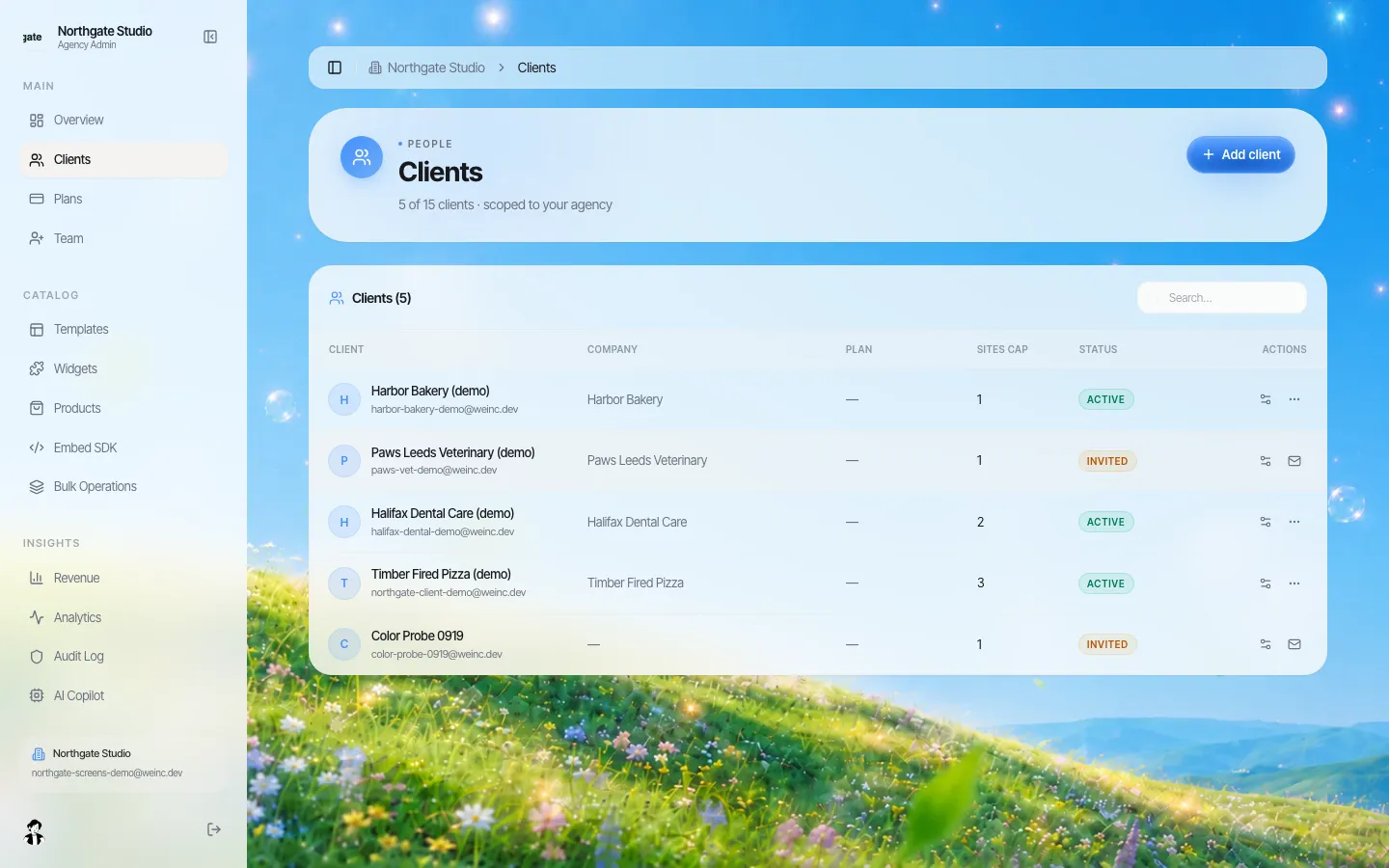
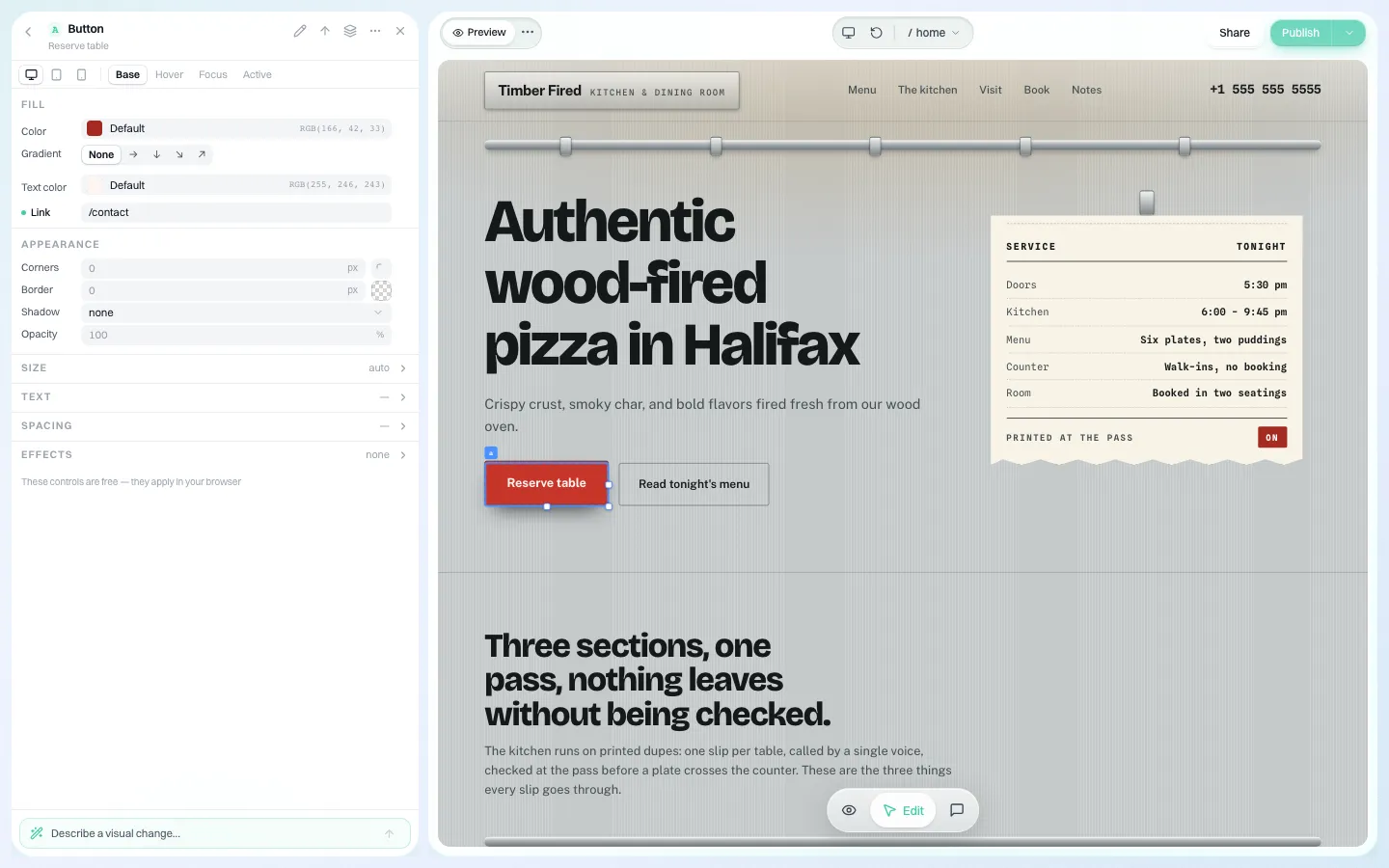
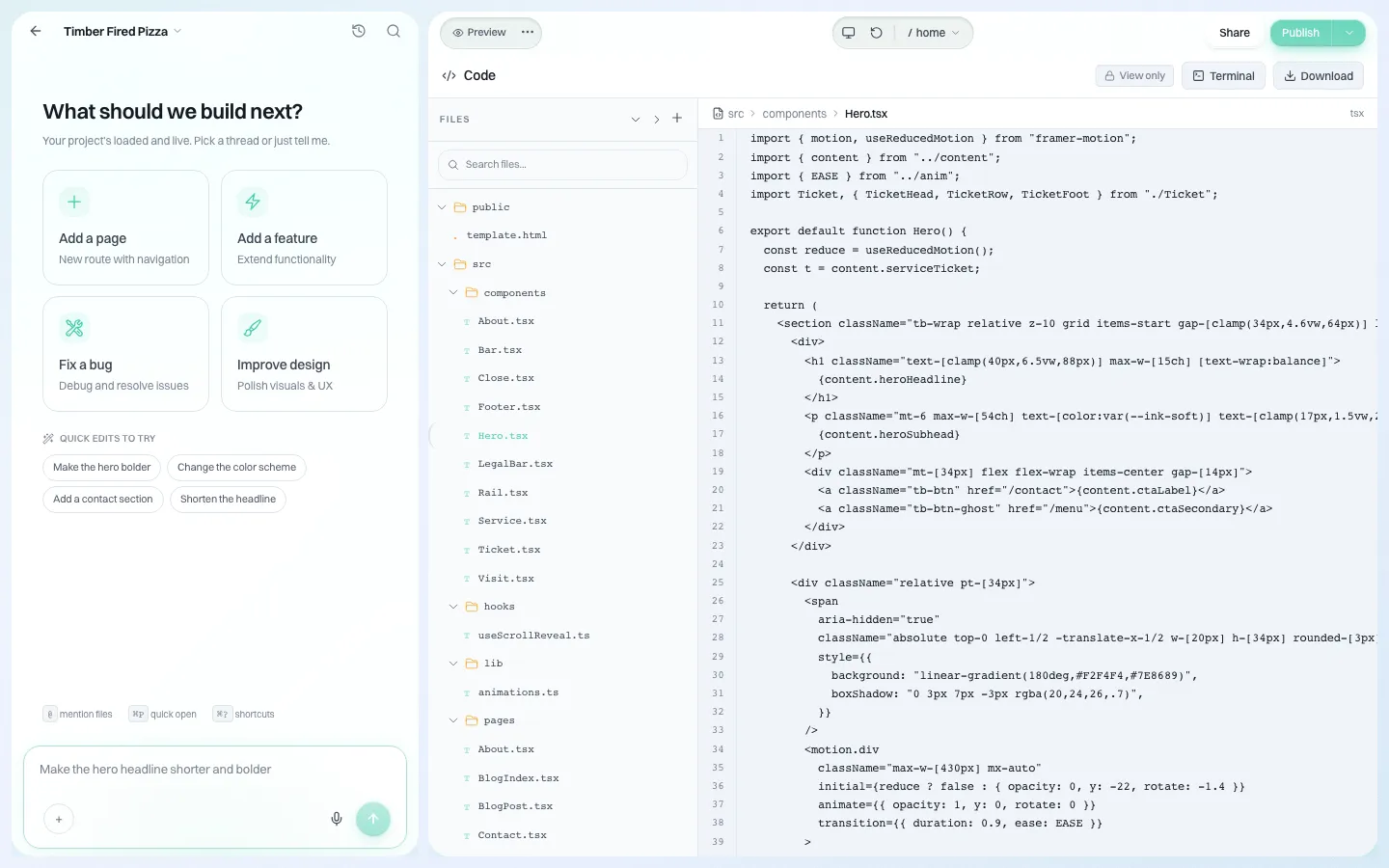
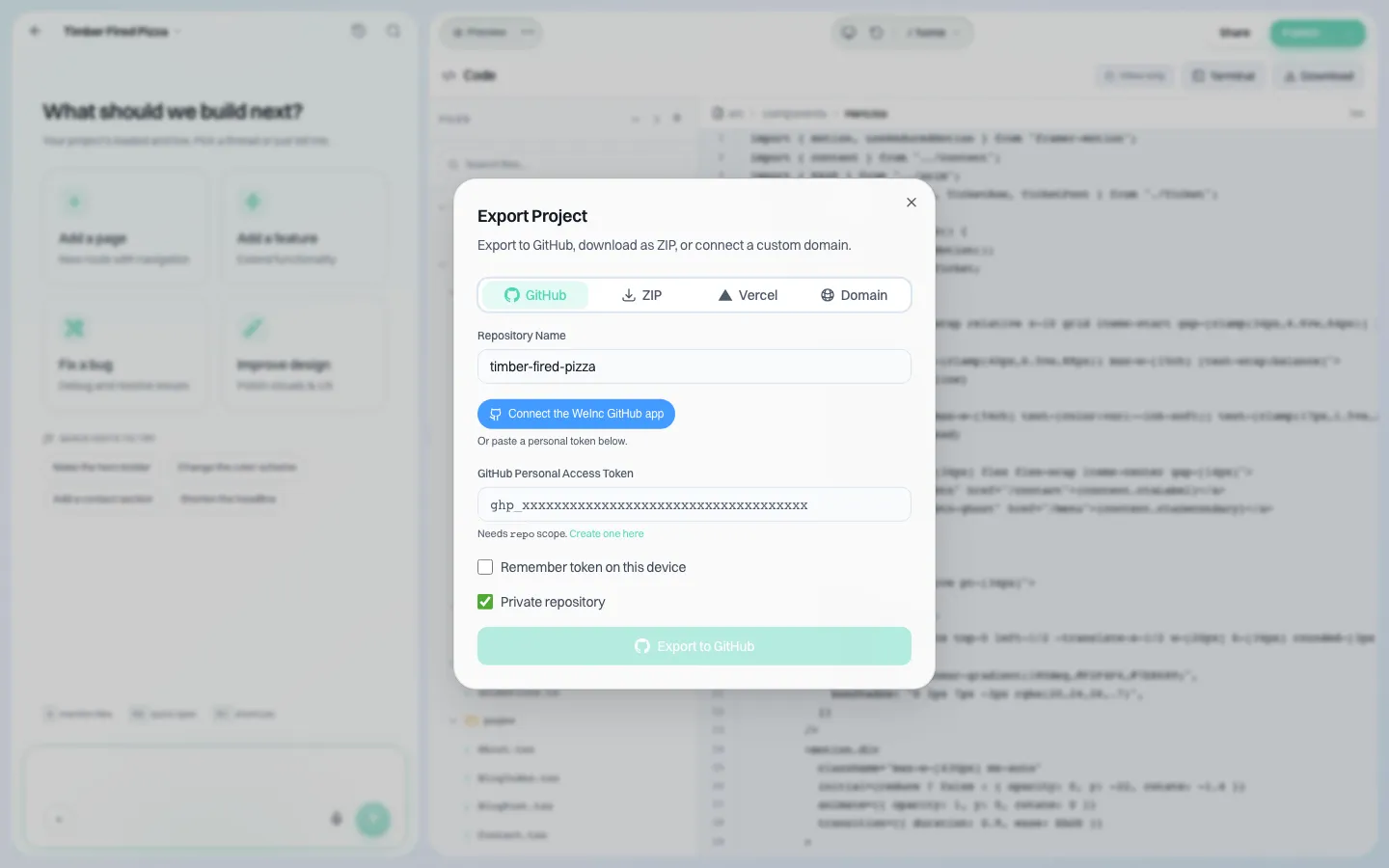
We.Inc is built for organisations running many sites under their own brand. In TCO terms, the lines it affects are editor time (sites are built and changed in a visual editor with an AI assistant), developer time for small layout changes, and exit cost: the site's code can be downloaded as a ZIP or synced to GitHub. It does not remove accessibility testing, content work or training. We do not publish white-label pricing; it is quoted per organisation in a demo.
To get a quote you can put into the sheet above, book a demo.
Sources
Last checked 2026-10-25.
- ADA.gov, Fact Sheet: Title II web and mobile app rule (WCAG 2.1 AA; contracted content).
This guide is general information, not legal or financial advice.
Frequently asked questions
What is website total cost of ownership?
Everything a platform costs over its life: licence, hosting, add-ons, build, content migration, editor and developer time, accessibility testing, security, training and the cost of leaving, usually modelled over five years.
What is the biggest hidden cost of a website platform?
For organisations with many editors it is usually staff time: minutes per change multiplied by thousands of changes, plus changes editors cannot make without a developer.
How do you estimate the cost of leaving a platform?
Ask the vendor to demonstrate a full export of content, media, URLs and code. Clean, complete export means exit is mostly redirects and testing; text-only export means a rebuild.
When is an enterprise CMS cheaper over five years?
Often when you run one very large, integrated site with complex content reuse, strict multi-stage workflows and an in-house team skilled in that CMS.
Does We.Inc publish white-label prices?
No. White-label is quoted per organisation in a demo, so you can put a written quote for your own estate into the TCO sheet.
More in Guides
- Public Sector Website Redesign Project Plan: Phases, Roles, Timeline and Risks | How-to Guide
- Website SLA Checklist: What a Service Level Agreement Should Promise, Measure and Exclude | How-to Guide
- Website Structure: How to Organise Pages, URLs and Links (5 Example Site Maps) | How-to Guide
- Website Titles Explained: Examples for Small Businesses | How-to Guide
- Website Vendor Exit Plan: Contract Clauses to Avoid Lock-In | How-to Guide
- Website vs Web App: The Difference, With Examples | How-to Guide
- WebSocket in Node.js: Server, Client, Heartbeat and Reconnect
- Welcome Email Templates for Small Businesses
Related guides and tools
Start building
- how to make a website
- AI website builder
- free website builder
- website templates
- website builders by industry
We.Inc is an AI-powered website builder you can resell under your own brand. Launch a branded client dashboard, bill on Stripe Connect, and deliver AI-generated websites in minutes. White-label pricing is tailored to your volume and setup: book a 30-minute demo for a quote.
Product
- AI Website Builder: Describe a site in plain English; it's live in minutes
- White Label Platform: Your brand, your domain, your margin
- Enterprise: SSO, custom SLAs, and dedicated support
- Developer API: Embed site generation into your SaaS
Who It's For
- For Agencies: Resell under your brand
- For Freelancers: Your own branded builder
- For Hosting Providers: Add a builder to your stack
- For SaaS Platforms: Embed site creation via API
- For Startups
- For Financial Services
- For Healthcare
Features
- Drag & Drop Editor
- Built-in SEO Tools
- Custom Branding
- Client Dashboard
- Reseller Billing (Stripe Connect)
Resources
- Blog
- Help Center
- Free Business Tools
- Free UI Components
- Website Templates
- Template Collections
- Website Examples
- Guides
- Comparisons
- Alternatives
- Best Lists
- Reviews
- Pricing Guides
- Use Cases
- Glossary & Guides
- Integrations
- Developers
- Benchmark
- Windows App