White-Label AI App Builder for Agencies: Resell Apps
Yes, if the platform offers white-labelling and lets you hand over or export the code. This guide covers what to check, how to price AI usage you do not control, who maintains the app after launch, and which client projects are a bad fit for prompt-built apps.
Yes, an agency can white-label an AI app builder and sell what it makes, provided three things are true: the platform lets you put your own brand on everything the client sees, its terms let you resell the output, and you can take the app's code with you if the client or the platform relationship ends. The harder parts are commercial, not technical: AI usage costs vary with how much a client asks for, prompt-built apps still need someone to test and maintain them, and some projects (heavy data, strict compliance, native mobile) are a poor fit. Agencies that do well with it sell a defined scope at a fixed price, cap included changes, and own the testing.
What "white-labelling an AI app builder" actually means
There are three different things agencies mean by it, and vendors support them unevenly:
| Level | What the client sees | What to check |
|---|---|---|
| 1. You build, they receive the app | Only the finished app. They never see the builder | Can the app run on the client's domain without the vendor's name in it? Can you export the code? |
| 2. They log in to see and request changes | A dashboard under your brand showing their app | Branded login, branded emails, no vendor name on any screen they reach |
| 3. They build and edit themselves | The full builder, under your brand | Per-client limits, approval before changes go live, who pays for their AI usage |
Level 1 needs no white-label feature at all, only a resale-friendly licence and code export. Levels 2 and 3 need a real white-label platform. Decide which you are selling before you compare vendors.
The checks before you sell anything
Licence and terms
Read the vendor's terms for three things: whether you may build for third parties and charge them, who owns the generated code, and what happens to running apps if your account ends. If the answers are vague, ask in writing. A platform that is happy to be white-labelled will usually answer quickly.
Code you can take
Ask for a real export during your trial: download the code of a test app and try to run it elsewhere. Some builders export clean code in a common framework; some export something you could not realistically maintain; some do not export at all. For agency work, export is your insurance. It lets you promise a client their app is not trapped.
Where the app runs
Check whether the app can be served on the client's own domain, and what the backend is: where the data lives, who can reach it, and how you would move it.
Brand coverage
For levels 2 and 3, sign up as a fake client and click everything: the login page, password-reset email, help links, billing screens, error pages. One stray vendor logo in a password email undoes the illusion.
Pricing AI usage you do not control
This is where agencies lose money. AI builders typically meter usage in credits or similar units, because each request costs the vendor money. When a client is allowed to request changes freely, your cost follows their enthusiasm, not your quote. Ways agencies handle it:
| Approach | How it works | Good for |
|---|---|---|
| Fixed scope, fixed price | You do the prompting; the client approves milestones. AI cost is part of your build cost | Level 1 projects |
| Included changes per month | Retainer covers a set number of change requests; extra requests are quoted | Level 2 clients |
| Usage passed through | Client buys a usage allowance under your brand; overages billed | Level 3 clients who edit heavily |
| Client editing turned off | Client can view, not prompt; all changes go through you | Clients who would burn usage on experiments |
Whichever you choose, track usage per client for the first three months before setting your standard prices. Our guide on how white-label licences are priced explains the vendor side of the bill.
Which client projects fit
| Good fit | Poor fit |
|---|---|
| Internal tools: dashboards, trackers, simple CRMs for one team | Apps holding health, payment card or other regulated data, unless you can prove the controls the rules require |
| Customer portals with a small number of screens | High-traffic consumer apps where performance tuning is the job |
| Booking, quoting and lead-capture apps | Native mobile apps distributed through app stores, unless the builder genuinely produces them |
| Prototypes to test an idea before a full build | Projects whose real complexity is integrating with an old internal system |
Be candid with clients about the poor-fit list. A custom development team is the better choice there, and saying so builds the trust that wins the next project.
Who maintains the app after launch
Prompt-built apps still have bugs, still need dependencies updated, and still break when a connected service changes. Write down, before launch:
- Testing: who tests each change, and against what list of key tasks.
- Data: where it lives, how it is backed up, and how a client gets an export.
- Access: who can change the app, and whether changes wait for approval before going live.
- Support: response times you promise, and what is out of scope.
- Exit: what the client receives if they leave (see who owns a client's website).
How to explain AI-built apps to clients
Clients will ask whether "AI built it" means it is cheap, fragile or generic. Answer before they ask. What has changed is the speed of producing a first working version; what has not changed is the need to understand the business, decide what the app should do, test it, and look after it. Say plainly that your agency uses AI tools to build faster, that you test and own the result, and that the client gets a real application with real code, not a mock-up. Some clients will care about where their data is kept and who can see it; have that answer written down for the platform you use, and do not guess.
Set expectations about change, too. Because a first version arrives quickly, clients tend to ask for many more changes than they would on a traditional build. That is good for the product and bad for your margin unless your pricing anticipates it. Name the number of change rounds in the proposal.
A scope sheet to attach to every proposal
| Item | Write down |
|---|---|
| Users | Who logs in, and what each type of user can do |
| Key tasks | The five things users must be able to do |
| Data | What is stored, how sensitive it is, who can see it |
| Integrations | Every outside service the app talks to |
| Change rounds | How many are included before launch |
| After launch | Support, changes per month, and how extra usage is billed |
A delivery process that works
- Write a one-page spec: users, the five tasks they must complete, the data involved.
- Build the first version yourself with the AI builder, in your own workspace.
- Test the five tasks on desktop and phone, with realistic data.
- Review the code for anything that handles data or logins, even briefly.
- Launch on the client's domain under your brand.
- Hand over a short guide and set up the change-request route you priced for.
How We.Inc fits
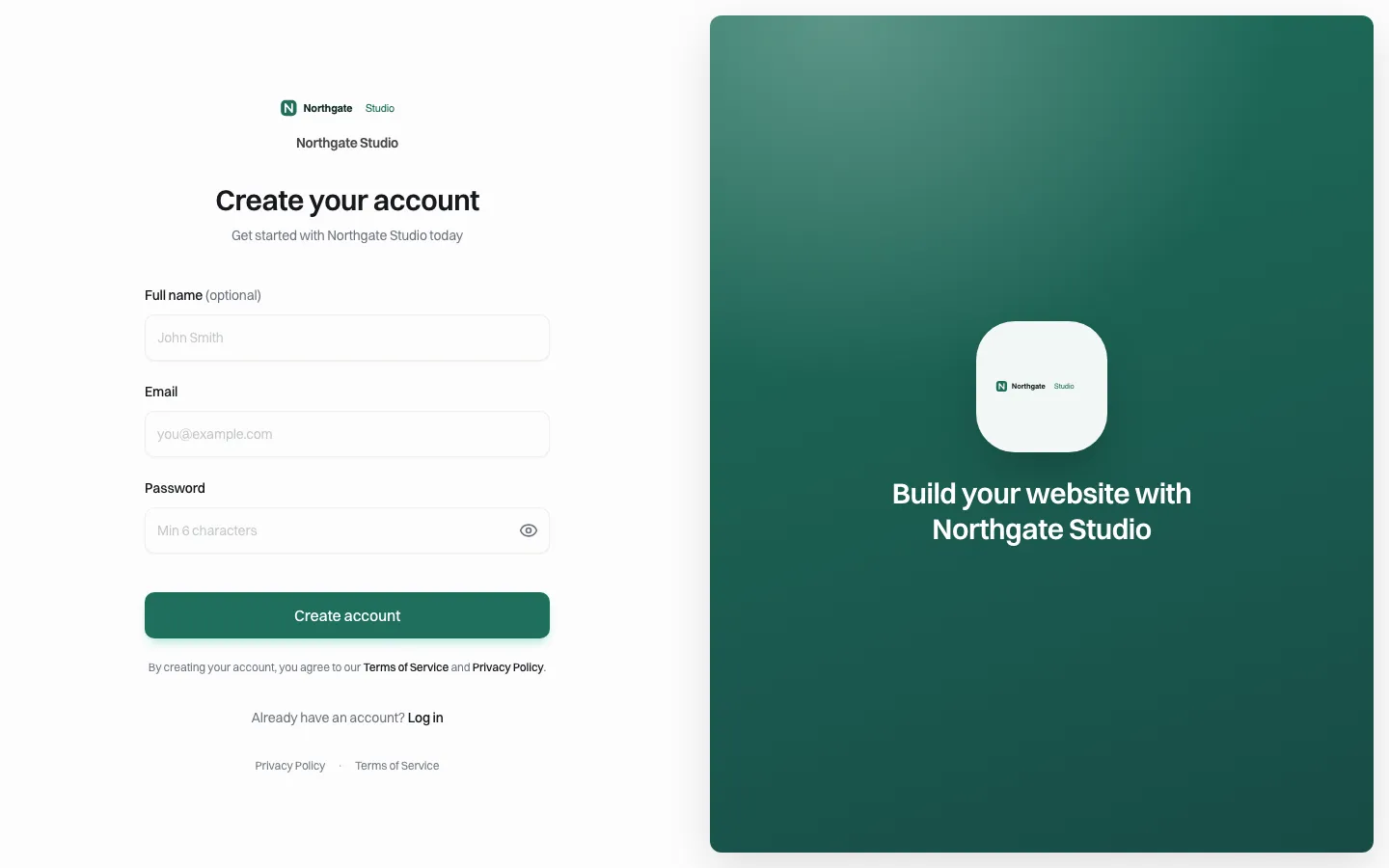
We.Inc is an AI builder for websites and web apps that agencies can run under their own brand. Clients sign up and log in on your brand.
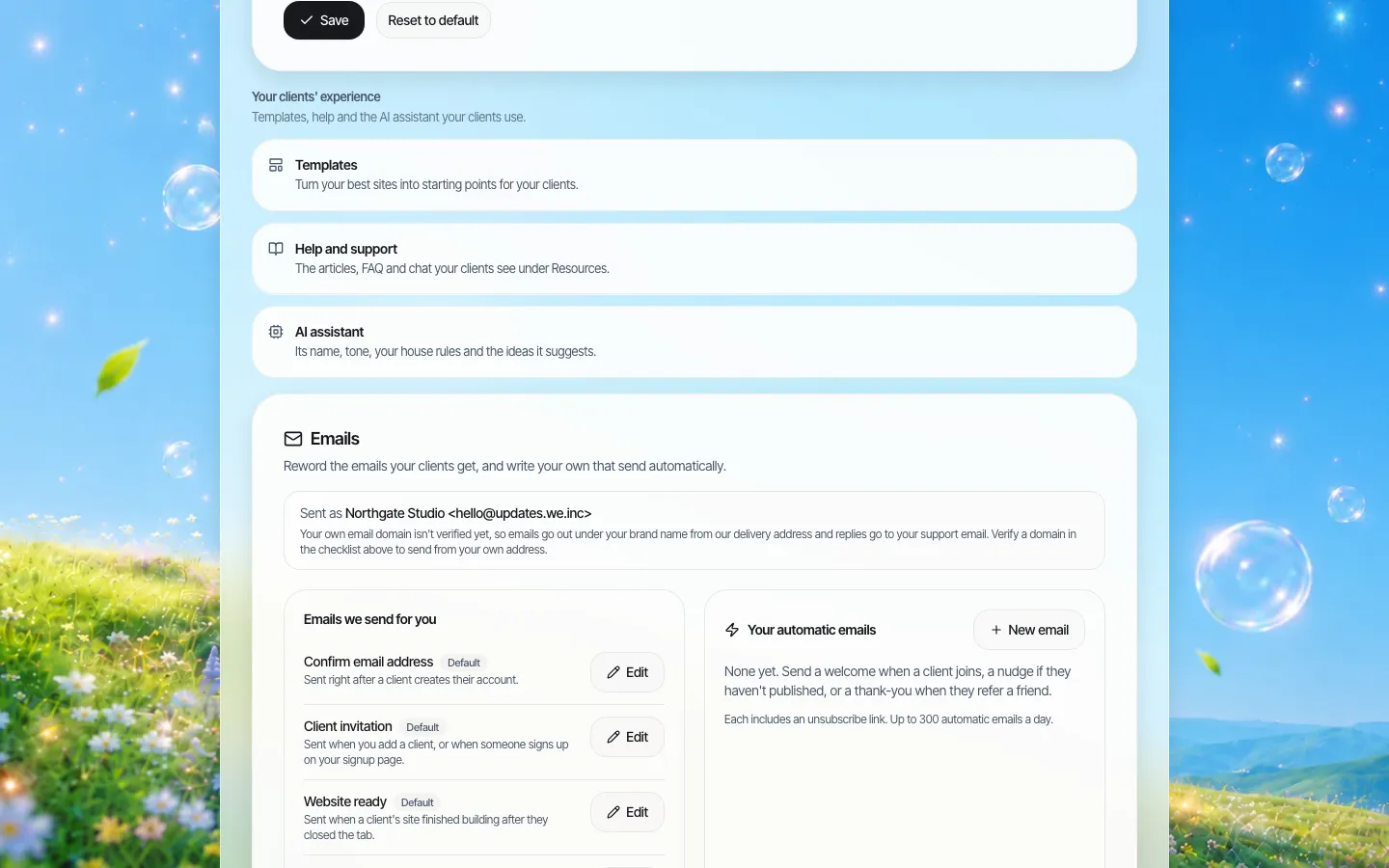
You decide what AI help clients get and what they can reach, from one settings page.
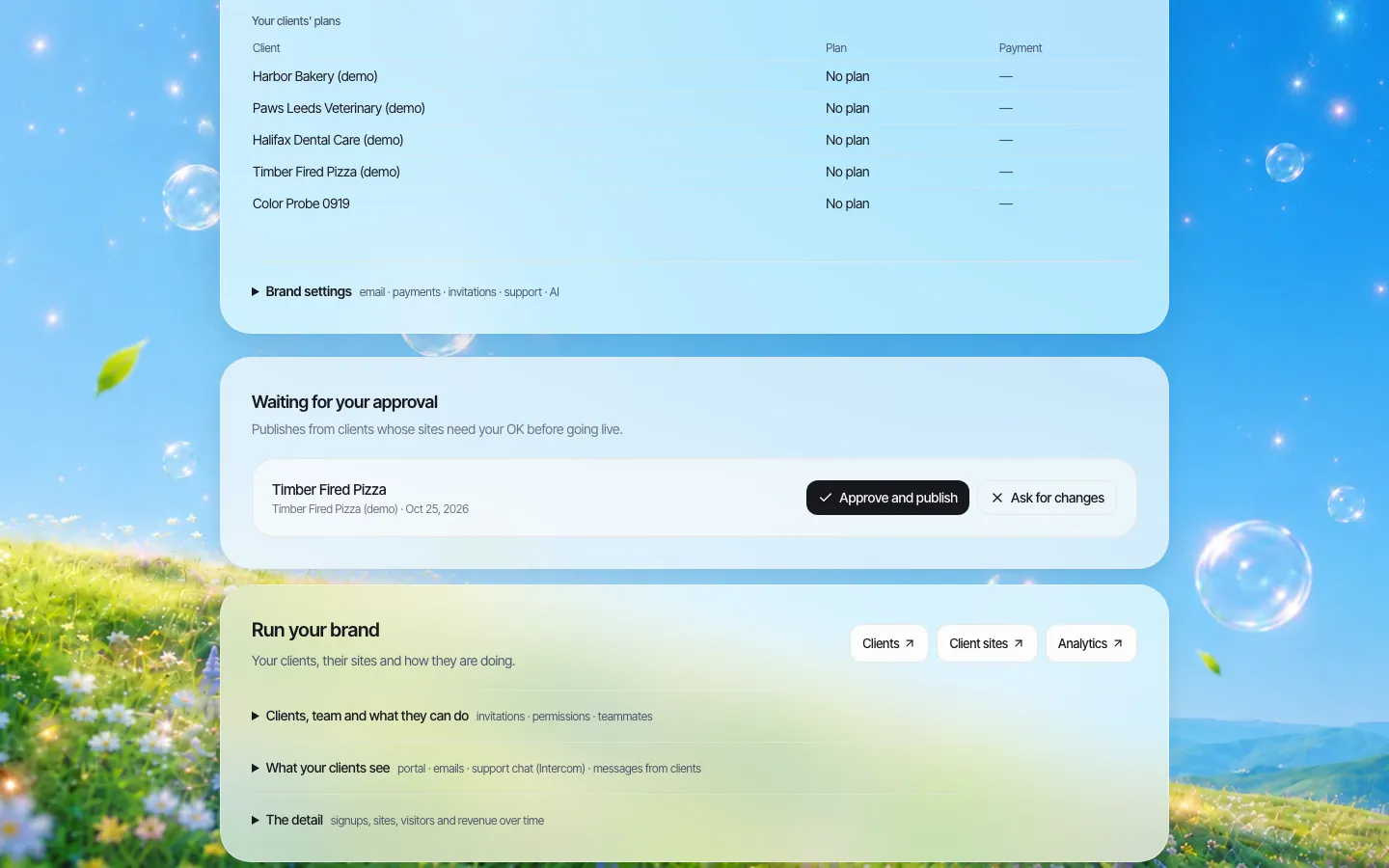
Per client, you can turn publishing, code viewing and other features on or off, and require your single-step approval before a client's site goes live.
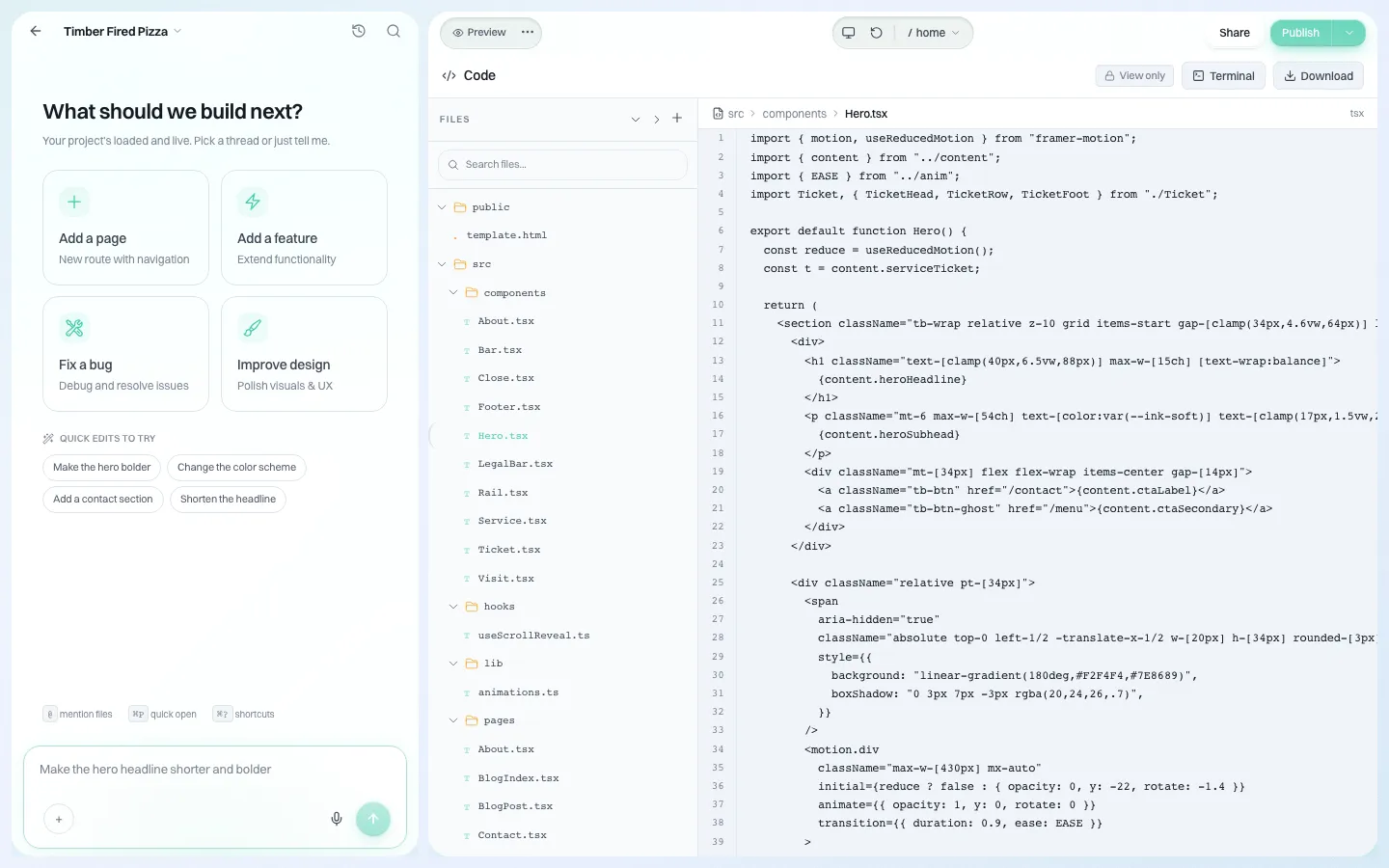
Every project is real code you can open, download or push to GitHub, which covers the export check above.
To see whether your client projects fit, book a demo and bring one real brief.
Frequently asked questions
Can an agency resell apps built with an AI app builder?
Yes, if the vendor's terms allow building for and charging third parties, and ideally if you can export the code. Check who owns the generated code and what happens to running apps if your account ends.
How should agencies price AI usage for clients?
Either do the prompting yourself within a fixed price, include a set number of changes per month, or pass usage through to clients who edit heavily. Track real usage per client for a few months first.
What projects are a poor fit for AI-built apps?
Apps holding regulated data without proven controls, high-traffic consumer apps where performance is the job, native mobile apps the builder cannot produce, and projects dominated by integration with old internal systems.
Can clients edit their AI-built app themselves under my brand?
On a white-label platform that supports it, yes. Set per-client limits, decide who pays for their AI usage, and consider approval before their changes go live.
More in Guides
- White-Label Website Builder vs Enterprise CMS: An Honest Fit Guide | How-to Guide
- White-Label Website Builder Pricing: 5 Models, 50 Sites Cost
- Who Owns a Client Website on a White-Label Platform?
- Why Does My Website Say "Not Secure"?
- Why Is My Website Not Showing on Google? A Step-by-Step Diagnosis | How-to Guide
- WooCommerce vs Shopify: What You Actually Pay and Manage
- The Default WordPress .htaccess File, and Safe Things to Add
- WordPress robots.txt: Default Rules, Editing and Safe Examples
Related guides and tools
Start building
- how to make a website
- AI website builder
- free website builder
- website templates
- website builders by industry
Product
Who It's For
- For Agencies
- For Freelancers
- For Hosting Providers
- For SaaS Platforms
- For Startups
- For Financial Services
- For Healthcare
Features
- Drag & Drop Editor
- Built-in SEO Tools
- Custom Branding
- Client Dashboard
- Reseller Billing (Stripe Connect)
Resources
- Blog
- Help Center
- Free Business Tools
- Free UI Components
- Website Templates
- Template Collections
- Website Examples
- Guides
- Comparisons
- Alternatives
- Best Lists
- Reviews
- Pricing Guides
- Use Cases
- Glossary & Guides
- Integrations
- Developers
- Benchmark
- Windows App