Websites for the projects, partners and small businesses an EDO serves
An economic development organization has three audiences that want different things from the web: site selectors and companies weighing a location, the member communities and partners who fund the organization, and the small businesses its programmes support. One main website cannot serve all three well. This page shows how We.Inc could host the sites around your main site, under your brand.
TL;DR
- Build microsites for business parks, sector campaigns, grant programmes and events under the EDO brand, owned by the staff who run them.
- Give partner communities or small-business programme participants their own site in your branded portal, with your rules and optional approval.
- Every site can be downloaded or synced to GitHub, which matters when funding cycles end.
- We are not a property database or a data-visualisation platform. Book a demo to test the fit.
The sites that sit around an EDO's main website
The main site of a regional partnership or county EDO usually carries the core pitch: why here, workforce, incentives, contact. What it struggles with are the satellite needs:
- Business park and site pages that need a better story than a property listing: the access roads, the utilities, the neighbours, who to call.
- Sector campaigns. A push for food processing, advanced manufacturing or logistics, with its own audience and its own visual angle.
- Partner communities. In regional partnerships, small towns often have no economic development page at all, and prospects judge the region by them.
- Small-business and entrepreneur programmes. Main street grants, storefront programmes, incubators, pitch competitions, each with an application window.
- Grant-funded initiatives with reporting pages that end with the grant.
Each of these is a small site with a clear owner and a limited life. That is the shape a white-label platform handles well.
Structure for a regional partnership
| EDO role | We.Inc role | Notes |
|---|---|---|
| Marketing or communications lead | Brand owner | Sets the brand, defaults and approvals |
| Project managers | Team members or clients, depending on who owns the site | A sector campaign owned by staff can sit under a staff client |
| Partner community (town, county, utility) | Client | Its own site under the partnership brand, edited by its own staff |
| Small-business programme participant | Client (optional) | Their own business site, if you offer websites as a programme benefit |
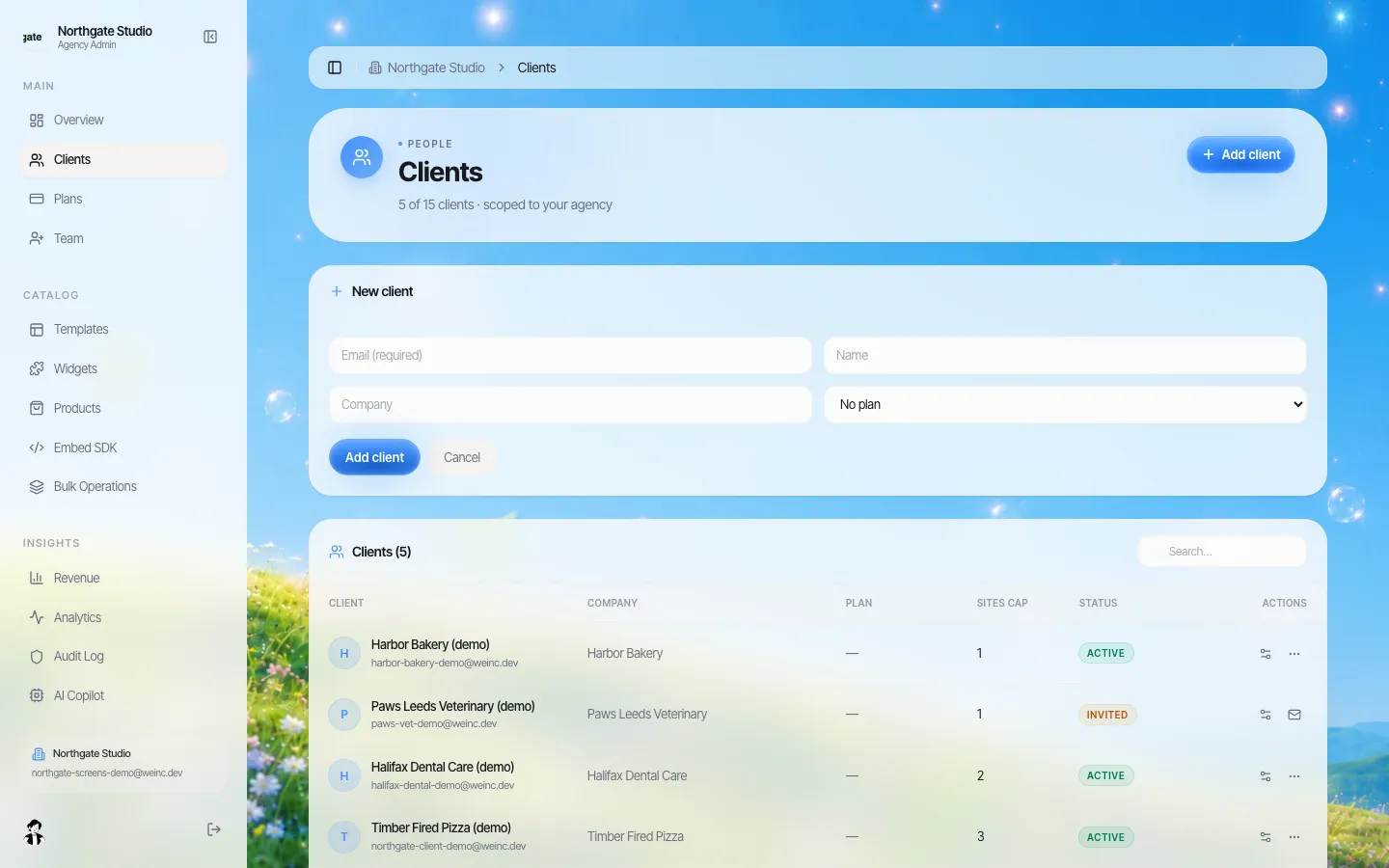
*Adding a client. For a partnership, a client might be a member town, a business park owner or a programme participant.*
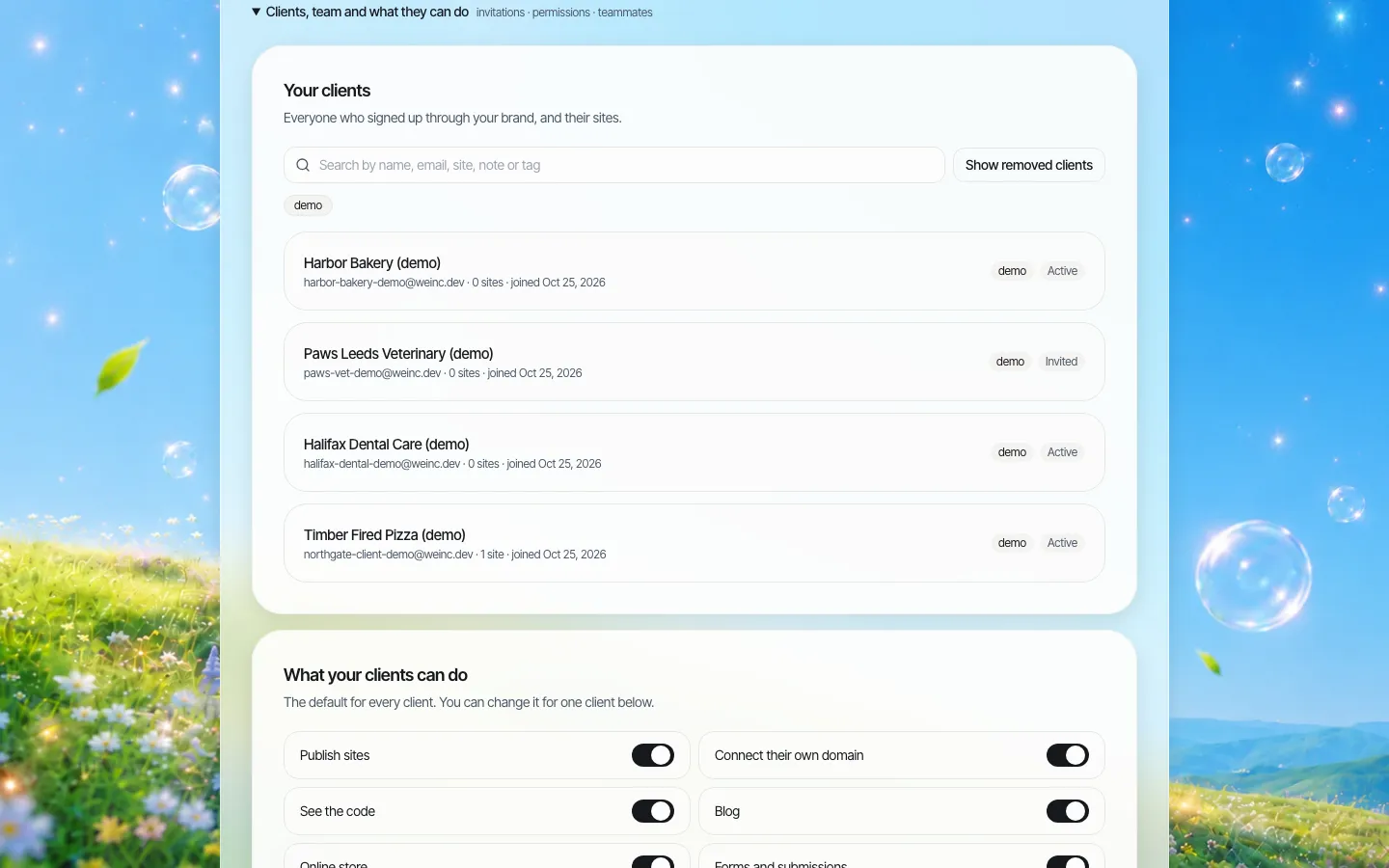
*The register of everyone with sites under your brand. Tag by county, programme or funding source.*
Partner community pages without a design fight
The regional brand is the asset; member communities want their own identity. A reasonable compromise is a shared brand look on the portal and in the defaults, with each community writing its own content: its people, its sites, its employers, its quality-of-life story. That is also what stops the pages reading like copies of one another.
Approval helps here. Switch it on for every community's first launch so the partnership can check facts (no out-of-date incentive amounts, no claims about utilities that the utility has not confirmed), then let trained editors publish directly.
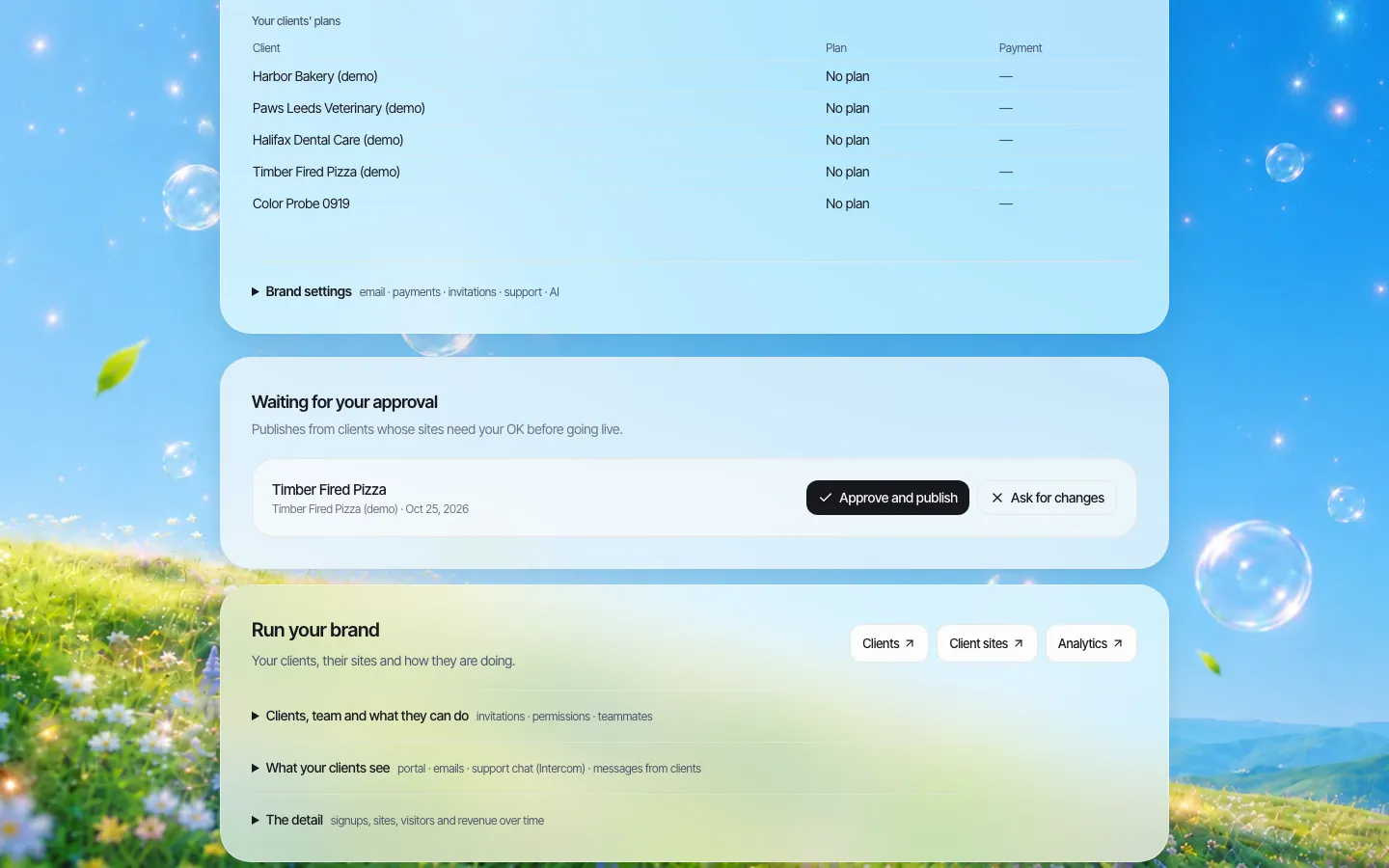
*Approval is a single step by the brand owner. (The request in this screenshot was staged for the picture.)*
Facts that age badly
Economic development sites are full of numbers that go out of date: incentive amounts, labour-force figures, tax rates, available acreage. Site selectors notice. Some house rules that work whatever platform you use:
| Content | Rule |
|---|---|
| Incentive amounts and terms | Link to the programme's official page instead of copying figures; if you must state a figure, date it |
| Labour and wage data | Name the source and the year next to every number |
| Available sites and buildings | Show "last confirmed" dates; remove sold or leased properties promptly |
| Testimonials from employers | Only with written permission, and only real ones |
| Rankings and awards | Name the publisher and year, link to it, and remove when stale |
Put a review date in each client's notes and check the register monthly.
A website as a small-business programme benefit
Many EDOs and small business programmes help owners get online. Usually that means a workshop and a list of builders. With a white-label platform you can give participants a real site under a programme brand, in your portal, with your support email on the help page.
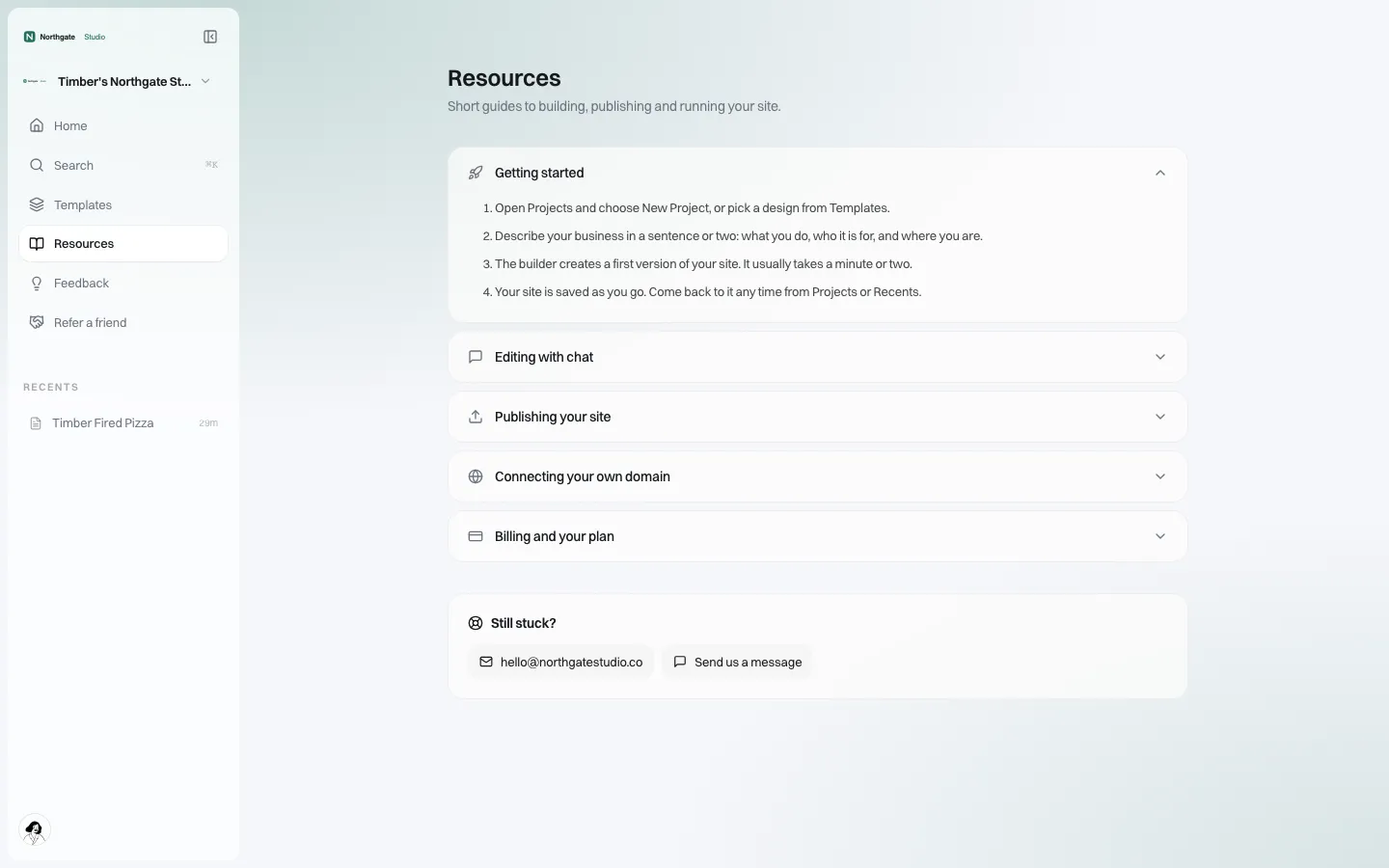
*The help page your participants see carries your support contact, not ours.*
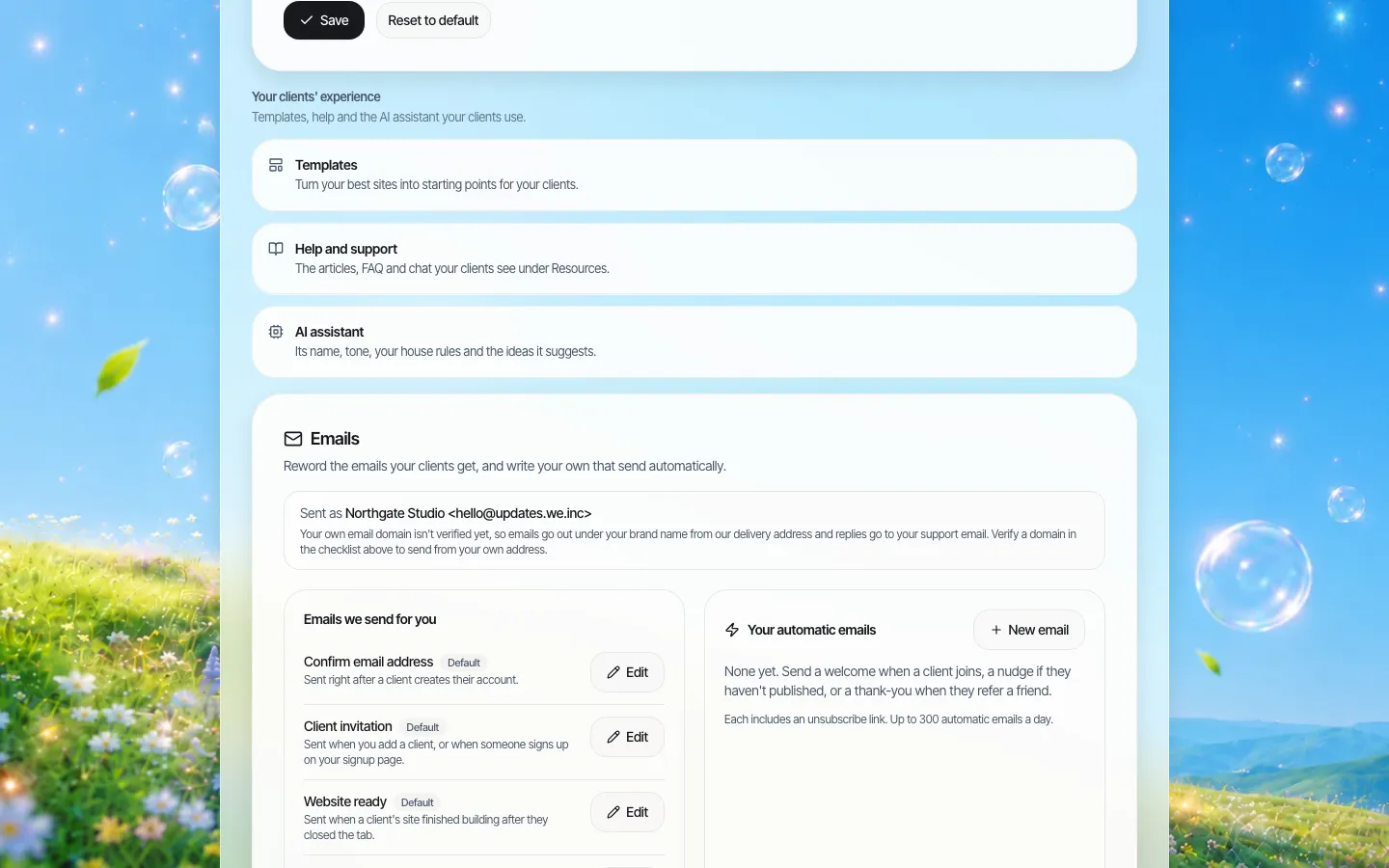
*You choose which templates, help links and AI assistance your participants get.*
Settle these before launch:
- Ownership and exit. The business owns its site. Let it connect its own domain and take its code when it leaves the programme.
- Funding rules. If the programme is grant-funded, check whether you may provide a hosted service, for how long, and what happens when funding ends.
- Support load. Decide what your staff will help with, and put that in writing on the help page.
- Fairness. A site under your portal is not an endorsement of the business; state that in the programme terms.
When a funding cycle ends
EDO initiatives often depend on grants and annual budgets. Before you pause a project's client, download its site or sync it to a GitHub repository you own.
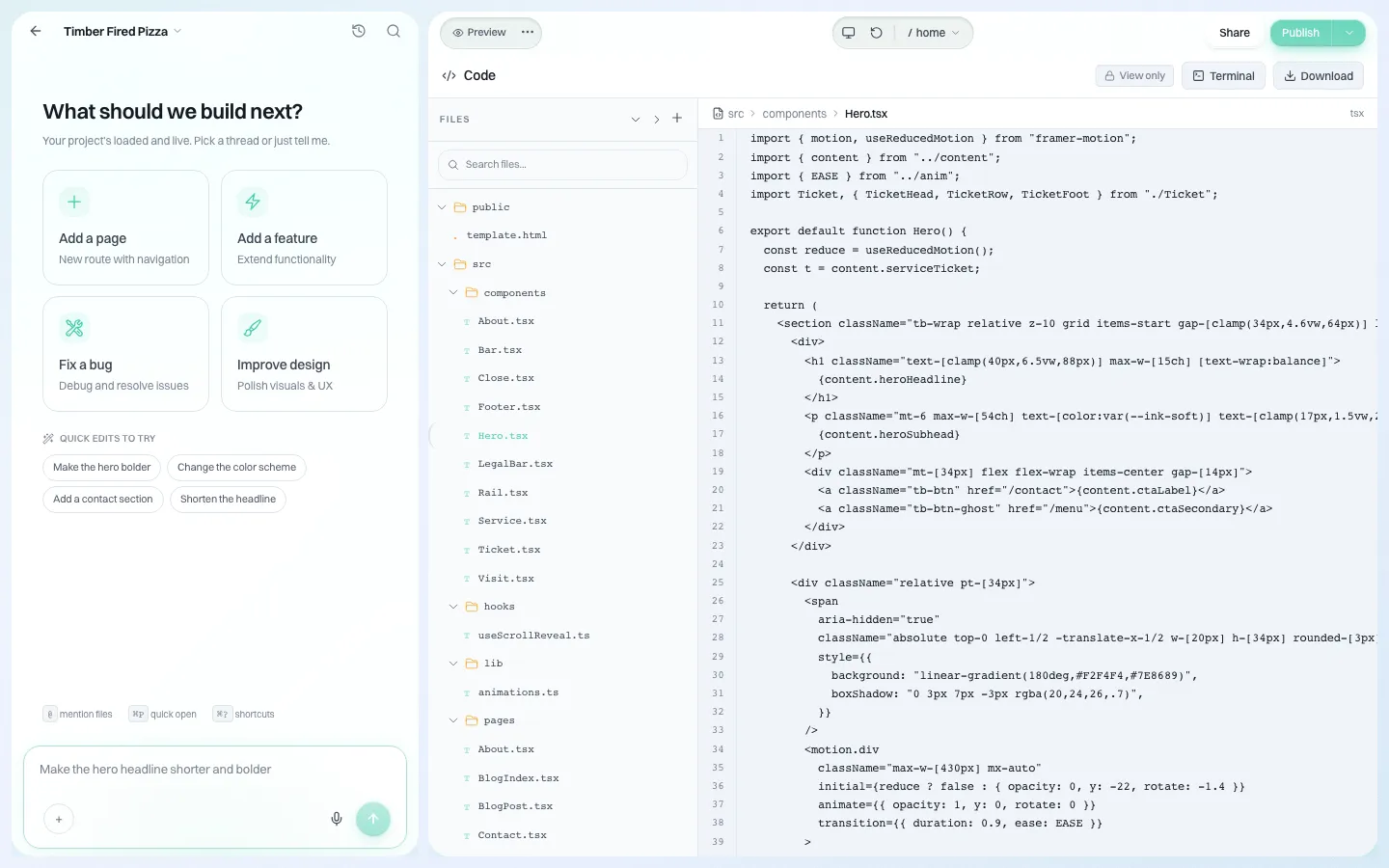
*Every site can be downloaded in full, so a finished initiative leaves a record behind.*
Questions for your board before a pilot
An EDO answers to funders, so settle the governance questions before anyone builds:
- Who owns each partner community's content? The partnership, the town, or both? Put it in the partner agreement.
- Who may speak for the region? Decide which staff can publish statements about incentives, projects or prospects, and keep approval on for everyone else.
- What is confidential? Prospect projects are often under non-disclosure. No project codename, company hint or site shortlist belongs on any public page, including drafts that someone might share.
- How long does a campaign live? Give every microsite an end date and an owner in the client notes.
- What do we measure? Enquiries from site selectors, programme applications, partner page visits. Pick two before launch.
A pilot of five sites (one business park, two partner towns, one sector campaign, one small-business programme) over two months will tell you more than any feature list.
Where We.Inc does not fit
- Property databases and GIS. We do not provide a searchable inventory of sites and buildings or mapping tools. Keep your property database or a specialist provider and link to it.
- Data dashboards. Regional data portals are a different product.
- Certifications and uptime. We do not state certifications, hosting regions or an uptime figure.
- Complex workflow. Approval is one step; roles are owner, admin and member, plus fixed team presets.
If you are a public body, the ADA Title II web rule applies to your web content; see our Title II guide. Sites are AI-built and your team must test them for accessibility. For chambers that work alongside you, see websites for chambers of commerce.
Book a demo with one business park, one partner community and one small-business programme in mind.
Sources
Last checked 2026-10-25.
- Federal Register, Extension of Compliance Dates for Nondiscrimination on the Basis of Disability; Accessibility of Web Information and Services of State and Local Government Entities, April 20, 2026: April 26, 2027 and April 26, 2028.
- ADA.gov, Fact sheet: new rule on the accessibility of web content and mobile apps: WCAG 2.1 Level AA, how to find your population, and the five exceptions.
Book a demo. Pricing is tailored to your volume and setup, and you get your exact price on the call. 0% transaction fee.
Frequently asked questions
Can member towns in a regional partnership have their own sites under our brand?
Yes. Each town can be a client of your brand with its own site and editors, under default rules you set, with approval before publishing if you switch it on.
Does We.Inc include a property or available-sites database?
No. We.Inc builds and hosts websites. Keep your property database or listing provider and link to it from your sites.
Can we offer websites to small businesses in our programme?
Yes. Participants can be clients in your branded portal and build their own sites. Check your funding rules and decide ownership and exit terms first.
What happens to a project site when its funding ends?
You can download the site's full code or sync it to a GitHub repository you own before pausing or removing the client.
Keep reading
- White label website builder: the We.Inc platform
- Manage many websites from one account
- Client permissions: what each site owner can do
- Brand governance across many websites
- Website vendor exit plan
- Website platform procurement checklist
More in White Label
- Every event needs a website for about nine months
- A Finalsite alternative for districts that mainly need websites
- White Label for Freelancers
- White Label for Hosting Providers
- White-Label Website Builder for MSPs & Agencies
- White Label for SaaS Platforms
- Location websites that franchisees can update and corporate can trust
- Your donation page converts. The charity's website is where supporters give up.
We.Inc is an AI-powered website builder you can resell under your own brand. Launch a branded client dashboard, bill on Stripe Connect, and deliver AI-generated websites in minutes. White-label pricing is tailored to your volume and setup: book a 30-minute demo for a quote.
Product
- AI Website Builder: Describe a site in plain English; it's live in minutes
- White Label Platform: Your brand, your domain, your margin
- Enterprise: SSO, custom SLAs, and dedicated support
- Developer API: Embed site generation into your SaaS
Who It's For
- For Agencies: Resell under your brand
- For Freelancers: Your own branded builder
- For Hosting Providers: Add a builder to your stack
- For SaaS Platforms: Embed site creation via API
- For Startups
- For Financial Services
- For Healthcare
Features
- Drag & Drop Editor
- Built-in SEO Tools
- Custom Branding
- Client Dashboard
- Reseller Billing (Stripe Connect)
Resources
- Blog
- Help Center
- Free Business Tools
- Free UI Components
- Website Templates
- Template Collections
- Website Examples
- Guides
- Comparisons
- Alternatives
- Best Lists
- Reviews
- Pricing Guides
- Use Cases
- Glossary & Guides
- Integrations
- Developers
- Benchmark
- Windows App