Your content earns the click. Make sure it lands somewhere good.
Social media agencies are judged on results their content does not fully control. A reel performs, the link gets tapped, and the client's website is slow, out of date, or a link-in-bio page with six buttons. The campaign looks weaker than it was. This page is about agencies that make content and run social ads, and want to own the landing side too, under their own brand, without becoming a web development shop.
TL;DR
- For social clients, the website is the end of the funnel. If you do not control it, you are reporting on results someone else breaks.
- In We.Inc your agency brand sits on the builder; each client is an account with a site, campaign pages and their own domain.
- Start with campaign pages and a proper link-in-bio site, then grow into full sites as a monthly line on your retainer.
- Disclosure rules for influencer and endorsement content still apply on the site. Book a demo to plan the add-on.
What changes when a social agency owns the landing page
Most social agencies already make the assets a website needs: photography, short video, brand voice, offers, a content calendar. What they do not usually own is the place the traffic lands. Taking that on does three things:
- Results you can stand behind. You control the page the ad sends people to, so a poor conversion rate is something you can fix, not explain away.
- A reason for the retainer between campaigns. Content is bought month by month; a site is a standing line on the invoice.
- Fewer awkward handoffs. No more emailing a client's web developer to ask for a promo banner by Friday.
This page is narrower than our general white-label builder for agencies page: it is about the social agency's specific problem, which is landing pages for traffic you create.
Three products a social agency can add
| Product | What it is | Why social clients want it |
|---|---|---|
| Link-in-bio site | A small, fast site on the client's own domain that replaces the list-of-links page | The profile link points to something that looks like the brand and ranks in search |
| Campaign pages | One page per launch, promo or event, matched to the creative | The ad and the page tell the same story |
| Full small-business site | Home, services, about, contact, blog | Content you already make (posts, reels) has a home that search engines can index |
You set what each plan contains and what clients pay, and bill it on your own Stripe account.
Building pages that match the creative
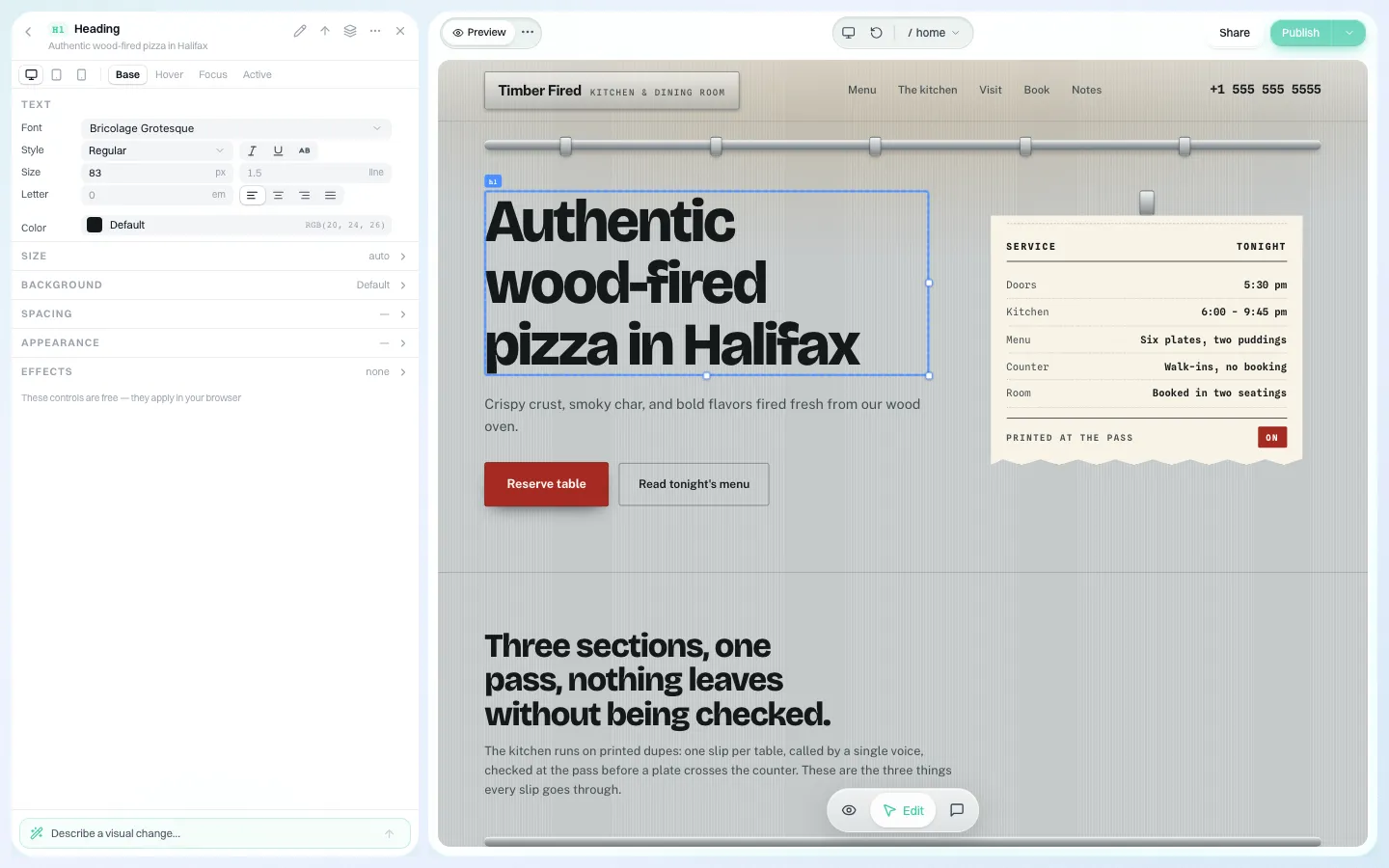
*The visual editor. Your designers set type and colour to match the campaign creative.*
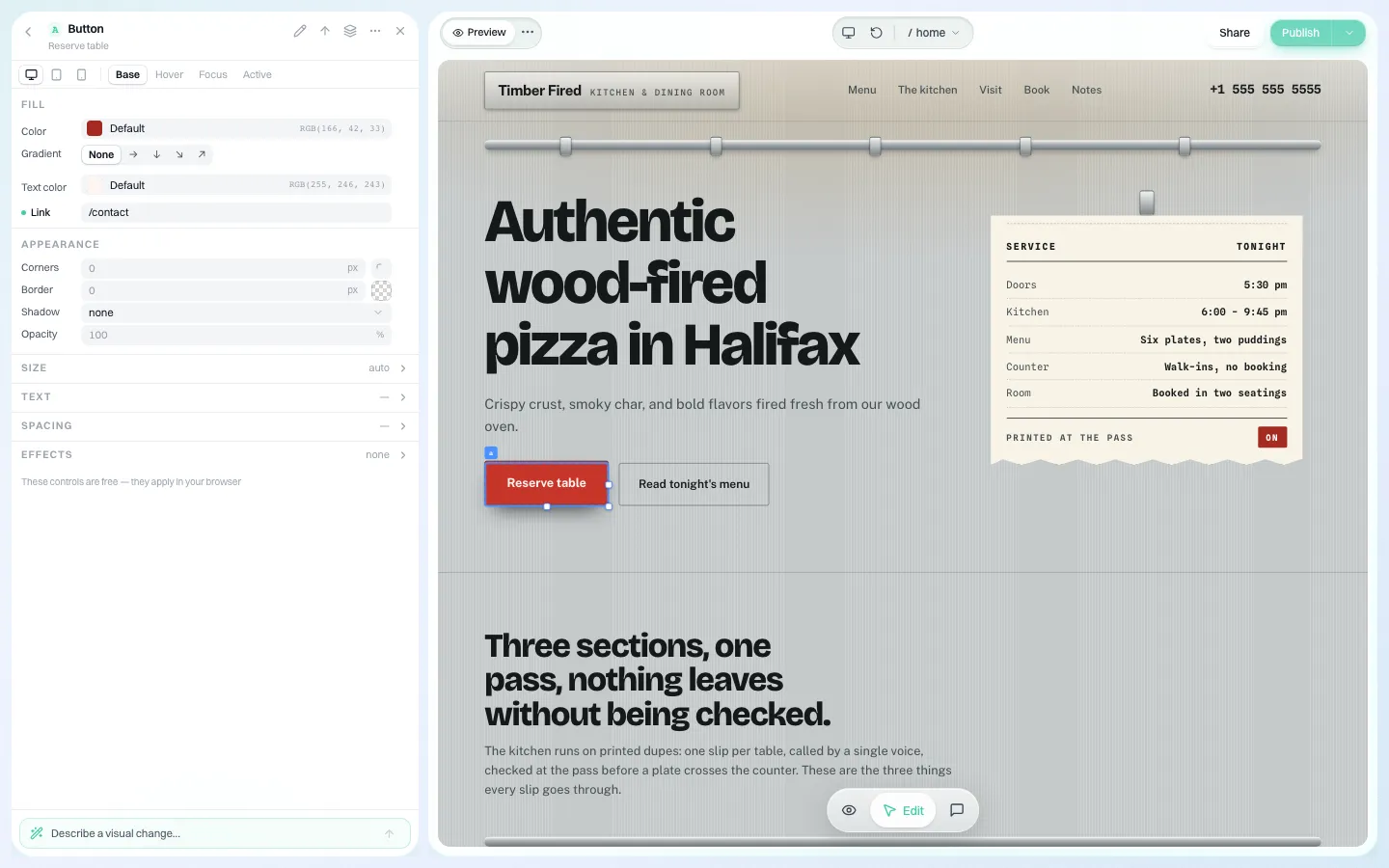
*Buttons, states and breakpoints. Most social traffic is on phones, so check the mobile breakpoint first.*
Social traffic is mobile traffic. When you build a campaign page, design it on the phone width first and treat desktop as the second view. Keep the first screen to the offer, one line of proof, and one button.
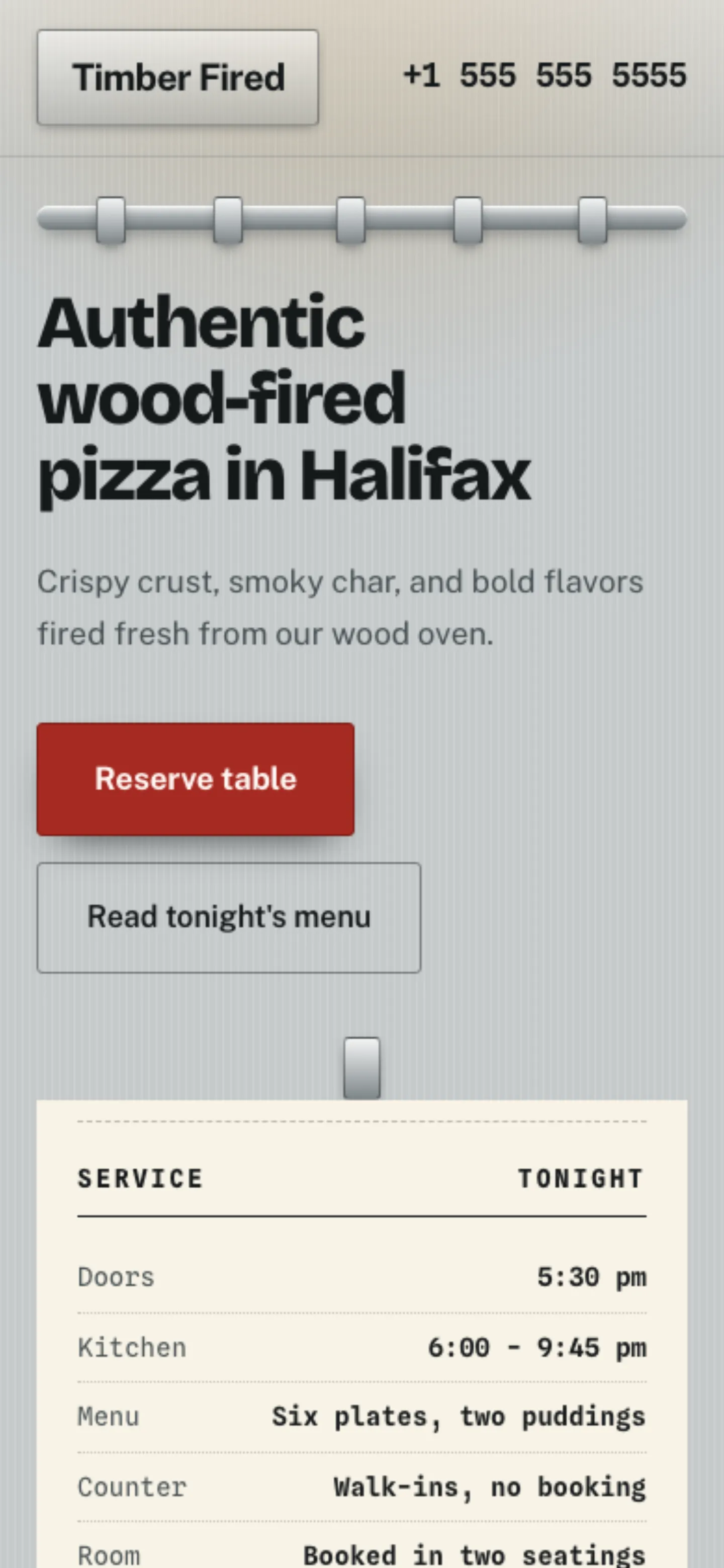
*A client site at 390 pixels wide, the size most social clicks arrive at.*
Who does what in the agency
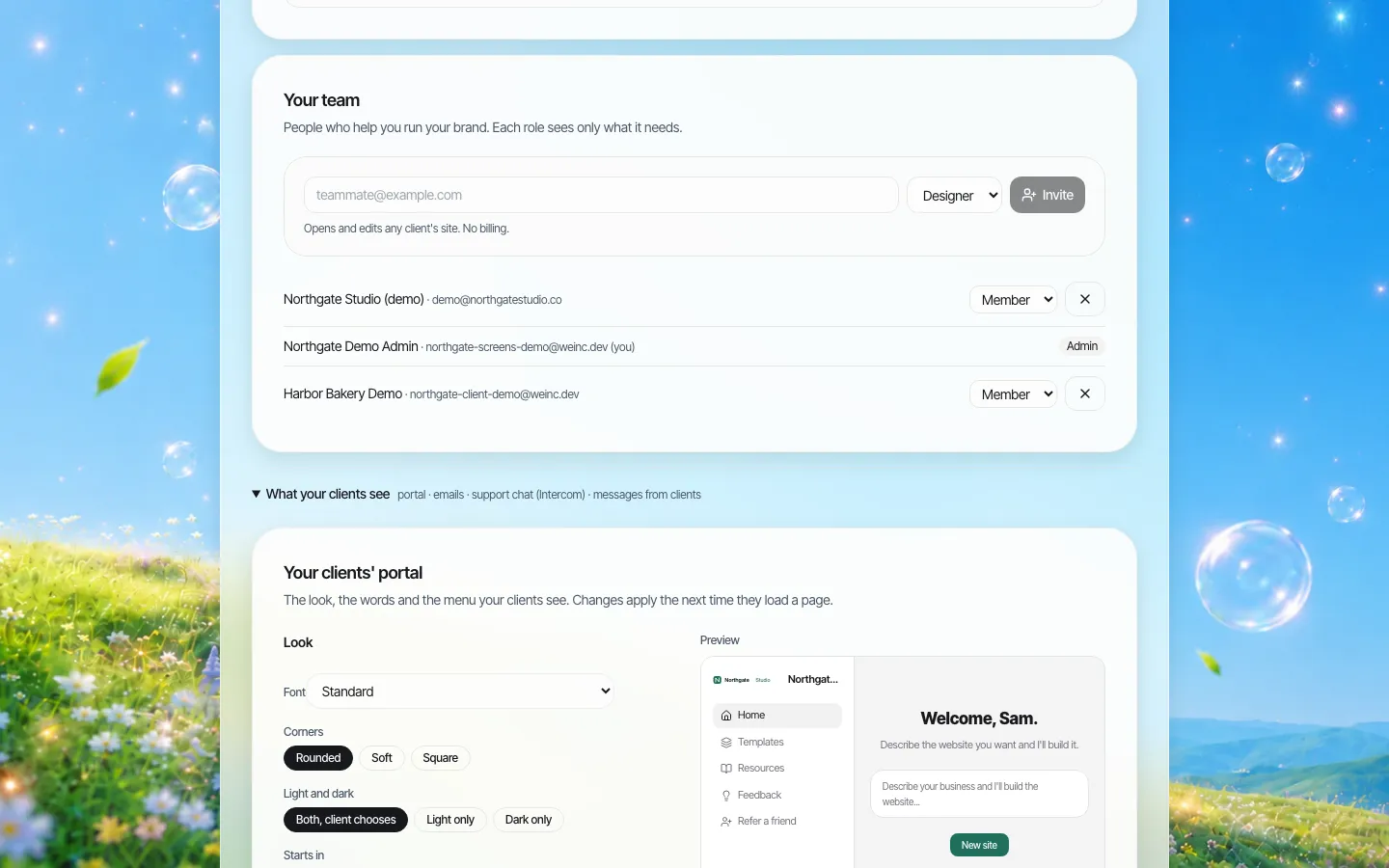
*Agency staff roles. A designer edits any client's site without seeing billing; support sees clients and writes notes but does not edit.*
A common split: content creators hand over assets; one or two designers build and update pages in any client's account; account managers use the support role to see sites and leave notes without editing; finance uses the billing role. Clients get their own logins if you want them to change opening hours or prices themselves, and you decide per client whether they can publish directly or need your approval first.
Disclosure on the landing page, not only in the post
If a campaign uses influencers, affiliates or paid endorsements, the disclosure obligations do not stop at the post. Under the FTC's rule on consumer reviews and testimonials (16 CFR part 465, effective October 21, 2024), fake or AI-generated reviews and testimonials, bought reviews and undisclosed insider reviews are prohibited. A landing page that pastes in influencer quotes as "customer reviews", or invents a few to fill a testimonial strip, is a problem.
Simple rules for your designers:
- Quotes on a page are real, attributed, and used with permission.
- Paid endorsements are labelled as such on the page as well as in the post.
- No star ratings unless they come from real reviews you can show.
- AI can help draft headlines; it never writes customer quotes.
This is general information, not legal advice.
Measuring the full path
Social reporting usually stops at the click. With the landing page in your hands you can report the next step: visits and enquiries on the site. The platform's insights show sites and visits, and a monthly branded report email to each client can be switched on. Pair that with your platform analytics for a report that covers creative, click and result.
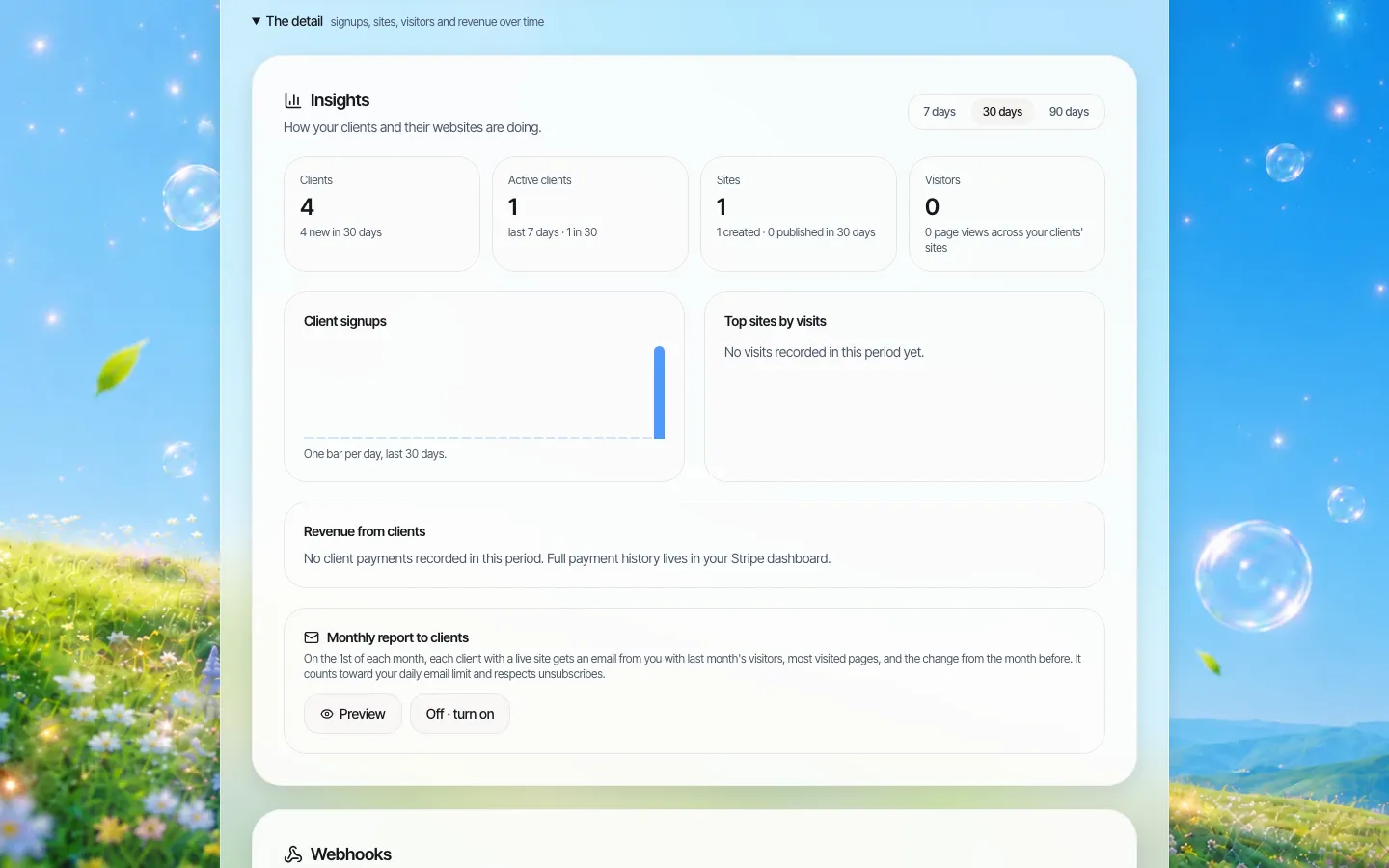
*Insights across your clients, and the monthly report email setting.*
Getting started without rebuilding every client
You do not need to move every client at once. A path that works:
- Pick three clients whose current link-in-bio or landing page is weakest.
- Build a small site for each on their own domain, using content you already produced.
- Run the next campaign to it and compare against the last one.
- Turn the result into the pitch for the rest of the roster.
A campaign-page brief your team can reuse
Hand this to whoever builds the page, filled in, before anyone opens the editor:
| Field | Example answer |
|---|---|
| Campaign and flight dates | Spring menu launch, 1 to 30 April |
| The one action we want | Book a table |
| Where the button goes | The client's existing booking system |
| Headline from the creative | Match the strongest-performing hook word for word |
| Proof | Two real reviews (with permission) and one photo of the dish |
| What happens after the campaign | Page stays as the "menu" page, offer line removed |
| Who approves | Account manager, then the client if their account needs approval |
Writing the last two rows down first stops campaign pages from piling up after their flights end with offers that no longer exist.
Where We.Inc fits, and where it does not
Good fit: social and content agencies with a roster of small and mid-sized clients who want landing pages and small sites as part of the retainer, under the agency's brand.
Better elsewhere: if a client needs a large ecommerce catalogue, deep integrations or a custom web app, a specialist developer or platform may serve them better; We.Inc is aimed at small-business sites, campaign pages and simple stores. If you only need one-off landing pages for ad tests and have no interest in reselling, a standalone landing-page tool may be simpler.
We do not publish security certifications or uptime figures. Each site's code can be downloaded or synced to GitHub if a client leaves. Book a demo and we will build one of your clients' campaign pages live.
Sources
Last checked 2026-10-25. Not legal advice.
- Federal Trade Commission, Trade Regulation Rule on the Use of Consumer Reviews and Testimonials, final rule (Federal Register text), 16 CFR part 465, effective October 21, 2024.
Book a demo. Pricing is tailored to your volume and setup, and you get your exact price on the call. 0% transaction fee.
Frequently asked questions
Do we need developers to offer websites?
No. Designers build and edit pages in a visual editor, starting from templates. Code is available if you want it, and you can hide it from clients.
Can clients edit their own site?
If you allow it. You decide per client whether they can publish directly, need your approval first, or have no access at all.
Can a campaign page sit on the client's own domain?
Yes. Connect the client's domain to their site; you decide per client whether they can connect domains themselves.
Will clients see the We.Inc name?
The sign-in page, dashboard, help pages and system emails carry your agency's brand and support contact.
Keep reading
- White label website builder: the We.Inc platform
- White-label website builder for agencies
- Resell websites under your brand
- Client permissions: what each site owner can do
- White-label reseller billing
More in White Label
- One league, forty clubs, a new volunteer every season
- Branch sites, specialty divisions and hiring campaigns, under one brand
- Twenty startups, twenty weeks, and half of them still have a placeholder homepage
- The long tail of state websites: boards, commissions and programs
- Give every person on your team the access their job needs, and no more
- A website for every business line you install
- One destination brand, a season's worth of microsites
- A website for every advisor, without losing the network's name
We.Inc is an AI-powered website builder you can resell under your own brand. Launch a branded client dashboard, bill on Stripe Connect, and deliver AI-generated websites in minutes. White-label pricing is tailored to your volume and setup: book a 30-minute demo for a quote.
Product
- AI Website Builder: Describe a site in plain English; it's live in minutes
- White Label Platform: Your brand, your domain, your margin
- Enterprise: SSO, custom SLAs, and dedicated support
- Developer API: Embed site generation into your SaaS
Who It's For
- For Agencies: Resell under your brand
- For Freelancers: Your own branded builder
- For Hosting Providers: Add a builder to your stack
- For SaaS Platforms: Embed site creation via API
- For Startups
- For Financial Services
- For Healthcare
Features
- Drag & Drop Editor
- Built-in SEO Tools
- Custom Branding
- Client Dashboard
- Reseller Billing (Stripe Connect)
Resources
- Blog
- Help Center
- Free Business Tools
- Free UI Components
- Website Templates
- Template Collections
- Website Examples
- Guides
- Comparisons
- Alternatives
- Best Lists
- Reviews
- Pricing Guides
- Use Cases
- Glossary & Guides
- Integrations
- Developers
- Benchmark
- Windows App