One league, forty clubs, a new volunteer every season
A league office needs every club to have a decent website: registration details, a contact, the safeguarding officer, where to park on game day. Clubs, meanwhile, are run by parents and volunteers who change every season and who reasonably care more about practice times than about brand rules. This page is about running club, team and tournament sites under the league’s brand, keeping children’s information off public pages, and keeping access when a volunteer moves on.
TL;DR
- The league should own the platform and the domains; clubs and teams get accounts tied to a role, not to a parent’s personal email.
- Youth sports sites carry children’s names and photos. Decide what is public before the season starts; if you collect information from children under 13 online, COPPA applies.
- In We.Inc each club or tournament is a client account under the league brand, with switches for publishing, domains, forms and more, and approval before a site goes live.
- Registration, scheduling and payments for fees stay in your sports management system; the site links to them. Book a demo to see a club site under your league brand.
What a league actually needs from club websites
Ask a league office what goes wrong with club websites and the list is short and familiar:
- The site is out of date. Last season's coaches, last year's fees, a registration link that closed in March.
- Nobody can log in. The parent who built it has moved on, and the login went with them.
- It does not look like the league. Eight clubs, eight logos, and no way to tell from the site that they belong to the same organisation.
- It shows too much. Full rosters of children with surnames and photos, sometimes with schools and ages.
Two of those are about people and access, one is about brand, and one is about safeguarding. A website platform helps with all four only if the league sets the rules first.
The league's season checklist
Copy this and run it at the start of each season, ideally in the same meeting where clubs confirm their officers.
- [ ] Each club names two web volunteers for the season (never just one).
- [ ] The league removes last season's volunteers and adds the new ones the same week.
- [ ] Each club confirms the registration link, fees page and contact details are current.
- [ ] The safeguarding or welfare contact is named on every club site.
- [ ] Rosters, if shown at all, use first names or initials only.
- [ ] Photo consent forms for the season are collected before any photos go up.
- [ ] Tournament sites from last season are archived or paused.
- [ ] Domains that renew this season are on the league's account, not a volunteer's card.
Children, photos and personal information
Youth sports sites are full of children. That deserves more care than most organisations give it.
Decide what is public. A reasonable default: club and team names, coach first names, practice locations and times, results. Not public: children's full names, dates of birth, schools, home towns, or anything that helps a stranger find a child. Team photos with no names attached are a common compromise.
Consent before photos. Get photo consent from parents as part of registration, and keep a list of children who must not appear. The person approving publication should check against it.
COPPA if you collect from children. In the US, the Children's Online Privacy Protection Rule covers commercial websites and online services directed to children under 13 that collect, use or disclose personal information from children. The FTC treats photos, videos and audio recordings that contain a child's image or voice as personal information. The rule was amended in 2025; the amendments took effect on 23 June 2025 and operators had until 22 April 2026 to comply. Whether COPPA applies to a particular club site depends on the facts, including who runs it and who it collects from. The safest design is simple: sites speak to parents, and any form collects information from parents, not children.
Other countries have their own rules on children's data; check them if your league plays across borders.
How it maps in We.Inc
| Your league | In We.Inc |
|---|---|
| The league or governing body | The brand account and its team |
| A club, team or tournament | A client account with its own site(s) |
| The league communications officer | A team member who approves publishing |
| A club's web volunteers | People invited on the club's account |
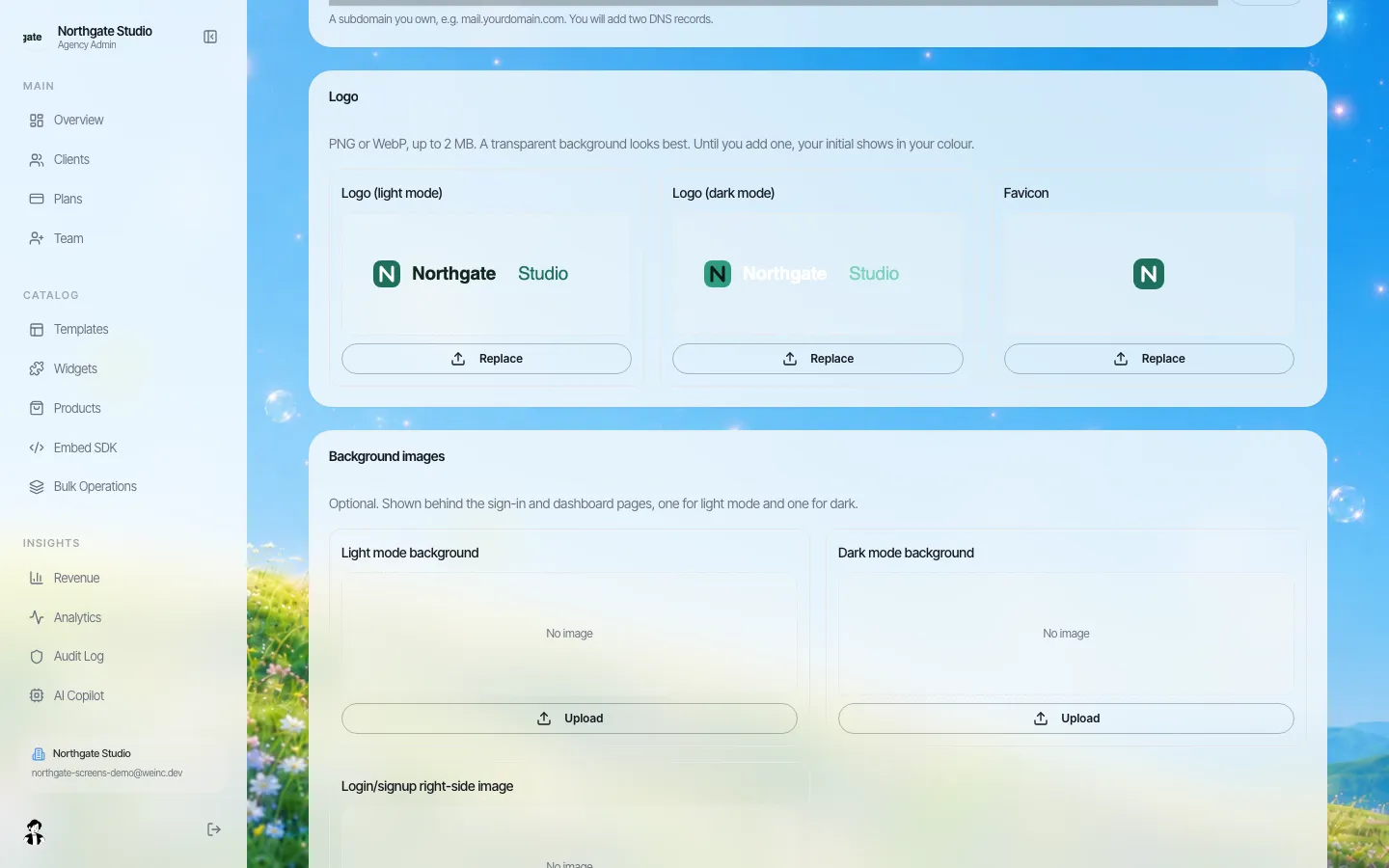
*The league brand: logo, colours and fonts that every club account works under.*
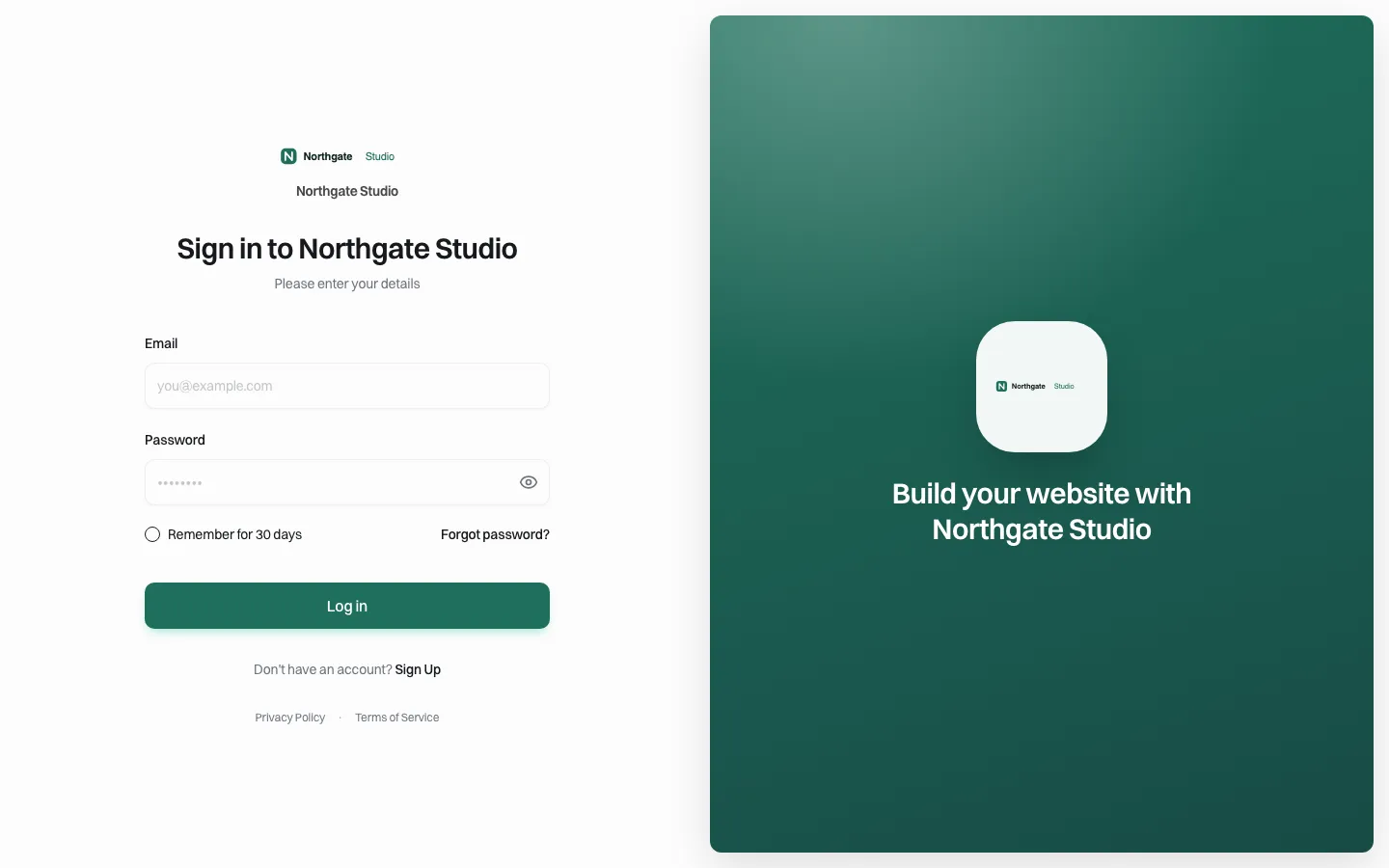
*Club volunteers sign in on a page with the league's name and logo.*
The league decides what each club can do. A sensible starting point for youth leagues:
| Switch | New club | Established club |
|---|---|---|
| Publishing | Through approval | Direct |
| Own domain | Off (league subdomain or league-held domain) | Allowed if the league holds it |
| Forms | On (parent enquiries) | On |
| Blog | Off | On |
| Store | Off unless the league allows club merchandise | Case by case |
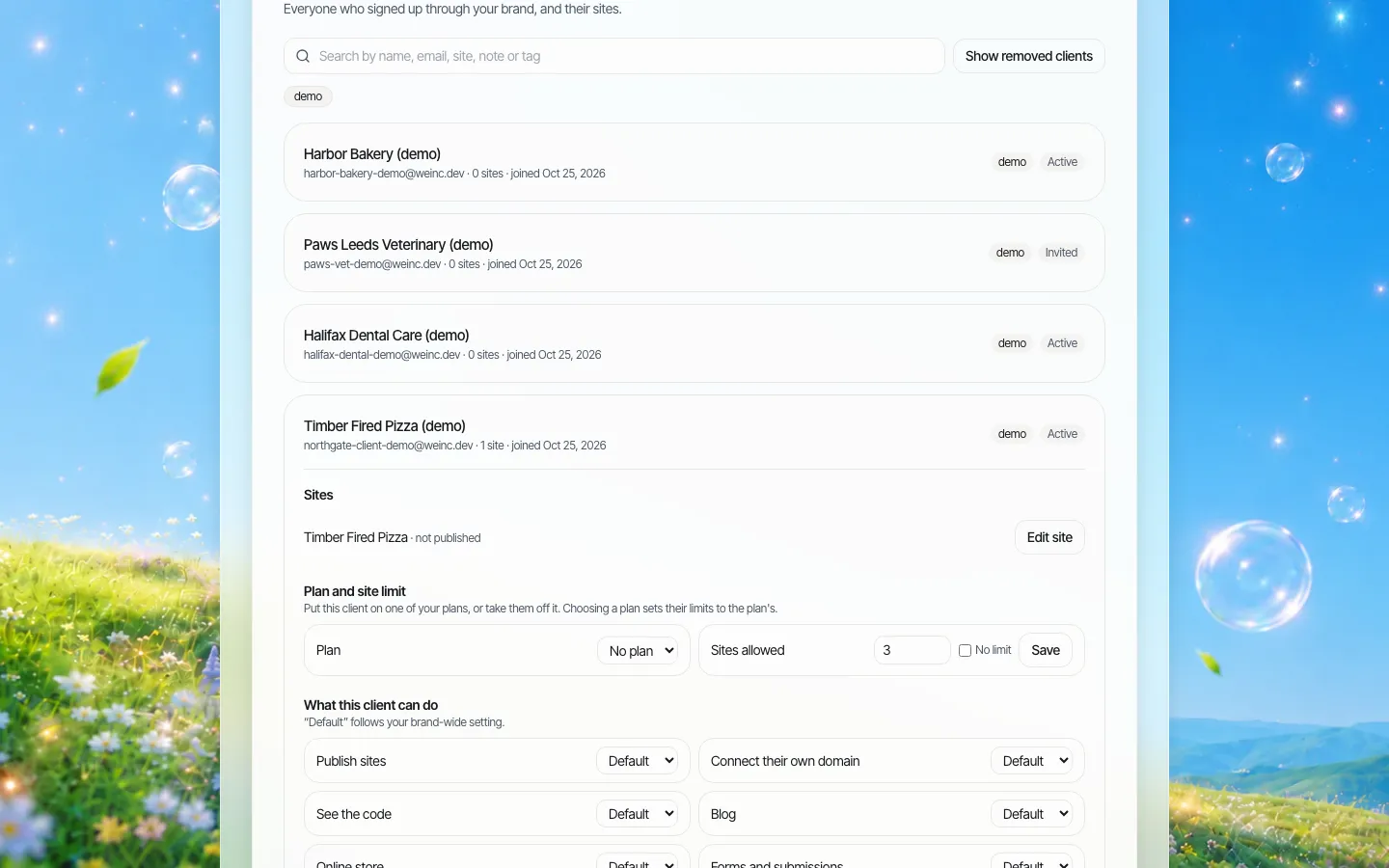
*One club's account. Switches override the league defaults for this club only.*
Approval during the busy weeks
Approval is a single step: a club volunteer presses Publish, and the request waits for the league's reviewer. That is valuable in the first weeks of a season, when new volunteers are learning and when rosters and photos go up. It becomes a bottleneck on game weekends, when a club needs to post a field closure in ten minutes. So:
- Keep approval on for new clubs and new volunteers.
- Switch it off for clubs whose volunteers have shown they follow the photo and roster rules.
- Tell clubs to use your league's urgent channel (text alerts, the scheduling app) for same-day changes, not the website.
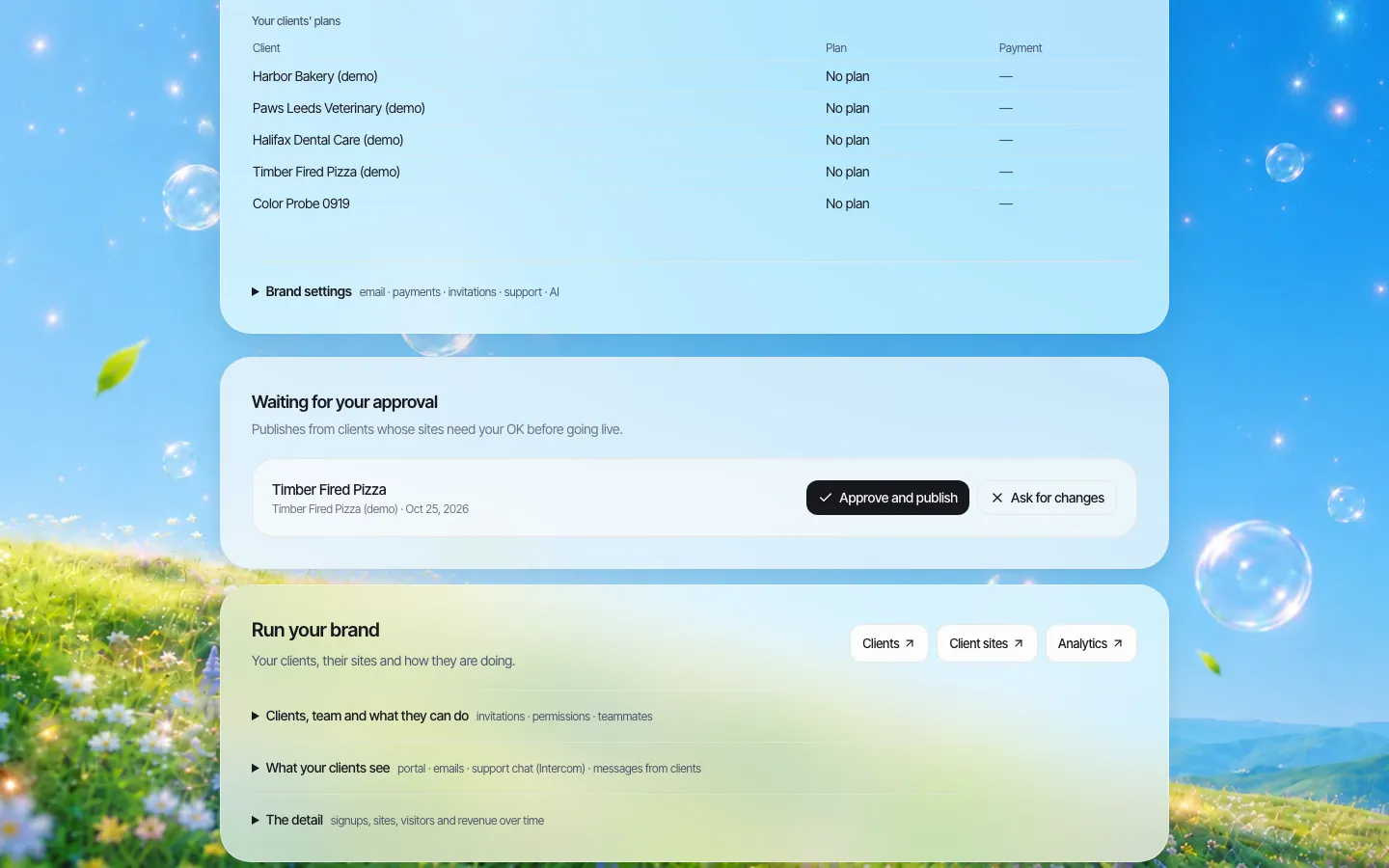
*The league's approval queue. The request shown was staged for this screenshot.*
Tournaments: sites with an end date
Tournaments are the one place a league needs many sites quickly and then not at all. Treat each tournament as its own account with its own site: schedule links, venue maps, rules, hotels, and a contact. After the event, pause the account so the site stops changing, or replace the content with results and a link to next year's event. Leaving a dozen dead tournament sites live, each with last year's dates, is how leagues end up with confused parents booking the wrong weekend.
What stays in your sports management system
We.Inc builds and hosts websites. It does not handle player registration, background checks, scheduling, standings or fee collection for leagues, and it has no integration with sports management platforms. Keep those where they are, and make the club site the friendly front door that links to them: "Register for the spring season", "See the schedule", "Report a concern".
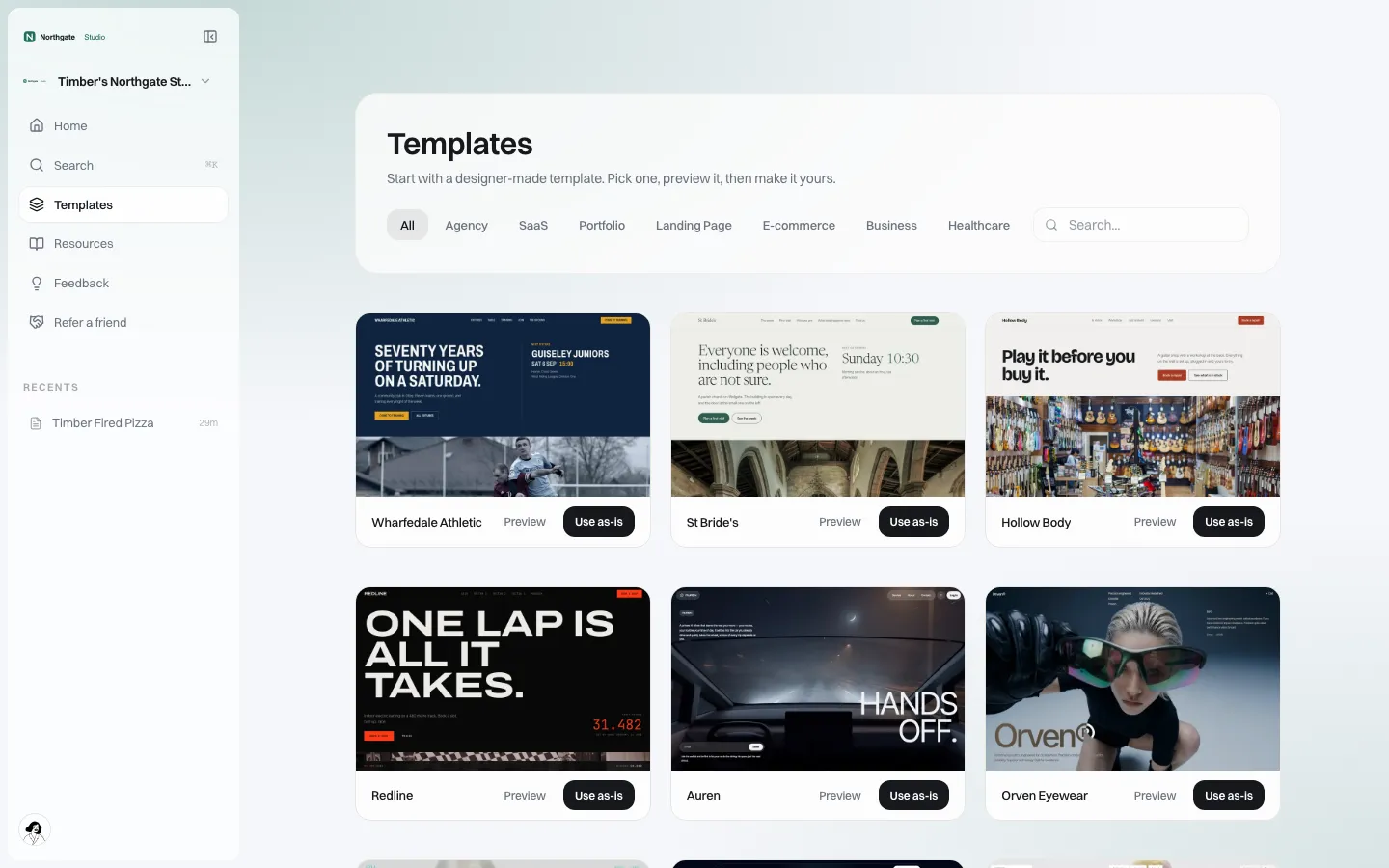
*Clubs start from templates under the league brand rather than a blank page.*
Is We.Inc the right fit?
A good fit for leagues, governing bodies and multi-club organisations that want branded club and tournament sites with central control of access, domains and approval, next to the registration system they already use.
Not the right fit if you want one product that does registration, scheduling, standings and club websites together. All-in-one sports management platforms include simple team pages and may be the better choice for a league that needs those features more than distinct club sites.
Book a demo and we will set up a sample club under your league brand.
Sources
Last checked 2026-10-25. This page is general information, not legal advice.
- Federal Trade Commission, Complying with COPPA: Frequently Asked Questions: scope and photos as personal information.
- Federal Register / FTC, Children's Online Privacy Protection Rule, final rule amendments (published 22 April 2025; effective 23 June 2025; compliance by 22 April 2026).
Book a demo. Pricing is tailored to your volume and setup, and you get your exact price on the call. 0% transaction fee.
Frequently asked questions
Can the league approve club pages before they go live?
Yes. Turn on publishing approval for every club or chosen ones. It is a single-step approval before a club’s site goes live.
Does We.Inc handle player registration or scheduling?
No. Keep registration, scheduling and fees in your sports management system and link to them from each club site.
What happens when a club volunteer steps down?
The site belongs to the club account under the league brand, so the league removes the old volunteer and invites the new one.
Keep reading
- White label website builder: the We.Inc platform
- Chapter websites for associations
- Client permissions: what each site owner can do
- Manage many client websites from one account
- Brand governance across many websites
- Website governance policy template
More in White Label
- Branch sites, specialty divisions and hiring campaigns, under one brand
- Twenty startups, twenty weeks, and half of them still have a placeholder homepage
- The long tail of state websites: boards, commissions and programs
- Give every person on your team the access their job needs, and no more
- A website for every business line you install
- One destination brand, a season's worth of microsites
- A website for every advisor, without losing the network's name
- Websites for every local, and for every member who runs a practice
We.Inc is an AI-powered website builder you can resell under your own brand. Launch a branded client dashboard, bill on Stripe Connect, and deliver AI-generated websites in minutes. White-label pricing is tailored to your volume and setup: book a 30-minute demo for a quote.
Product
- AI Website Builder: Describe a site in plain English; it's live in minutes
- White Label Platform: Your brand, your domain, your margin
- Enterprise: SSO, custom SLAs, and dedicated support
- Developer API: Embed site generation into your SaaS
Who It's For
- For Agencies: Resell under your brand
- For Freelancers: Your own branded builder
- For Hosting Providers: Add a builder to your stack
- For SaaS Platforms: Embed site creation via API
- For Startups
- For Financial Services
- For Healthcare
Features
- Drag & Drop Editor
- Built-in SEO Tools
- Custom Branding
- Client Dashboard
- Reseller Billing (Stripe Connect)
Resources
- Blog
- Help Center
- Free Business Tools
- Free UI Components
- Website Templates
- Template Collections
- Website Examples
- Guides
- Comparisons
- Alternatives
- Best Lists
- Reviews
- Pricing Guides
- Use Cases
- Glossary & Guides
- Integrations
- Developers
- Benchmark
- Windows App