A website for every congregation, under a shared identity
Ask a denomination or diocese office about its congregations' websites and you hear the same story: a few excellent sites, many built years ago by a volunteer who has since moved, and some congregations with nothing but a social page. This page is about offering every congregation, mission and ministry a decent website under the shared identity, with a light touch from the regional office.
TL;DR
- The denominational, diocesan or network office is the brand owner; each congregation, school, camp or ministry is a client with its own site.
- Volunteers build from a description and edit by clicking or chatting, so the site does not depend on one technical volunteer.
- Single-step approval before a congregation's site goes live, per-congregation switches, and a code download for every site.
- Write a short policy on giving, links and political content; IRS Publication 1828 treats a church website like its printed material.
The volunteer problem, stated plainly
Congregation websites rarely fail for lack of money. They fail because one person knew how the site worked, and that person moved, retired or lost interest. The domain lapses, the service times are wrong, the "new here?" page describes a pastor who left three years ago. Visitors who look a church up before their first Sunday see that.
A shared platform fixes the volunteer problem in two ways: the site is built and edited in plain language, so the next volunteer can pick it up, and the regional office can see every congregation's site and step in when one goes stale.
Who is who
Denominational structures vary (dioceses and parishes, conferences and charges, presbyteries, associations of autonomous churches, planting networks). The mapping still follows one pattern:
| Your structure | We.Inc role |
|---|---|
| Denominational, diocesan, conference or network office | Brand owner and admins |
| Communications staff who help congregations | Team members, for example the designer preset (edit any site, no billing) |
| Congregation, parish, mission or church plant | Client |
| Schools, camps, retreat centres, ministries | Clients of their own, or additional sites under a congregation |
| The parish secretary, pastor or volunteer | The person signed in as the client |
Where congregations are fully autonomous, as in many Baptist and congregational traditions, the office cannot require anything. The platform then works as an offer: a shared, good-looking option a church may choose, with the network's look and help.
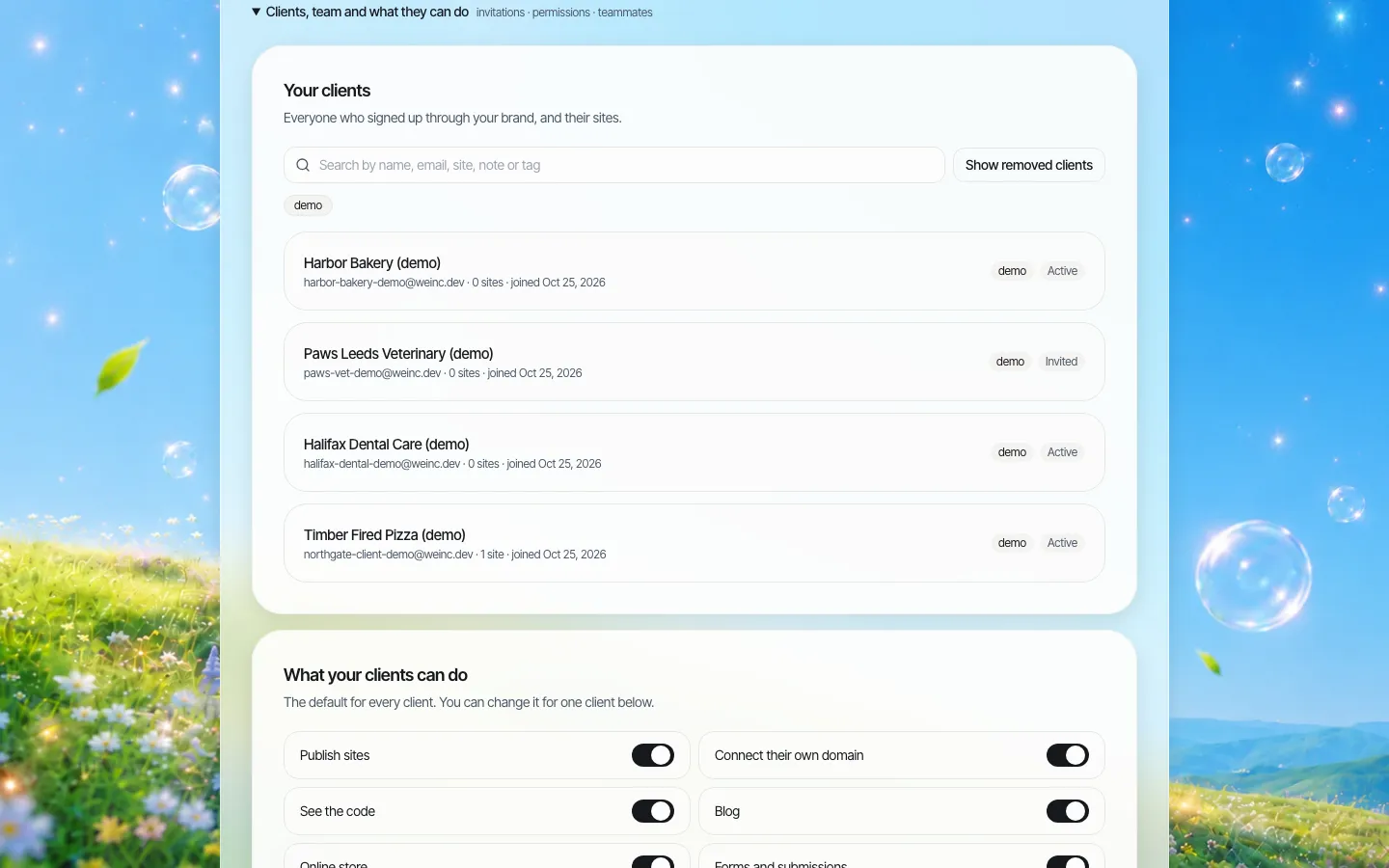
*The register of every client. Tag congregations by deanery, district or region, and note the contact and review date.*
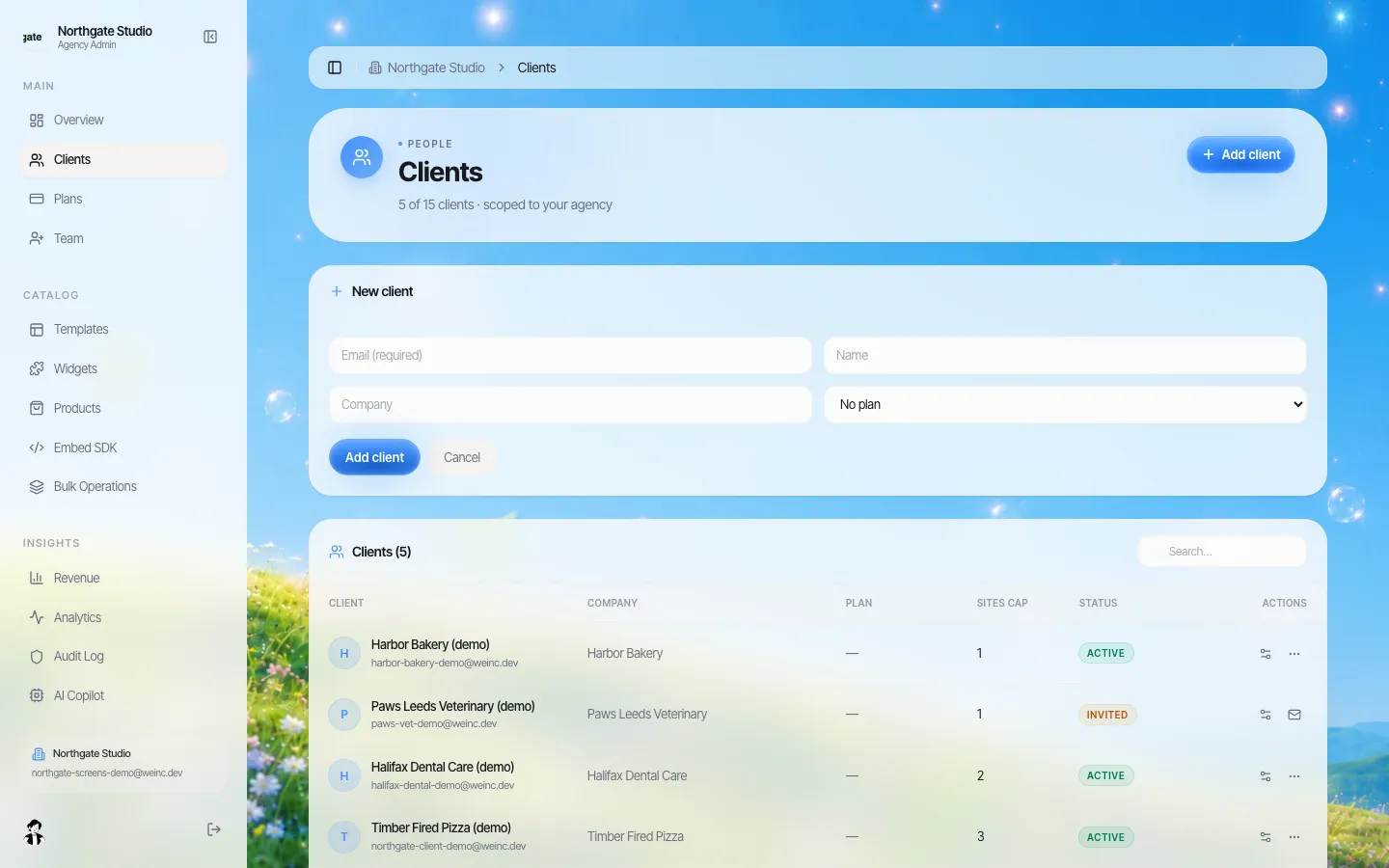
*Inviting a congregation. The invitation goes out in your name.*
What a congregation's site needs
A congregation site does not need to be large. The pages visitors look for, roughly in order:
- Service times and location, with parking and accessibility information.
- "Plan your visit" or "new here": what to expect, what to wear, children's arrangements.
- Who the clergy and staff are, with a way to contact them.
- Ministries and groups, with when and where they meet.
- Giving, linked to the congregation's own giving platform.
- Safeguarding or child-protection contact, where your denomination requires it.
- News and events.
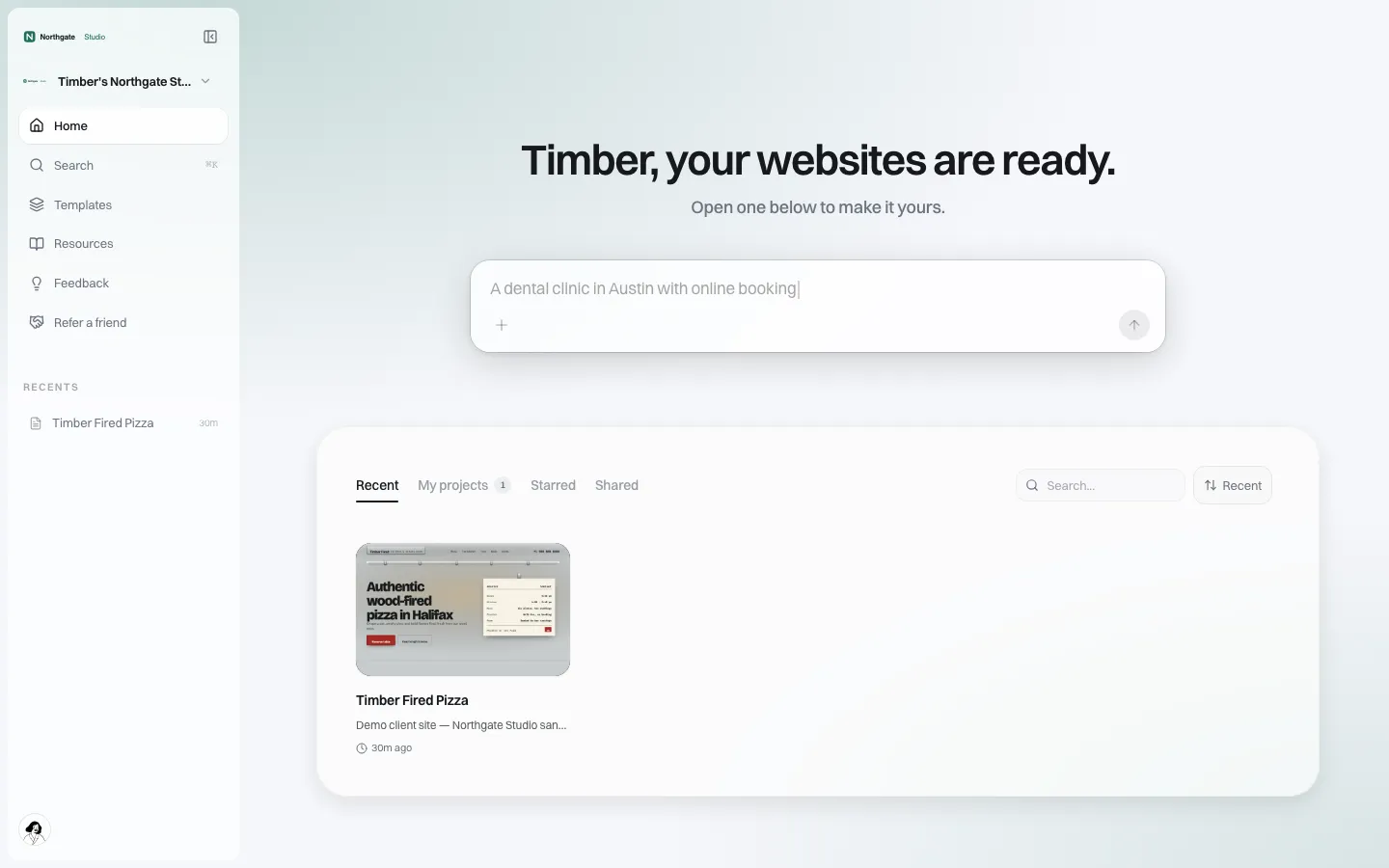
*The congregation's home in your portal. A volunteer describes the church and the AI builds a first version.*
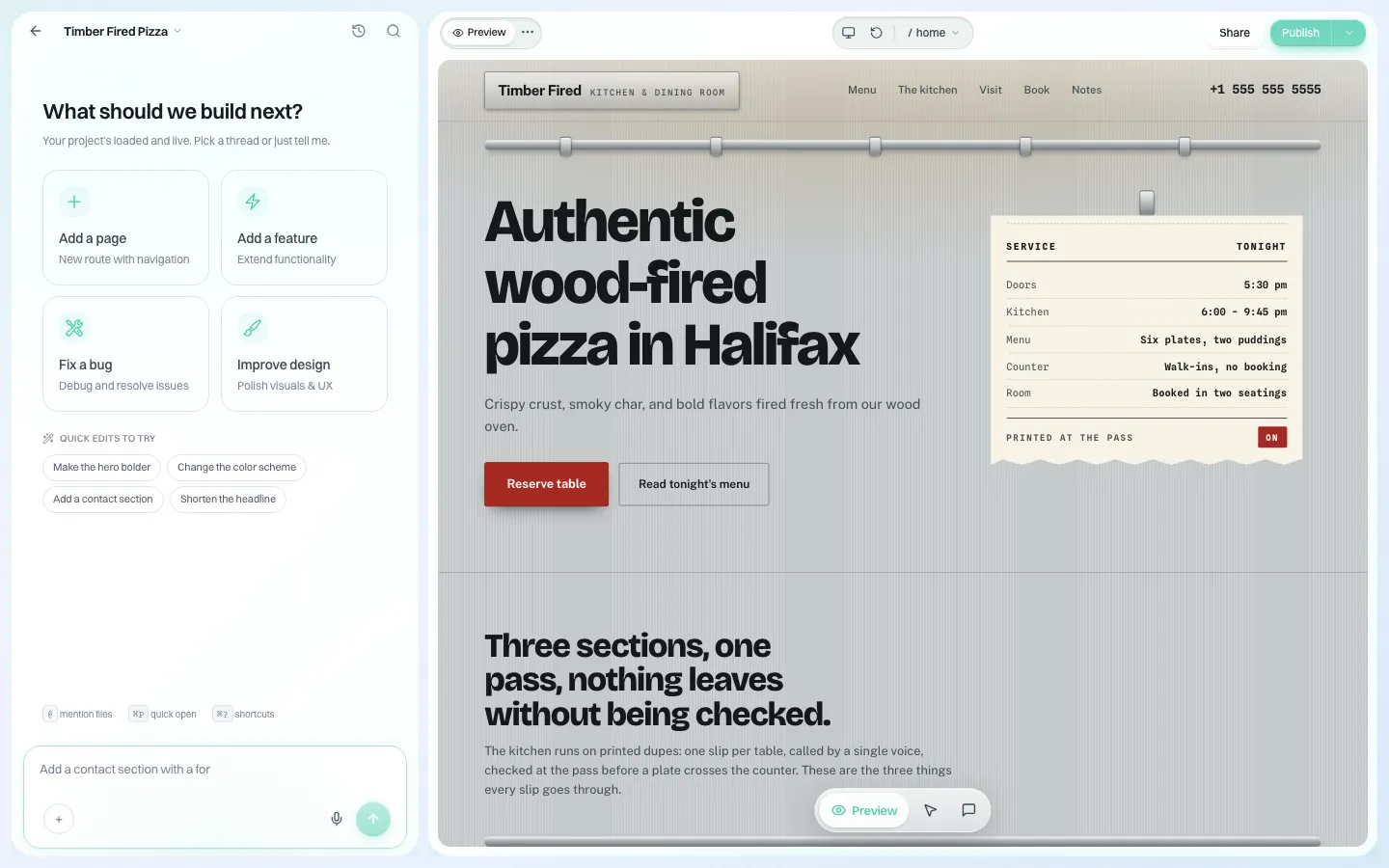
*Edits happen in this editor by clicking or asking in chat, so the next volunteer does not need the last one's know-how.*
Rules for launch and for links
Publication 1828, the IRS tax guide for churches and religious organisations, has a section on websites. It says that "a website is a form of communication" and that if an organisation posts something on its website that favours or opposes a candidate for public office, it "will be treated the same as if it distributed printed material, oral statements or broadcasts that favored or opposed a candidate." It also says an organisation that links to another site "is responsible for the consequences of establishing and maintaining that link", even without control over the linked content.
The rules on churches and political speech have been the subject of recent litigation: in 2025 the IRS agreed a proposed consent decree on how the rule applies to communications with a congregation, and in March 2026 a federal court dismissed that case without entering it. Your denomination's legal counsel is the right source for current guidance. *This page is general information, not legal or tax advice.*
Practical rules that fit the platform:
- Approval on for every first launch. The regional office checks safeguarding contacts, the required statements and links.
- A short link policy. Link to denominational resources and community partners; avoid linking to campaign material.
- Approval back on when a congregation's web volunteer changes. It is a single switch per client.
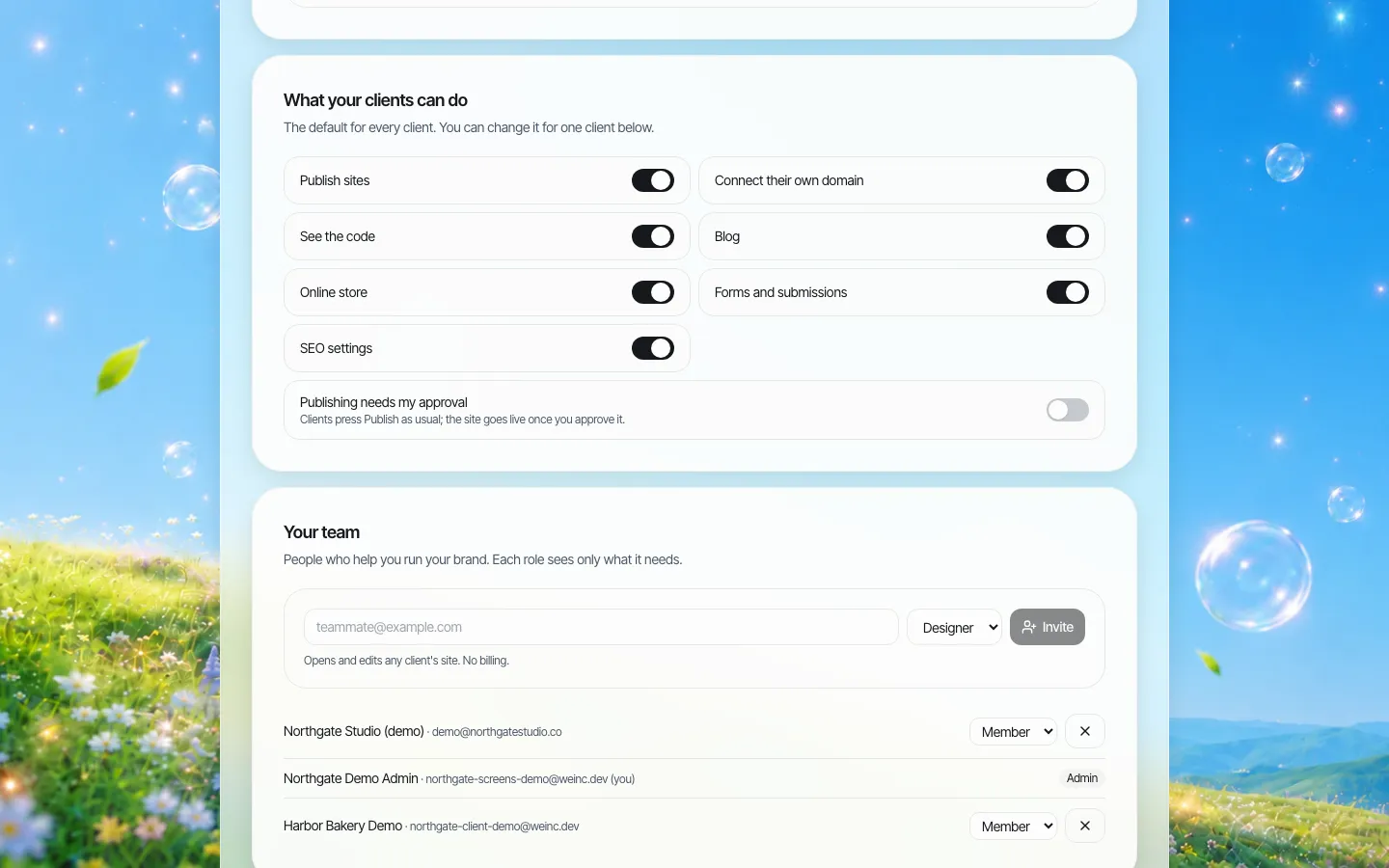
*Defaults for every congregation, including approval before publishing. Any switch can be changed for one congregation.*
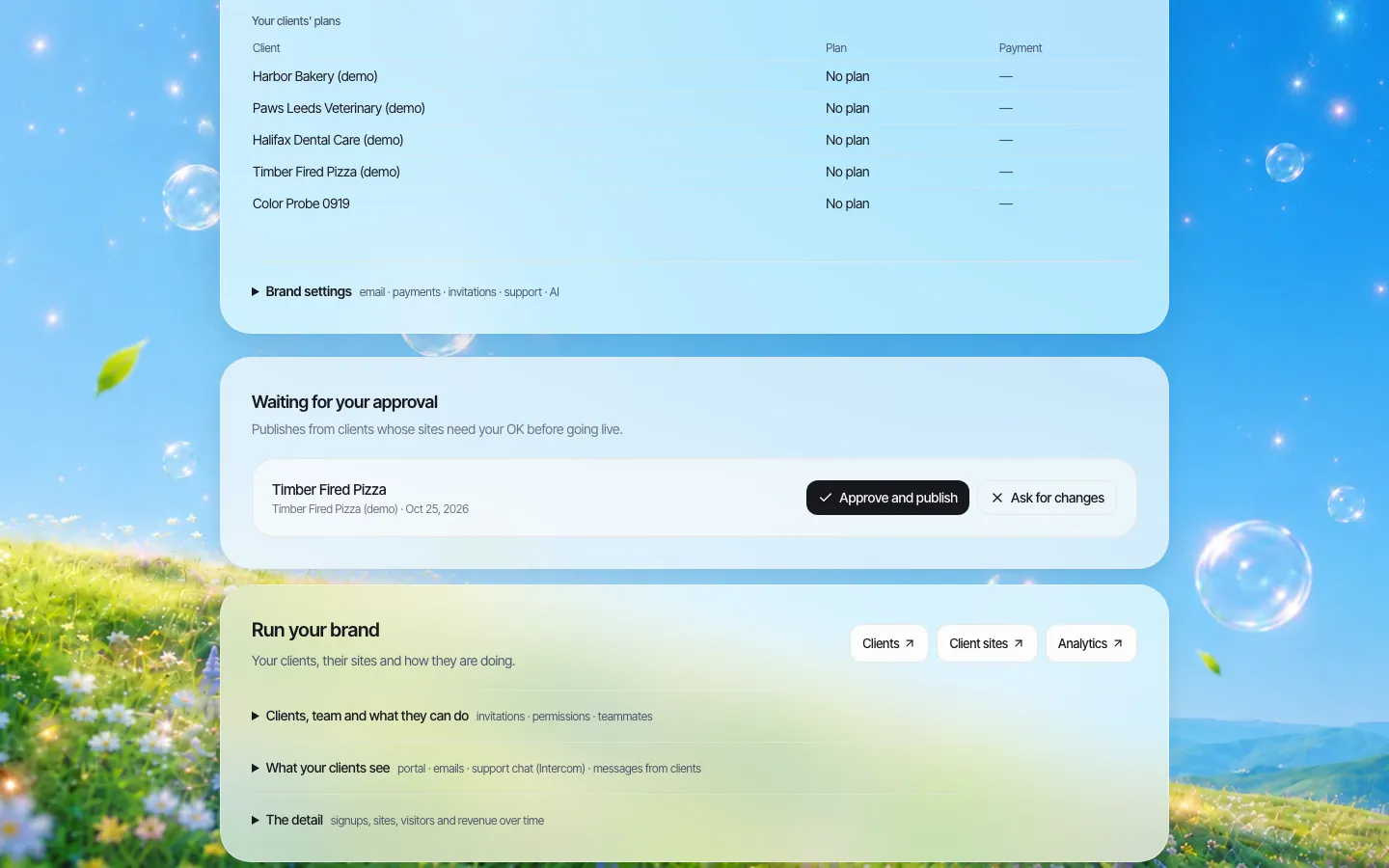
*A single-step approval by the office. (The request in this screenshot was staged for the picture.)*
Giving, prayer requests and personal information
Keep giving on the platform your congregations already use and link to it. Site forms are fine for "contact us" and "plan a visit". Think twice before collecting prayer requests, pastoral care needs or children's details through general web forms; that information is sensitive, and a pastoral care system or a phone call is often the better route.
Who pays
Denominations fund this in different ways: the office covers it as a shared service, congregations pay a contribution, or larger congregations pay and small ones are subsidised. If congregations pay, they can be billed under your brand through your own Stripe account, at prices you set.

*What a congregation sees under billing: access provided by your office.*
When a congregation leaves
Congregations close, merge and sometimes leave a denomination. The website should not become part of the dispute. Agree the rule in advance: the congregation's own content is theirs to take, the shared name and look come off, and the site's full code can be downloaded or synced to the congregation's own GitHub. If the site sits on a subdomain of the denomination's domain, redirect it to a "find a church" page after the transition period.
Where We.Inc fits, and where it does not
- Good fit: a regional or national office supporting dozens to hundreds of congregations, many with volunteers instead of staff, wanting a consistent look and a launch check.
- Not a church management system. Membership records, giving, check-in and scheduling stay in your church management software.
- Not a streaming platform. Link or embed from the service you already use.
- Not offered: multi-stage approval, custom roles, certifications, a hosting region or an uptime figure.
Book a demo and bring three congregations: one with a good site, one with an outdated site and one with none.
Sources
Last checked 2026-10-25.
- IRS, Publication 1828, Tax Guide for Churches and Religious Organizations (Rev. 8-2015), section on websites.
- KPMG, Federal court rejects deal to allow churches political speech, April 2026.
Book a demo. Pricing is tailored to your volume and setup, and you get your exact price on the call. 0% transaction fee.
Frequently asked questions
Can every congregation in our diocese or conference have its own website under our identity?
Yes. Your office is the brand owner and each congregation, school or ministry is a client with its own site and editors, under default rules your office sets.
Can the regional office check a congregation's site before it goes live?
Yes. Approval before publishing can be on by default and changed per congregation. It is a single approval step by your office.
Does a church website count as church communication for IRS purposes?
IRS Publication 1828 says a website is a form of communication and treats candidate content on it like printed material, and that links carry responsibility. Ask your denomination's counsel for current guidance.
Does it replace our church management software?
No. Membership, giving, check-in and scheduling stay in your existing systems. Congregation sites link to them.
Keep reading
- Chapter websites for associations
- Brand governance across many websites
- Client permissions: what each site owner can do
- Manage many websites from one account
- Website governance policy template
- Website vendor exit plan
More in White Label
- A CivicPlus alternative for the sites a civic suite was never meant to run
- Showing clients their numbers without exporting a single spreadsheet
- Client Dashboard | White Label
- Answer the same ten client questions once, in your own words
- The first email a client gets from your platform should look like it came from you
- The first week decides whether a client builds or churns
- Decide what every site owner can do, in seven switches
- Your logo on someone else's product is not a portal. Your words and your menu are
Product
Who It's For
- For Agencies
- For Freelancers
- For Hosting Providers
- For SaaS Platforms
- For Startups
- For Financial Services
- For Healthcare
Features
Resources
- Blog
- Help Center
- Free Business Tools
- Free UI Components
- Website Templates
- Template Collections
- Website Examples
- Guides
- Comparisons
- Alternatives
- Best Lists
- Reviews
- Pricing Guides
- Use Cases
- Glossary & Guides
- Integrations
- Developers
- Benchmark
- Windows App