A CivicPlus alternative for the sites a civic suite was never meant to run
CivicPlus sells local governments a connected suite: the website, resident self-service, payments, permits and meeting video. If you want all of that from one vendor, it is a reasonable choice and we would not talk you out of it. But many public bodies also run sites that sit outside the main city website: a library foundation, a parks programme, a tourism board, an events site, a special district. This page is about those sites, and about smaller bodies that need a good website more than a suite.
TL;DR
- CivicPlus says CivicEngage "has been rebranded as CivicPlus Municipal Websites": a drag-and-drop CMS connected to resident self-service, a Resident Portal and CivicPlus Video.
- It is a suite. Its value is the connection between website, payments, permits and notifications.
- We.Inc is narrower: AI-built websites under your own brand for many site owners, with central rules and single-step approval before publishing. No permits, payments-for-services or meeting video.
- Best fit for We.Inc: the satellite sites around a main government website, or small bodies whose need is a clear, well-run website.
What CivicPlus offers, in its own words
On its Municipal Websites page, checked today, CivicPlus says its former CivicEngage product "has been rebranded as CivicPlus Municipal Websites", a content management system for local governments. The page describes:
- A drag-and-drop CMS with responsive designs.
- Integrated communication with social media, email and notification systems.
- Resident self-service for finding information, paying bills, applying for permits and reporting issues.
- A Resident Portal with a single login for communications, requests and payments.
- CivicPlus Video for live and recorded meetings.
- A separate Web Accessibility product with compliance support, reporting and remediation tools.
That is a coherent proposition: one vendor for the public-facing side of a municipality. If your priority is joining up the website with bill payment, permits and alerts, a suite like this solves a problem a website builder does not try to solve.
The sites a suite does not fit well
The municipal website is one site. Ask your communications team how many others the organisation actually runs, and the list is usually longer than anyone expects:
- Parks and recreation programme sites, summer camps, seasonal events.
- Tourism, economic development and "move here" campaign sites.
- Library, museum and foundation sites with their own boards.
- Special districts, authorities and joint boards with their own identity.
- Election, consultation and capital project microsites with a short life.
These sites tend to be built ad hoc on whatever a staff member knew, paid for on a credit card, and forgotten when that person leaves. They carry the same accessibility and records duties as the main site, with none of the oversight. Putting all of them into the main civic CMS is one answer; it can also mean every small site waits in the same queue as the main site's priorities.
A register-and-rules approach for satellite sites
We.Inc treats each site owner (a department, board or programme) as an account under your brand. The central team sees every site in one register, sets what each owner can do, and decides which sites need approval before they go live.
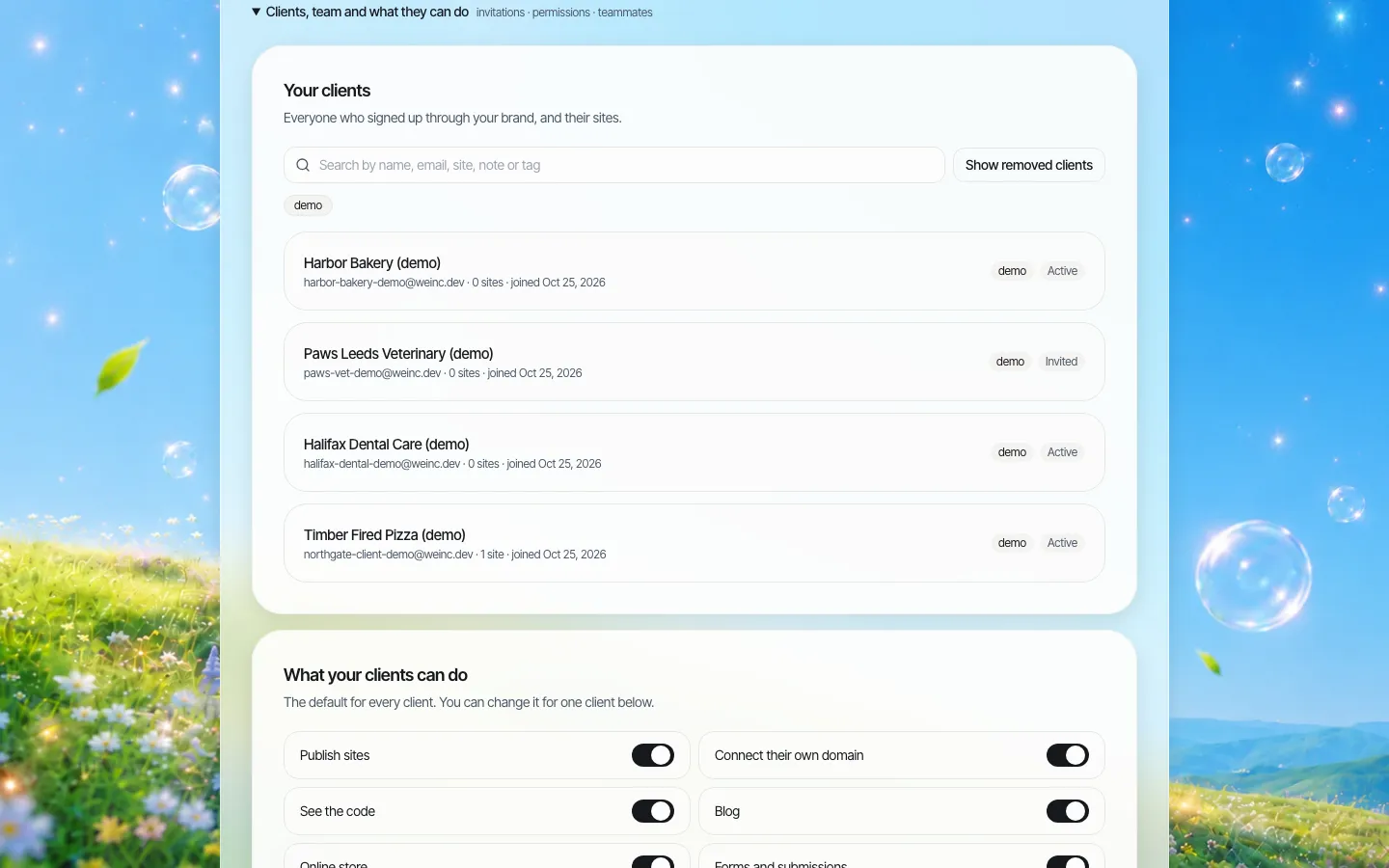
*One register for every satellite site and its owner. Tag by department, programme or review date.*
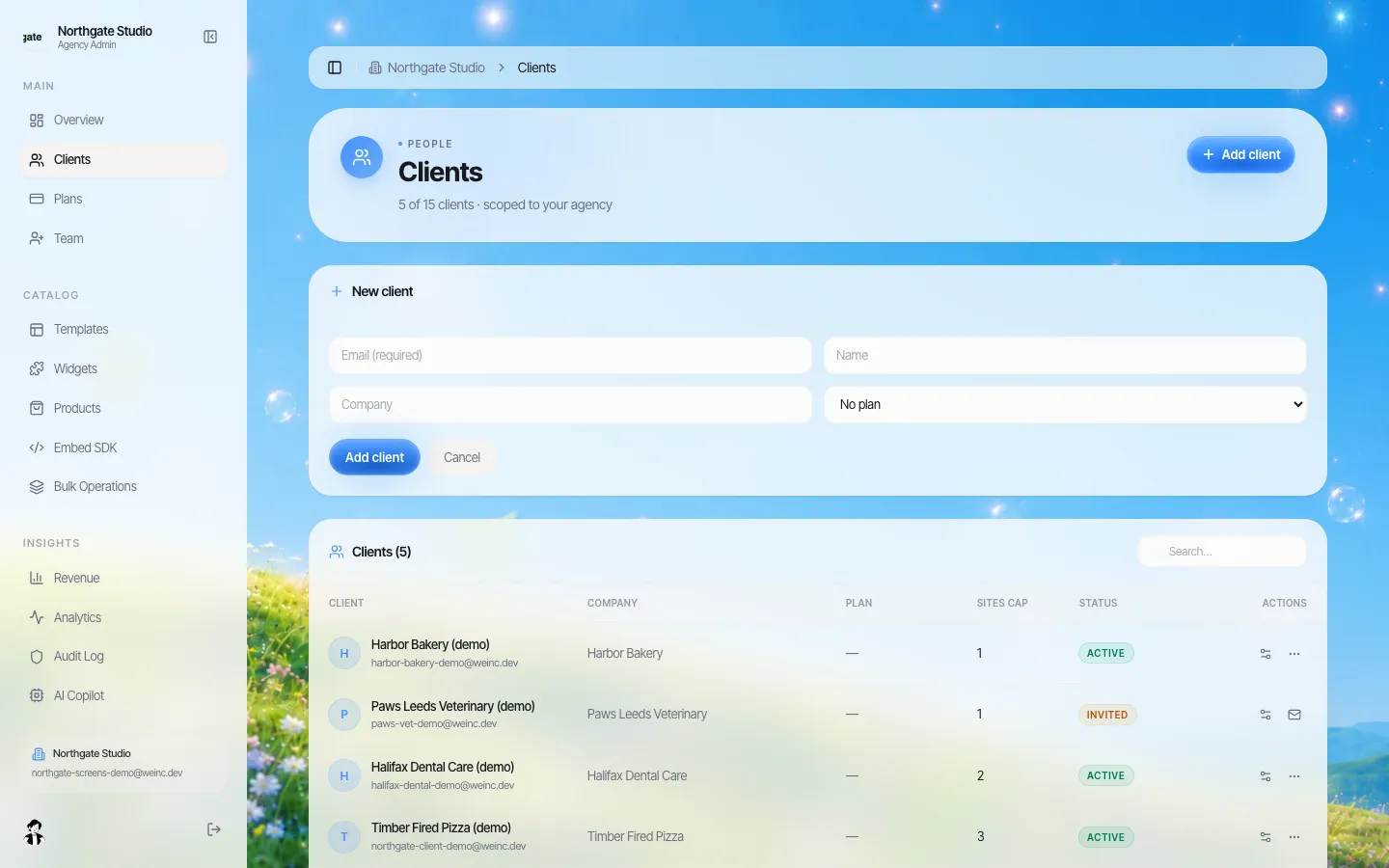
*Adding a new site owner: an invitation in your organisation's name.*
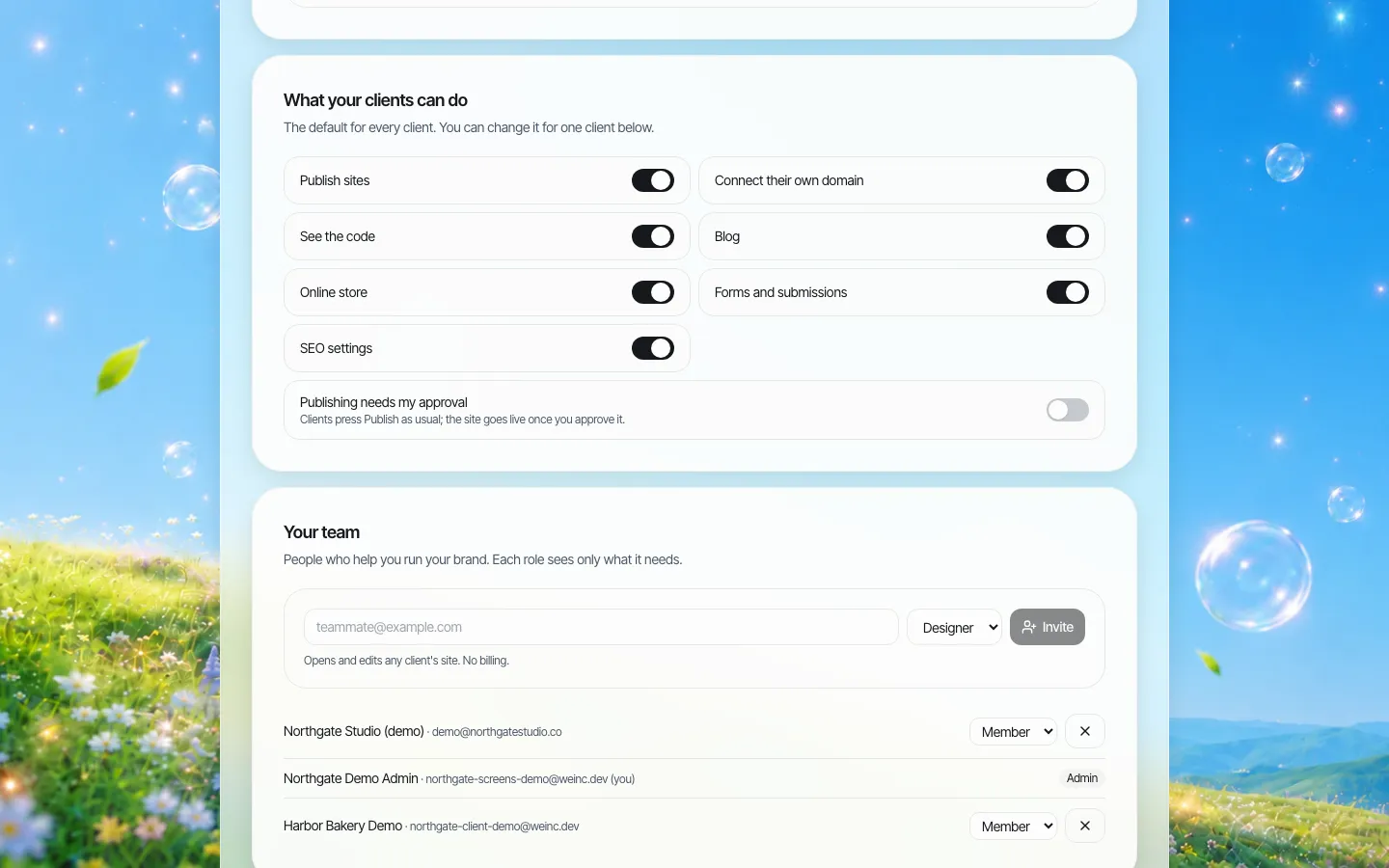
*Defaults for every owner: whether they can publish directly, use their own domain, run forms and so on.*
The approval is single-step. A programme manager presses Publish; the site goes live once a central owner approves it or sends it back with notes. If your policy requires legal or communications review in sequence, that happens before the central owner approves.
Side by side
| Need | CivicPlus Municipal Websites (from its page) | We.Inc |
|---|---|---|
| Main municipal website | Core product | Possible for small bodies; larger municipalities may prefer a civic suite |
| Online bill pay, permits, issue reporting | Resident self-service described | Not offered |
| Single resident login across services | Resident Portal described | Not offered |
| Meeting video | CivicPlus Video described | Not offered |
| Many small sites under central rules | Ask CivicPlus how it handles this | Core: register, per-owner switches, approval, audit log |
| Building a site | Drag-and-drop CMS | AI builds from a description; owners edit visually |
| Accessibility | Accessibility-focused design plus a separate accessibility product | Built to help you meet WCAG 2.1 AA; your team must test |
| Leaving | Ask about export terms | Every site's code can be downloaded or synced to GitHub |
Accessibility applies to every site, not only the main one
ADA.gov currently lists the compliance dates for the Title II web rule as 26 April 2027 for state and local governments with a population of 50,000 or more, and 26 April 2028 for smaller public entities and special district governments, following an interim final rule published in April 2026. Satellite sites are public entity websites too. Whatever platform runs them, someone needs to test them. Our Title II guide explains what the rule covers. This page is general information, not legal advice.
We.Inc does not claim WCAG conformance for AI-generated sites. The output is built to help you meet WCAG 2.1 AA, and the visual editor lets owners fix headings, contrast and text directly, but your team must test each site before it goes live. Approval before publishing is a sensible place to put that test.
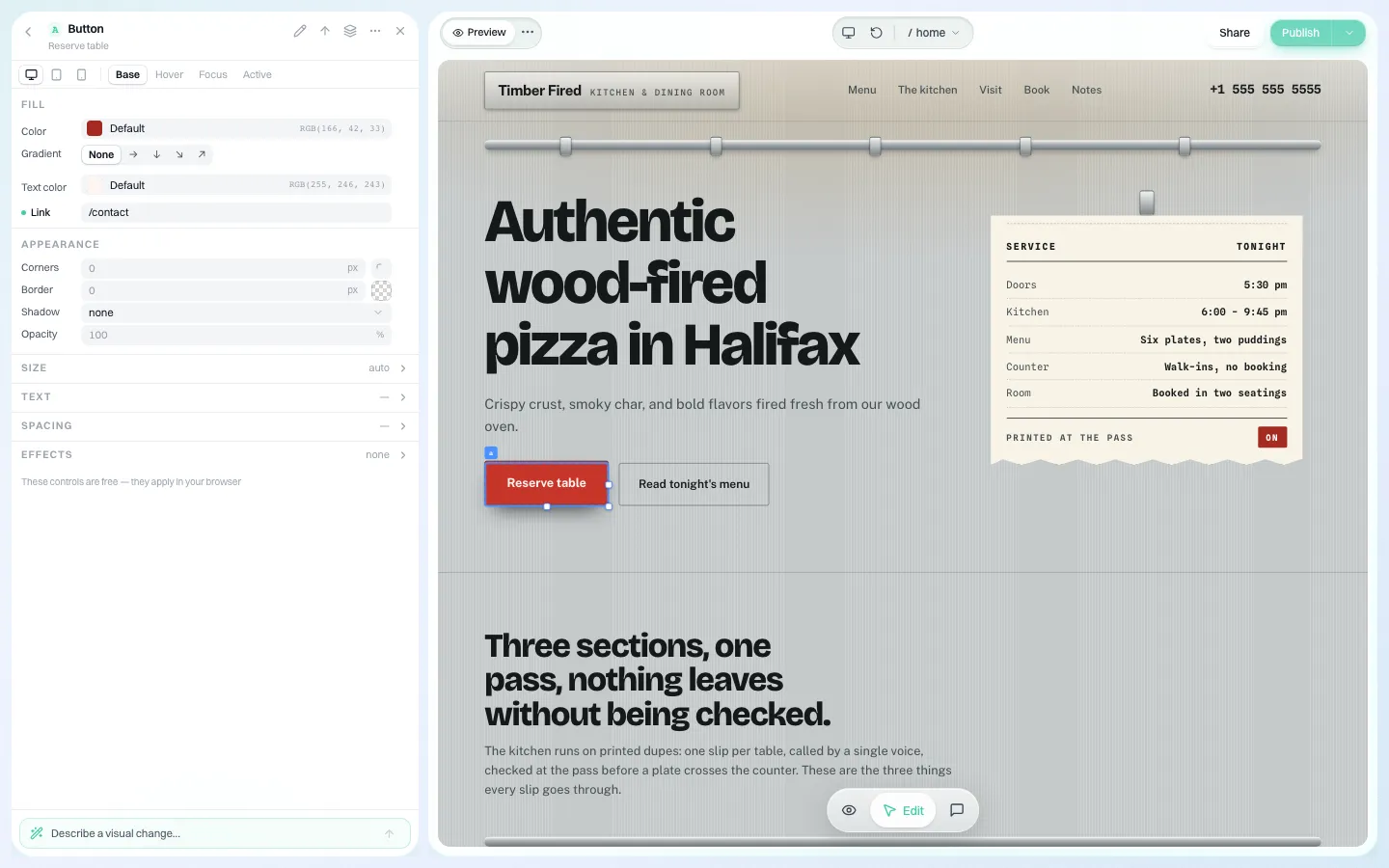
*Owners can fix a button's colour or a heading's level themselves when an accessibility check flags it.*
Accountability for procurement
Public bodies have to explain decisions later. We.Inc keeps an audit log of organisation actions (owners added or removed, switches changed, approvals), and every site can be exported, so the organisation is not tied to us. We do not claim certifications or hosting regions; our security questionnaire guide lists what to ask any vendor, including us.
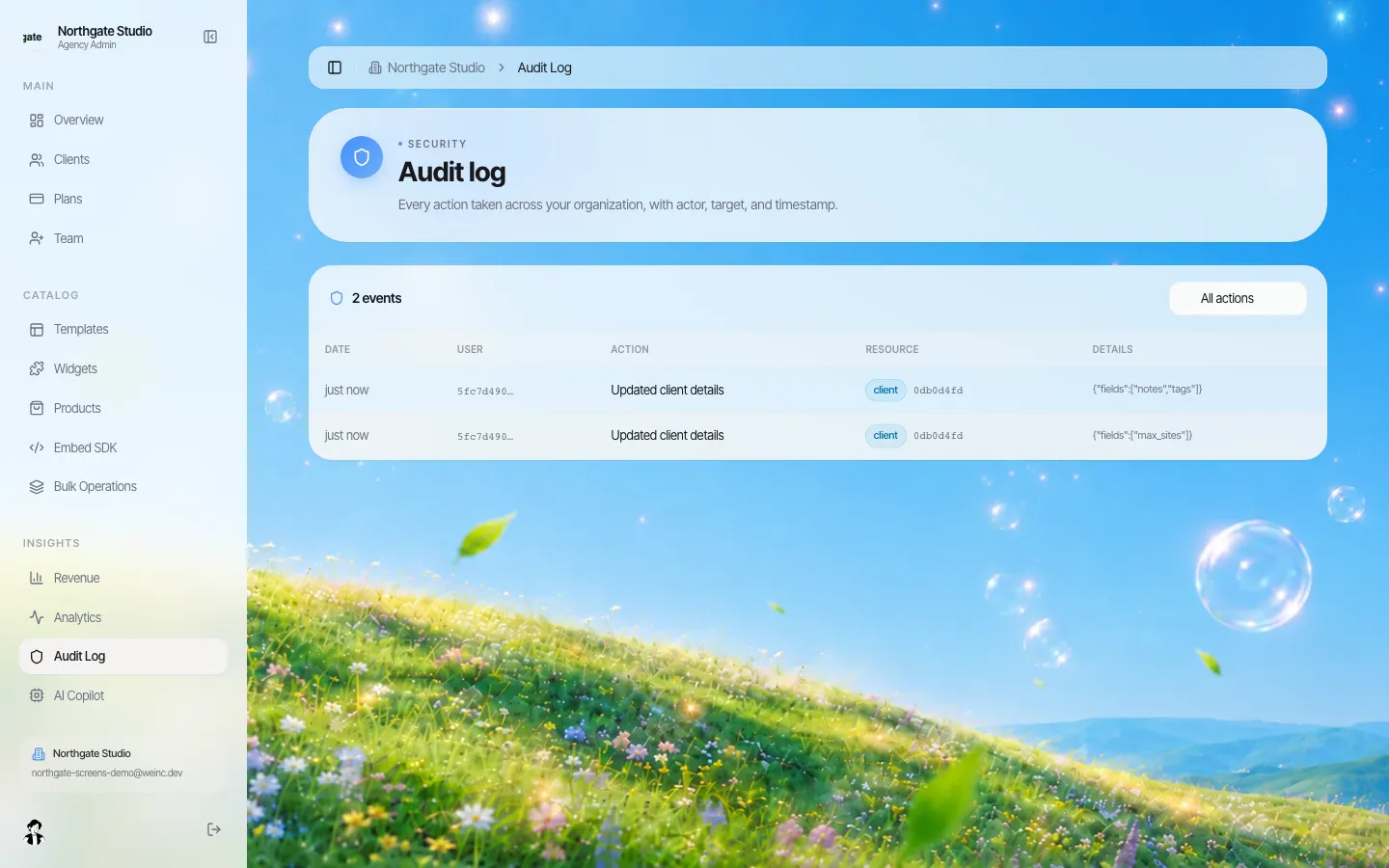
*The audit log: who changed an owner's settings, and when.*
Finding the satellite sites you already have
Most public bodies cannot list their satellite sites from memory. A one-afternoon audit usually finds them:
- Search engines. Search for your organisation's name together with words like "programme", "festival", "foundation" and "project", and note every domain that is not the main one.
- Domain renewals. Ask finance for every domain and hosting charge in the last two years, including card payments.
- Links from the main site. Crawl the main website's outbound links; satellite sites are usually linked from department pages.
- Social profiles. Department social accounts often link to a site the web team has never seen.
- Ask. Email department heads with one question: "Does your team run any website, page or form outside the main site?"
Put the result in a register with an owner, a purpose and a review date. That list is the real scope of your web estate, and it is what you should take to any vendor, including CivicPlus and us.
Which to choose
- Choose a civic suite such as CivicPlus if the main need is joining your website to payments, permits, a resident login and meeting video.
- Choose We.Inc for the satellite sites around your main website, or if you are a small body whose need is a clear website with central control.
- Use both if the main city site lives in a suite and you want the long tail of programme and campaign sites under one register.
Book a demo and bring the list of sites your organisation runs outside the main website.
Sources
Last checked 2026-10-25.
- CivicPlus, Municipal Websites: CivicEngage rebrand, CMS, resident self-service, Resident Portal, CivicPlus Video, Web Accessibility product.
- U.S. Department of Justice, ADA.gov, Fact Sheet: New Rule on the Accessibility of Web Content and Mobile Apps: compliance dates and the April 2026 interim final rule.
Book a demo. Pricing is tailored to your volume and setup, and you get your exact price on the call. 0% transaction fee.
Frequently asked questions
What is CivicPlus Municipal Websites?
According to CivicPlus, it is the rebranded CivicEngage product: a content management system for local governments connected to resident self-service, a Resident Portal and CivicPlus Video.
Can We.Inc handle permits and bill payments?
No. We.Inc builds and runs websites. It does not process permits or utility bills or provide a resident services portal.
Does We.Inc guarantee ADA or WCAG compliance?
No. Sites are AI-generated and built to help you meet WCAG 2.1 AA, but your team must test each one. Approval before publishing is a good point for that check.
When do the Title II web accessibility rules apply?
ADA.gov currently lists 26 April 2027 for public entities with a population of 50,000 or more and 26 April 2028 for smaller entities and special districts. This is general information, not legal advice.
Keep reading
- White-label websites for government agencies
- Government website RFP template
- ADA Title II website deadline explained
- Website builder security questionnaire
- Manage many websites from one account
- Website platform procurement checklist
More in White Label
- Showing clients their numbers without exporting a single spreadsheet
- Client Dashboard | White Label
- Answer the same ten client questions once, in your own words
- The first email a client gets from your platform should look like it came from you
- The first week decides whether a client builds or churns
- Decide what every site owner can do, in seven switches
- Your logo on someone else's product is not a portal. Your words and your menu are
- Your best work, as a starting point for every new client
We.Inc is an AI-powered website builder you can resell under your own brand. Launch a branded client dashboard, bill on Stripe Connect, and deliver AI-generated websites in minutes. White-label pricing is tailored to your volume and setup: book a 30-minute demo for a quote.
Product
- AI Website Builder: Describe a site in plain English; it's live in minutes
- White Label Platform: Your brand, your domain, your margin
- Enterprise: SSO, custom SLAs, and dedicated support
- Developer API: Embed site generation into your SaaS
Who It's For
- For Agencies: Resell under your brand
- For Freelancers: Your own branded builder
- For Hosting Providers: Add a builder to your stack
- For SaaS Platforms: Embed site creation via API
- For Startups
- For Financial Services
- For Healthcare
Features
- Drag & Drop Editor
- Built-in SEO Tools
- Custom Branding
- Client Dashboard
- Reseller Billing (Stripe Connect)
Resources
- Blog
- Help Center
- Free Business Tools
- Free UI Components
- Website Templates
- Template Collections
- Website Examples
- Guides
- Comparisons
- Alternatives
- Best Lists
- Reviews
- Pricing Guides
- Use Cases
- Glossary & Guides
- Integrations
- Developers
- Benchmark
- Windows App