Websites for members who own the business, not franchisees who follow it
A cooperative or buying group cannot tell its members what to do the way a franchisor can. Members joined to buy better, keep their independence and share services they could not afford alone. A website service fits that model well, as long as it is designed as a service members choose, governed the way the co-op is governed, and careful about the things competitors should not coordinate. This page is a working plan for member-services teams.
TL;DR
- Design the website service as an opt-in member benefit, with a banner option and a fully independent option.
- Decide in governance, not in the software, what is shared (banner, campaigns) and what belongs to each member (prices, people, services).
- Members are competitors with each other. Keep prices and commercial terms on each member site in that member's hands.
- We.Inc runs under the co-op's brand with per-member switches, optional approval before publishing, templates and branded emails. It does not sync your catalogue into member sites.
Why cooperatives are a different kind of network
The International Co-operative Alliance's seven principles include democratic member control, member economic participation, autonomy and independence, and education, training and information. Each has a direct consequence for a website program:
| Principle | What it means for member websites |
|---|---|
| Voluntary and open membership | The website service is opt-in. Members who decline lose nothing else. |
| Democratic member control | The rules (what is shared, what is required) are approved through your governance, not set by staff alone. |
| Member economic participation | Funding is transparent: a fee, a share of marketing funds, or included in dues, decided openly. |
| Autonomy and independence | Each member owns their site, domain and content, and can leave with them. |
| Education, training and information | Training on running the site is part of the service, not an extra. |
| Cooperation among cooperatives | Templates and lessons can be shared with sister co-ops. |
| Concern for community | Member sites can showcase local roots, which is what independents compete on. |
Buying groups that are not formal cooperatives often work the same way in practice: independent owners, a shared supplier program, and services that only work if members want them.
Offer two tiers, not one
Members differ. A program that only offers the banner-branded site loses the members who are proud of their own name; one that only offers a blank builder loses the members who want the group's buying power to show.
| Tier | What the member gets | Who chooses it |
|---|---|---|
| Banner site | Co-op banner, colours and campaigns, with the member's name, people and services | Members who trade under the banner |
| Independent site | The member's own name and look, with an optional "member of" mark | Members with a strong local brand |
Both tiers sit in the same program. In We.Inc, each member is a client account; the difference between tiers is the template they start from and the switches you set.
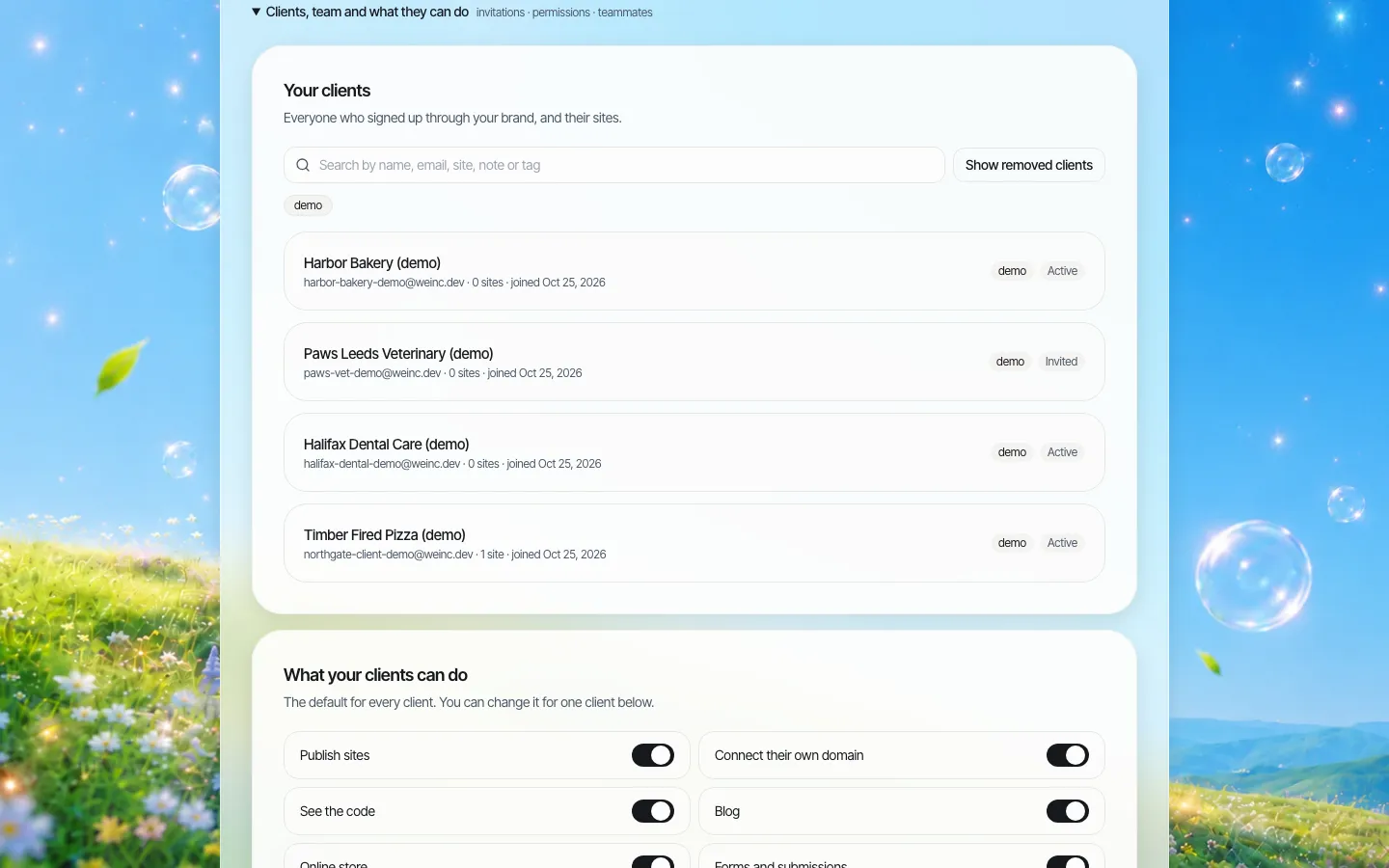
*The member register. Tag members by tier, region or store type so the team can find them quickly.*
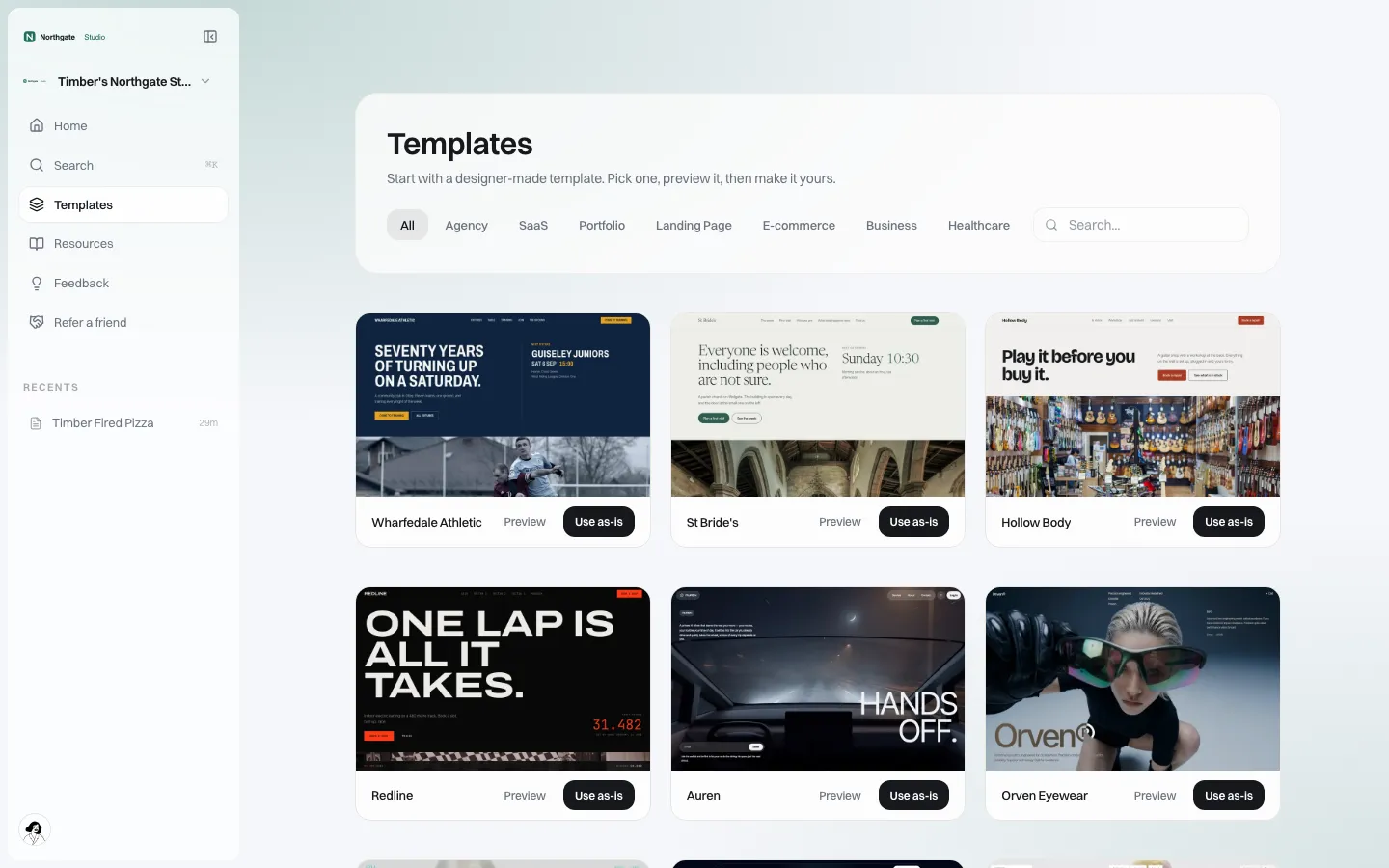
*Members start from templates. Keep one banner template and one independent template per store type.*
What is shared and what belongs to the member
Put this split to your board or member council. Once it is agreed, the software settings follow from it.
| Content | Shared or member? | Notes |
|---|---|---|
| Banner logo, colours, campaign artwork | Shared | Banner tier only |
| Seasonal campaigns and supplier promotions | Shared, opt-in | Members choose which to run |
| Prices and offers | Member | See the next section |
| Opening hours, location, team | Member | |
| Services, specialities, local stories | Member | This is what makes each site worth visiting |
| Privacy notice and legal text | Shared template, member completes | Each member is usually the data controller for their own site |
| Domain | Member | Registered in the member's name |
Competitors in one room: keep prices local
Members of a buying group or retailer cooperative usually compete with each other in the same markets. Joint buying is the reason the group exists, but coordinating resale prices between competitors is a classic competition-law risk in many countries. A website program should not become the place where that happens by accident.
Practical rules many groups adopt (ask your own counsel to confirm them for your market):
- Each member sets and publishes their own prices. Central staff do not edit prices on member sites.
- Campaign templates come without prices, or with a clearly optional suggested price where your counsel says that is acceptable.
- No shared dashboard shows members each other's prices.
- Keep records of how campaign content is offered to members, so it is visibly optional.
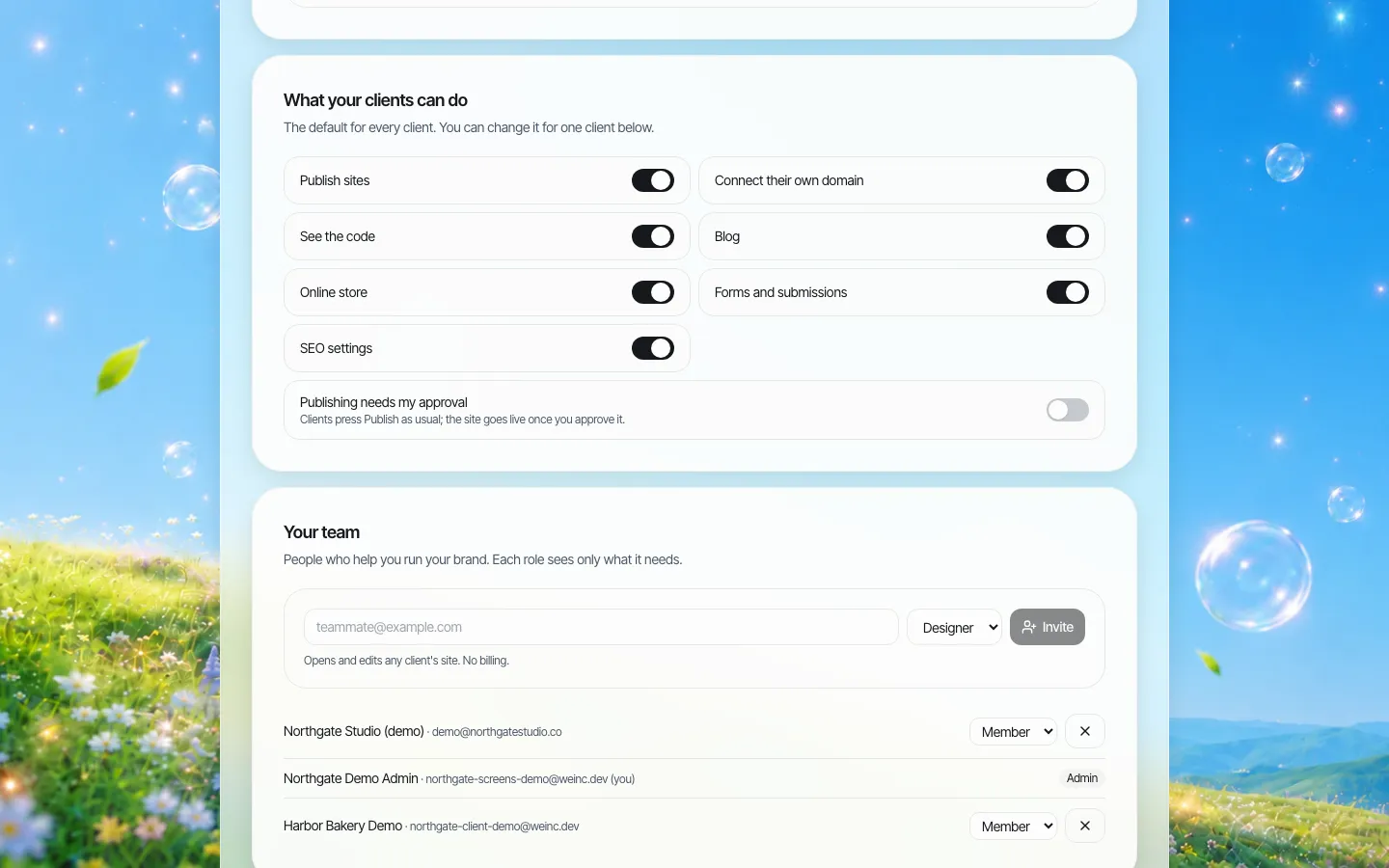
*Defaults for the whole membership. A cooperative usually leaves publishing open to members and keeps approval for the banner tier only, if at all.*
How it runs in We.Inc
- Your banner, not ours. Members sign in on your branded page, see your logo and support details, and receive emails from your brand.
- Per-member switches. Publishing, own domain, blog, online store, forms and SEO settings can be set for all members and changed for one.
- Approval only where the members agreed it. Single-step approval before a member's site goes live can be on for the banner tier and off for independents.
- Templates you control. You can turn a strong member site into a template, with that member's agreement, so others start from proven work.
- Branded emails. Invitations, "your website is ready" and other system emails carry the co-op's brand.
- Funding your way. Include it in dues, or create member plans with your own prices and collect through your own connected Stripe account. Our price to you is quoted in a demo.
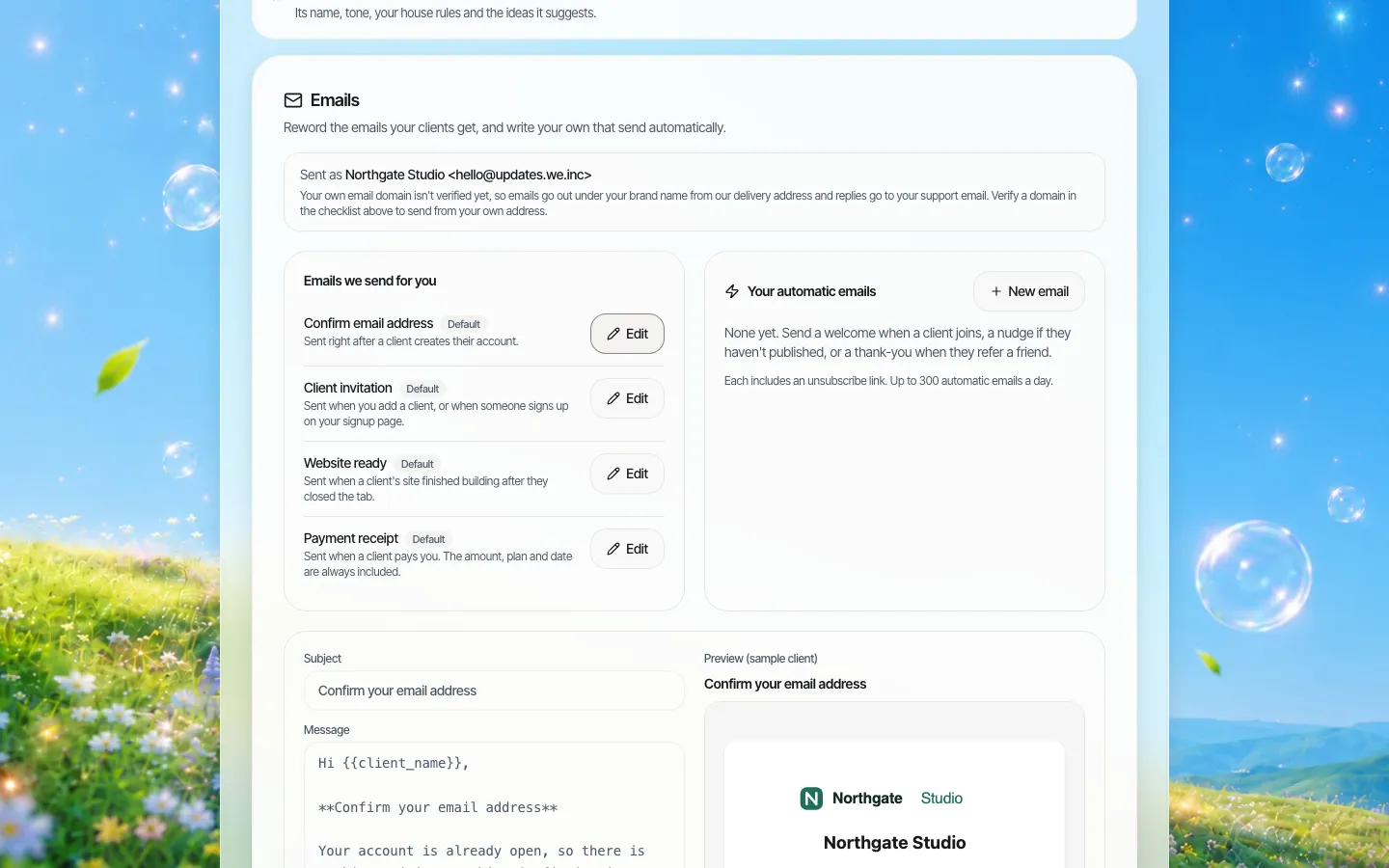
*The invitation email a member receives, in your brand. Members should know the service comes from their co-op.*
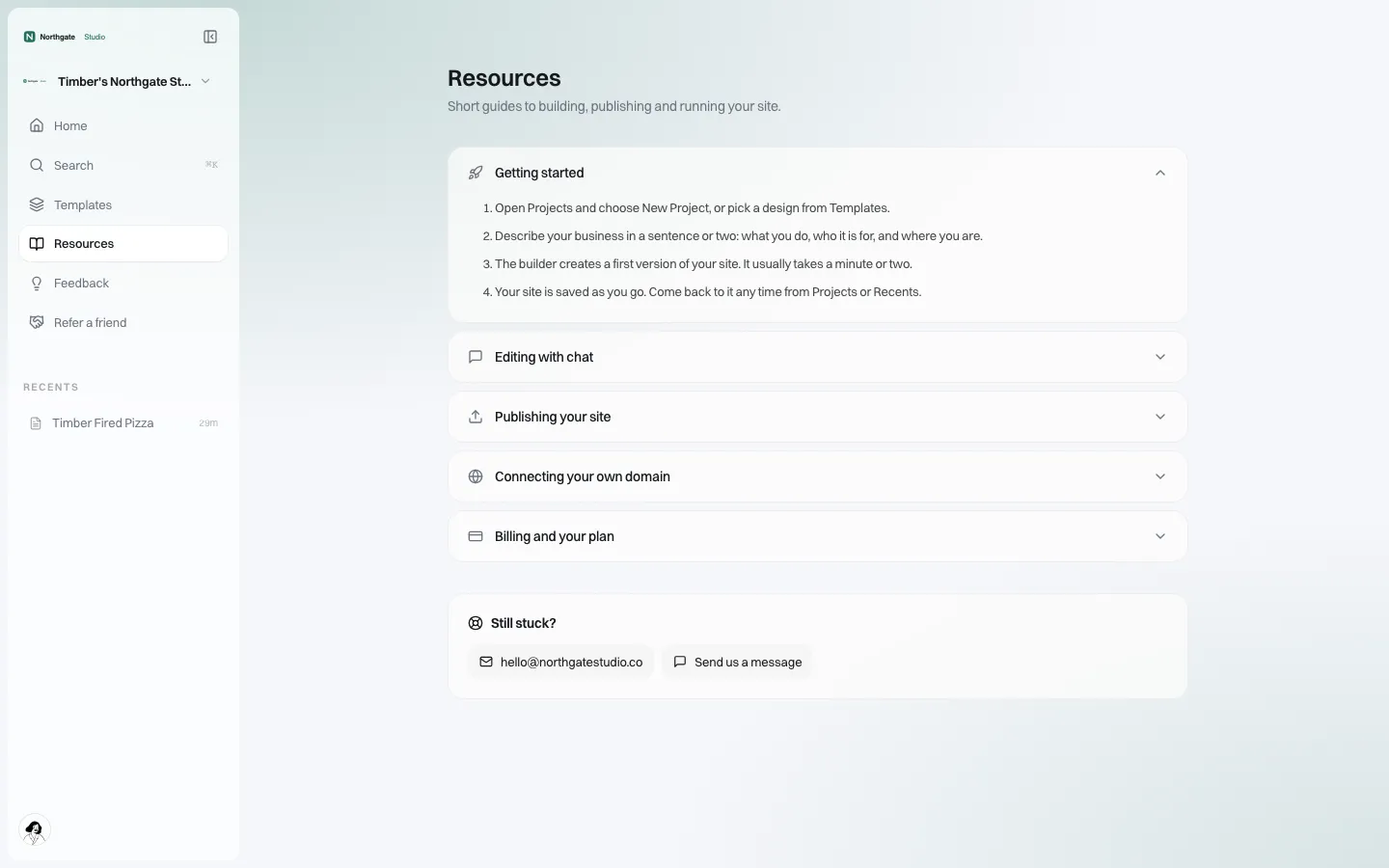
*Branded help pages. Training is a co-op principle; put your own guides and contact details here.*
Launching through your governance
- Member survey. Ask how many members have a website they are happy with, and what they would pay for one. If fewer than a third are interested, run a smaller pilot.
- Board or council approval of the two tiers, the shared-versus-member table and the funding model.
- Pilot with 20 volunteer members across store types and both tiers.
- Report back at the member meeting: publishing rate, member feedback, cost.
- Open to all members, with training sessions recorded for later joiners.
Where We.Inc fits, and where it does not
A good fit: retailer-owned cooperatives, purchasing cooperatives and buying groups whose members are independent local businesses needing a credible site, with the group providing brand, templates and support.
Better served elsewhere:
- Shared e-commerce on the co-op's catalogue. We do not sync the co-op's catalogue or stock into member sites. If members need a full online shop fed from the central warehouse, a commerce platform built for that is the better choice.
- Online sales through the co-op's own ordering system. The built-in store connects to Stripe only.
- Strict uniformity. If every member must look identical, that is closer to a franchise; see our franchisors page.
Members who leave can take their site: code can be downloaded or synced to GitHub, which is the practical form of the autonomy principle.
Book a demo. Bring your shared-versus-member split and we will show both tiers running under your banner.
Sources
Last checked 2026-10-25. This page is general information, not legal advice.
- International Cooperative Alliance, Cooperative identity, values and principles: the seven cooperative principles.
Book a demo. Pricing is tailored to your volume and setup, and you get your exact price on the call. 0% transaction fee.
Frequently asked questions
Can some members use the co-op banner and others their own brand?
Yes. Each member is a client account, so the template and switches can differ by member. Many groups run a banner tier and an independent tier.
Can the co-op change prices on member sites?
The software would let your staff edit sites, but we suggest prices stay with each member, because members are often competitors. Ask your counsel.
Does the co-op catalogue appear on member sites?
No. We do not sync catalogues or stock into member sites.
Who owns a member site if the member leaves?
We suggest the member does. Their domain stays theirs, and site code can be downloaded or synced to GitHub.
Keep reading
- White label website builder: the We.Inc platform
- Websites for associations and chapters
- White-label websites for franchisors
- Client permissions: what each site owner can do
- A template library for your clients
- Code export: leave with your sites
More in White Label
- Your members need websites. You could be the one who gives them one.
- How to create white label websites for your clients, step by step
- Custom Branding | White Label
- Client domains: the part of white-label that breaks when nobody owns it
- Every acquired practice comes with a website nobody at head office can log into
- Your sellers will make a website either way. Make it one you can see.
- Most domains you sell never become a website. That gap is the product.
- Drupal multisite alternative: keep Drupal for the flagship, rethink the long tail
Product
Who It's For
- For Agencies
- For Freelancers
- For Hosting Providers
- For SaaS Platforms
- For Startups
- For Financial Services
- For Healthcare
Features
Resources
- Blog
- Help Center
- Free Business Tools
- Free UI Components
- Website Templates
- Template Collections
- Website Examples
- Guides
- Comparisons
- Alternatives
- Best Lists
- Reviews
- Pricing Guides
- Use Cases
- Glossary & Guides
- Integrations
- Developers
- Benchmark
- Windows App