Agents want their own site. The brokerage needs it to stay on-brand. Both can be true.
An agent who builds a personal brand is good for the brokerage, right up to the day they leave and take the website with them, or post a page your broker of record would never have approved. Brokerages that run an agent website program are trying to give agents room while keeping supervision and brand in one place. This page walks through how that works in We.Inc and where you will need other tools.
TL;DR
- Each agent or team is a client account under your brokerage brand, with switches you control for publishing, domains, blog, forms and SEO.
- Supervision fits a single approval step: the agent edits, the broker or marketing approves, the site goes live.
- Decide in the agent agreement who keeps the domain and content when an agent leaves.
- There is no MLS or IDX listing feed built in. If live listing search is essential, keep it in your IDX provider and link to it.
Start with the agent agreement, not the software
The commonest fight in agent website programs is about departure. An agent leaves for another brokerage and asks for "their" site. Was it theirs? Write the answer down before the first site is built:
| Item | Brokerage keeps | Agent keeps | Note |
|---|---|---|---|
| The brokerage's name, logo and design | Yes | No | Remove from any content the agent takes |
| The agent's own domain (their name) | Usually no | Usually yes | Make sure it is registered to the agent, not on a brokerage card |
| Bio, photos and blog posts the agent wrote | Agree in advance | Agree in advance | Most brokerages let agents take their own words |
| Leads that came through the site | Per your lead policy | Per your lead policy | Lead routing rules apply as usual |
Once that is settled, the platform can follow it. In We.Inc, pausing or removing an agent's client account takes the site out of their hands; if your policy lets them take their content, the site's code can be downloaded as a ZIP and handed over.
How it maps
| Brokerage | In We.Inc |
|---|---|
| The brokerage and its marketing team | The brand account and its team |
| An agent or a team | A client account with its own sites and site limit |
| Broker of record or compliance reviewer | A team member who approves publishing |
| A transaction coordinator who helps with sites | A team member with the designer preset (edits, no billing) |
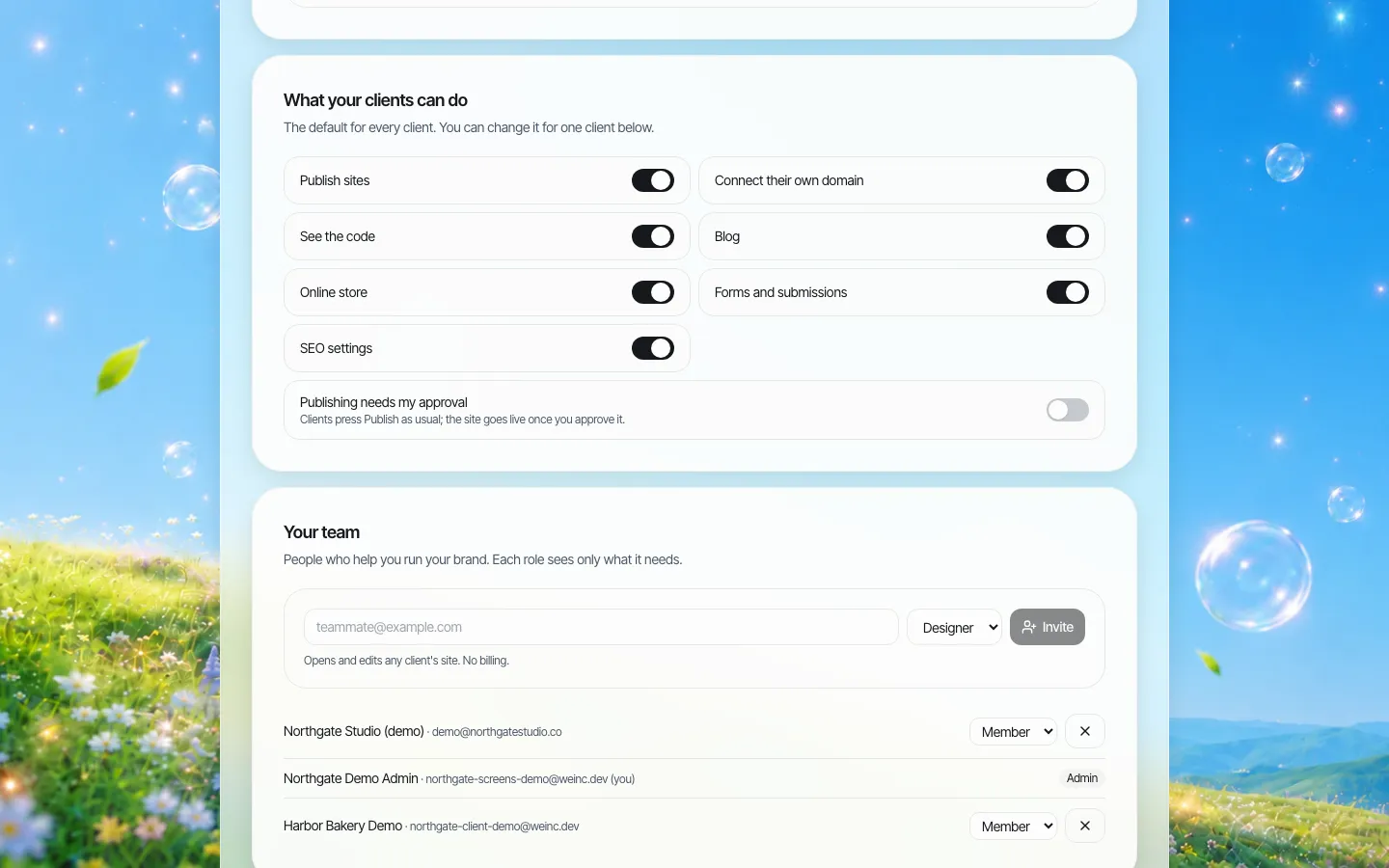
*Brokerage-wide defaults. Every new agent starts with these until you change them for that agent.*
What agents should be able to change
Agents update their sites for real reasons: a new designation, a sold milestone, a neighbourhood guide, a market update. Make those easy. Things that carry legal or brand risk deserve a second look:
- Any statement about the people a neighbourhood "suits".
- Claims about sales volume, rankings or awards.
- The brokerage's name, logo and licence details: these should be fixed in the design, not editable.
- Testimonials: real, attributed, and with permission.
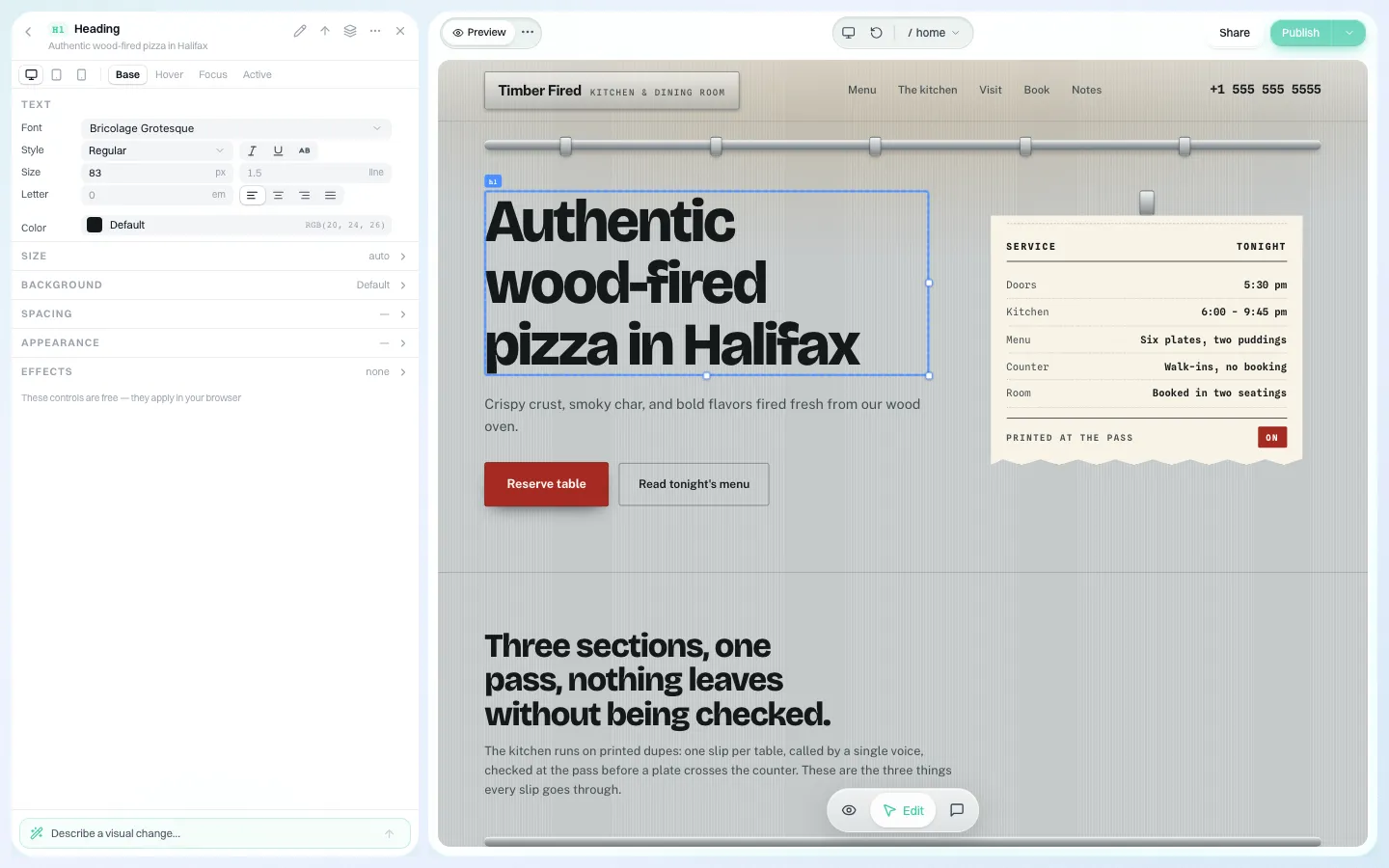
*Agents edit text and images directly in the visual editor. With approval on, nothing goes live until it is approved.*
Fair housing applies to websites too
The federal Fair Housing Act regulations make it unlawful to publish "any notice, statement or advertisement with respect to the sale or rental of a dwelling" that indicates a preference, limitation or discrimination based on a protected characteristic. HUD's examples include words, images or symbols that suggest homes are open or closed to certain groups, and choosing advertising media or locations that keep certain groups from seeing listings.
Agent websites drift into this most often through neighbourhood descriptions ("perfect for young professionals", "great for families like yours") and through stock photography. A short review rule catches most of it: describe the property and the area, not the people who should live there.
The single approval step in We.Inc is a good place to apply that rule. When an agent with approval on presses Publish, the request goes to your queue, and your reviewer approves it or asks for changes.
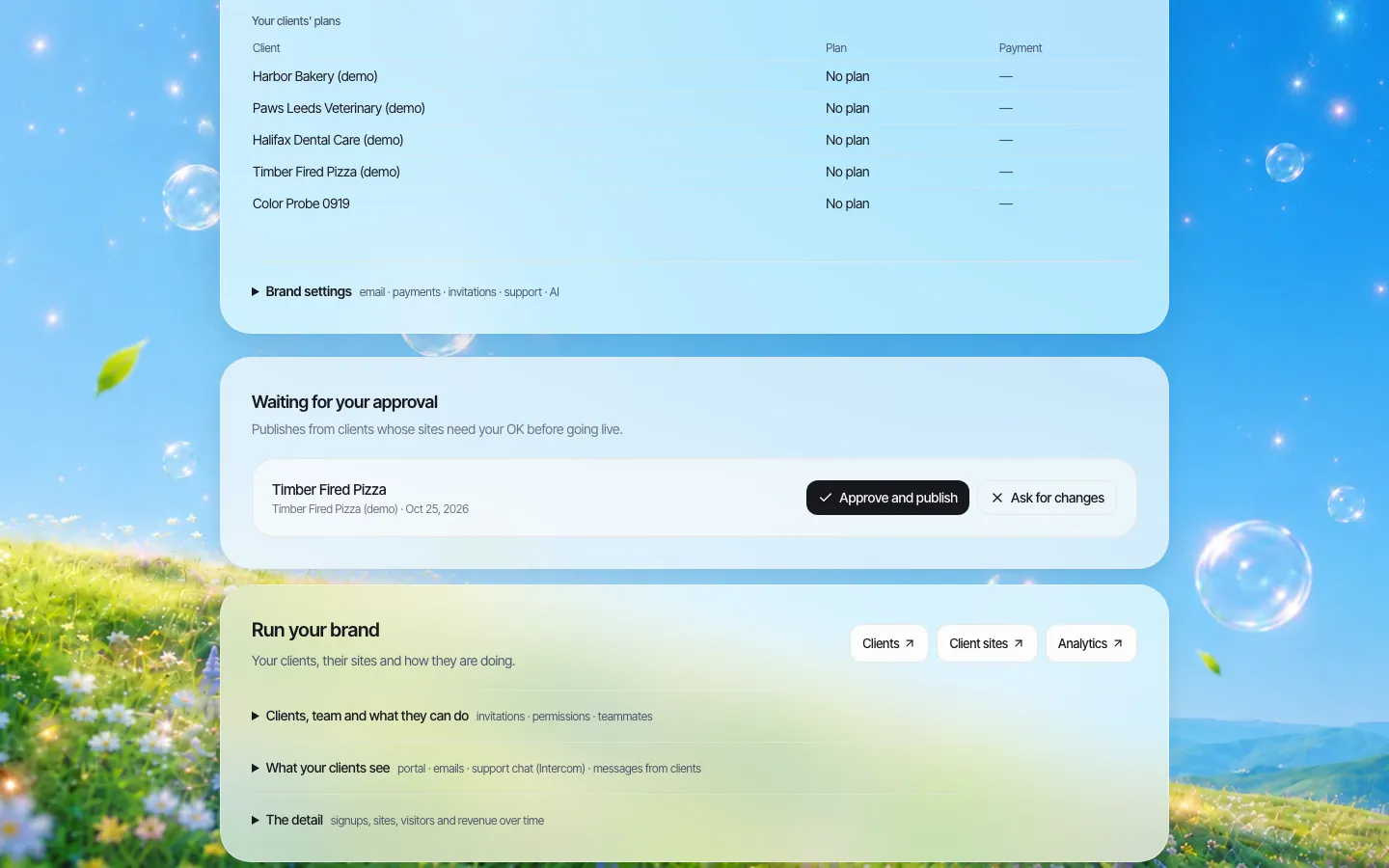
*One queue for every agent's pending changes.*
State real estate commissions also set their own advertising rules, for example on how the brokerage name must appear. Those differ by state; check yours.
The honest limit: listings
Most agent sites show listings. We.Inc does not include an MLS or IDX feed, and we do not claim an integration with any IDX provider. Two workable approaches:
- Keep listing search where it is. Your IDX vendor probably gives each agent a search page; link to it from the agent's site, labelled clearly.
- Feature a few properties by hand. For agents who want to show their own current listings with their own photos and words, a featured property page is simple to add and often reads better than a feed.
If live, filterable listing search on every agent site is your main requirement, an agent website product built around IDX is the better choice, and you should buy that instead.
Keeping an eye on a large roster
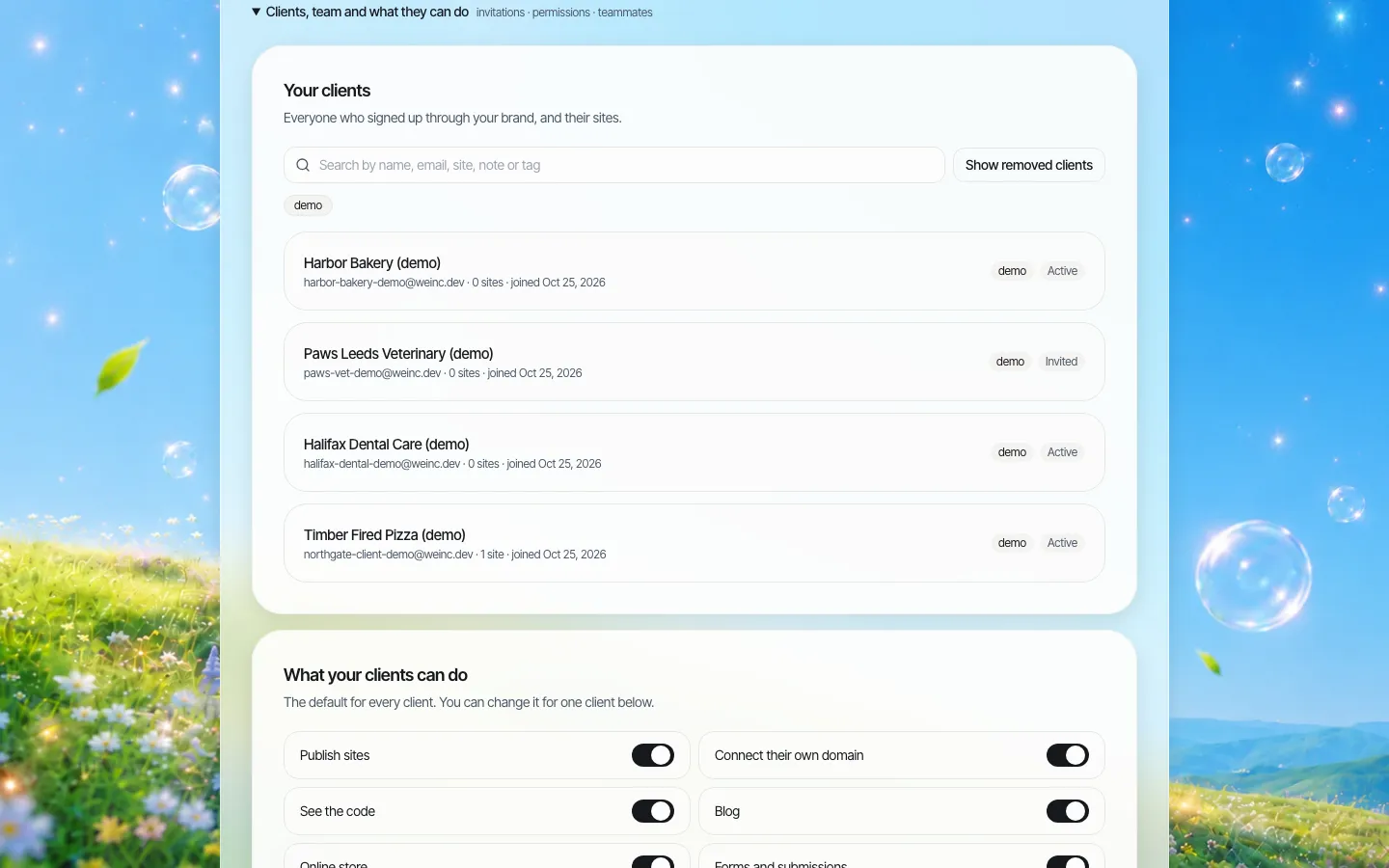
*The agent roster. Tag by office, team or status ("new agent", "departing") and search by tag.*
Rosters change constantly. Tag agents by office and team; put the licence renewal date or onboarding date in notes, which are searchable. The audit log records account-level actions, such as an agent's site being paused or their switches changing, so you can answer questions later.
You can also turn on a monthly report that goes to each client, which some brokerages use to show agents how their site is doing.
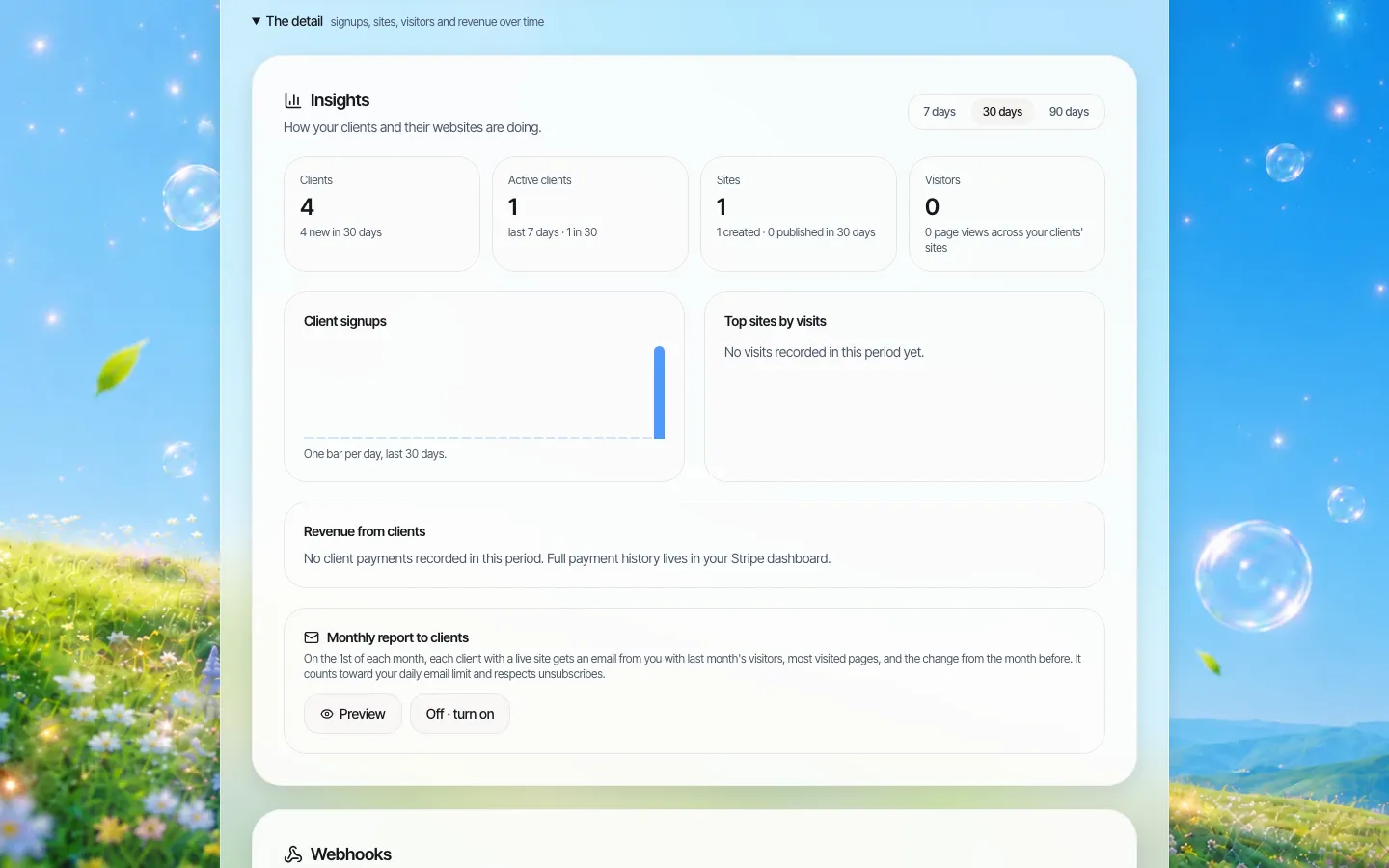
*Brand-level insights across all agents.*
Search: one strong brokerage site, many real agent sites
Fifty agent sites that repeat the same "why buy with us" text help nobody. Google's spam policies describe doorway abuse as "when sites or pages are created to rank for specific, similar search queries". Keep the brokerage story on the brokerage site; let each agent's site say what only that agent can say about their area, their clients and their work.
Onboarding a new agent in one afternoon
New agents join in the middle of everything else. A short, repeatable checklist keeps their site from waiting weeks:
- [ ] Agent signs the agreement that says who keeps the domain and content.
- [ ] Invite the agent as a client; tag them with office and team.
- [ ] Agent registers their personal domain in their own name, if they want one, and you decide whether they may connect it.
- [ ] Agent writes their own bio and uploads a real headshot; no copied bios from a previous brokerage.
- [ ] Link to their IDX search page and to their reviews profile.
- [ ] First publish goes through approval; check fair housing wording and the brokerage name.
- [ ] Add the agent's site to your roster notes with a review date six months out.
And the reverse, for an agent who leaves: pause the account on their last day, decide with them whether the content goes with them, and make sure their domain points somewhere they control so their past clients can still find them. A clean departure is good for the brokerage's reputation with the next agent you recruit.
Where We.Inc fits, and where it does not
Good fit: brokerages that want branded, supervised agent and team sites that agents genuinely update, with listings handled by the IDX tool they already pay for.
Look elsewhere if IDX search, CRM and lead routing in one agent website product is what you need.
Book a demo and we will set up a sample agent under your brokerage brand with approval switched on.
Sources
Last checked 2026-10-25. This page is general information, not legal advice.
- eCFR, 24 CFR 100.75, Discriminatory advertisements, statements and notices.
- Google Search Central, Spam policies for Google web search: doorway abuse.
Book a demo. Pricing is tailored to your volume and setup, and you get your exact price on the call. 0% transaction fee.
Frequently asked questions
Does We.Inc include IDX listings?
No. There is no MLS or IDX feed built in. Link each agent’s site to your IDX search page, or feature a few listings by hand.
Can the broker approve agent site changes?
Yes. Switch on approval before publishing for all agents or chosen ones. It is a single approval step by your team.
What happens to an agent’s site when they leave?
You can pause or remove their account. If your agreement lets them take their content, the site code can be downloaded and handed over.
Keep reading
- White label website builder: the We.Inc platform
- Client permissions: what each site owner can do
- Brand governance across many websites
- Manage many client websites from one account
- Audit log for a white-label website platform
- White-label websites for franchisors
More in White Label
- How to resell websites under your own brand
- Website Builder Reseller Program & Billing
- White-Label Reseller Dashboard
- Six restaurants, six personalities, one place to keep them accurate
- Embedding a website builder in your product: how the pieces fit
- Simvoly white label: what it costs, and the AI alternative
- Handover is a process, not a password in an email
- The SiteSwan alternative for resellers who want AI to build the sites
We.Inc is an AI-powered website builder you can resell under your own brand. Launch a branded client dashboard, bill on Stripe Connect, and deliver AI-generated websites in minutes. White-label pricing is tailored to your volume and setup: book a 30-minute demo for a quote.
Product
- AI Website Builder: Describe a site in plain English; it's live in minutes
- White Label Platform: Your brand, your domain, your margin
- Enterprise: SSO, custom SLAs, and dedicated support
- Developer API: Embed site generation into your SaaS
Who It's For
- For Agencies: Resell under your brand
- For Freelancers: Your own branded builder
- For Hosting Providers: Add a builder to your stack
- For SaaS Platforms: Embed site creation via API
- For Startups
- For Financial Services
- For Healthcare
Features
- Drag & Drop Editor
- Built-in SEO Tools
- Custom Branding
- Client Dashboard
- Reseller Billing (Stripe Connect)
Resources
- Blog
- Help Center
- Free Business Tools
- Free UI Components
- Website Templates
- Template Collections
- Website Examples
- Guides
- Comparisons
- Alternatives
- Best Lists
- Reviews
- Pricing Guides
- Use Cases
- Glossary & Guides
- Integrations
- Developers
- Benchmark
- Windows App