Six restaurants, six personalities, one place to keep them accurate
A restaurant group is not a chain. The taqueria should not look like the steakhouse, and the wine bar has its own following. But behind the different personalities, the same failures happen at every concept: last season's menu, wrong holiday hours, a closed location still taking enquiries. This page is about running a website per concept without flattening them into one look.
TL;DR
- The things guests check most on a restaurant site are hours, menu, location and how to book or order. Those must be right at every concept, every week.
- Each concept or location becomes a client account under your group, with its own design and domain, and switches the group controls.
- US chains with 20 or more locations under one name have calorie labeling duties on menus; check with counsel whether they reach your online menus.
- We.Inc runs the websites. Online ordering, reservations and POS stay in the tools you use. Book a demo with your concept list.
What a group is really managing
A restaurant website is small, but it changes constantly: menus, seasonal hours, private-dining packages, events, job postings. Multiply by six concepts and three locations each, and the group is running a content operation without anyone owning it. The usual signs:
- The chef updated the menu in the restaurant, but the PDF online is from spring.
- Holiday hours were posted on social media and nowhere else.
- One concept's site belongs to the agency that built it at opening, and the group cannot log in.
- A closed location still appears in search with a working enquiry form.
If you are a franchisor with one concept and many franchisees, your problem is different (brand control across owners); see websites for franchisors. This page is for groups that own and operate several distinct concepts.
Concepts are different; operations are the same
The right split is: each concept keeps its own design, voice and domain; the group owns the account, the accuracy rules and the people.
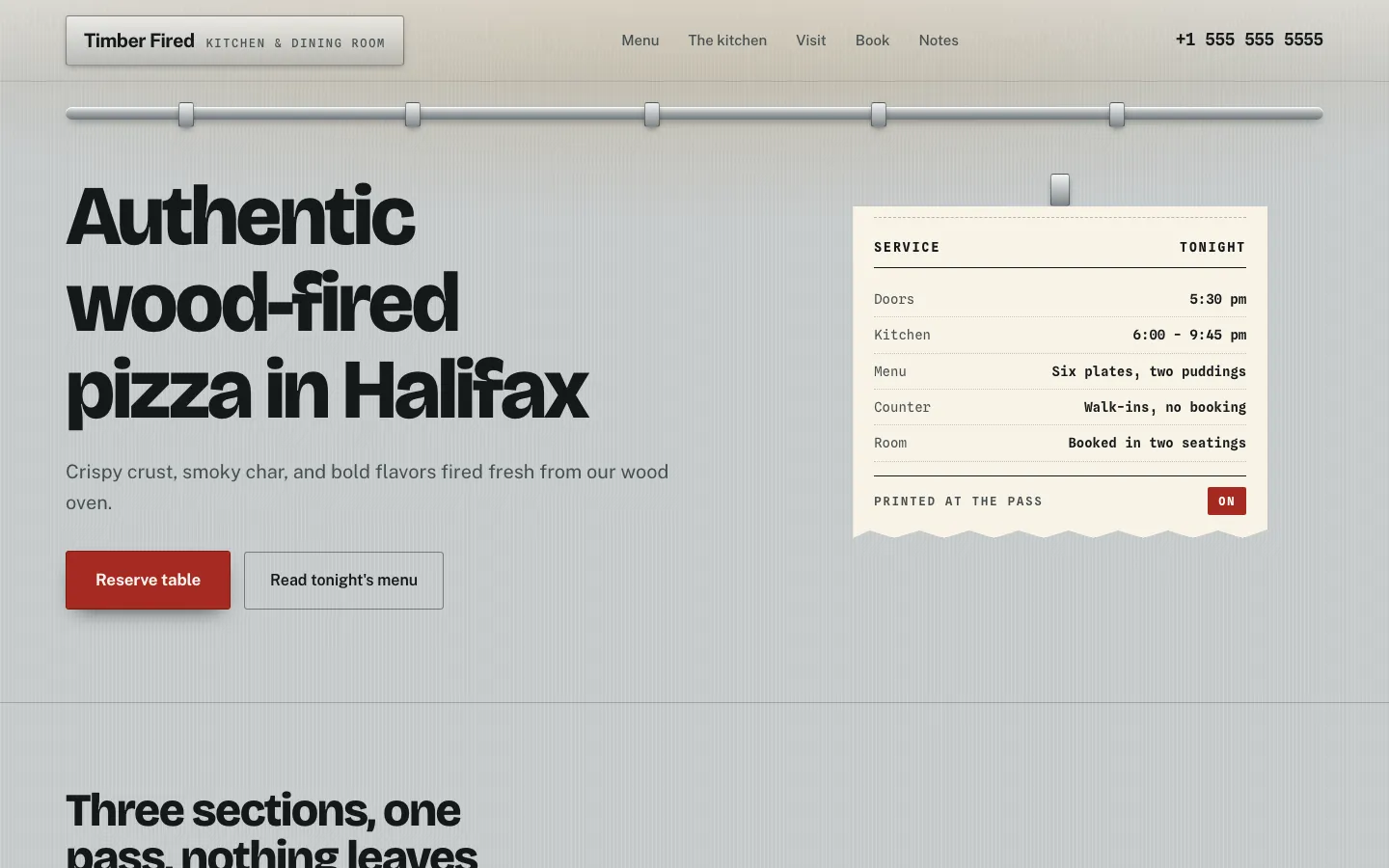
*A demo restaurant site, Timber Fired Pizza, in the live preview. Each concept has its own design; the group runs them all from one account.*
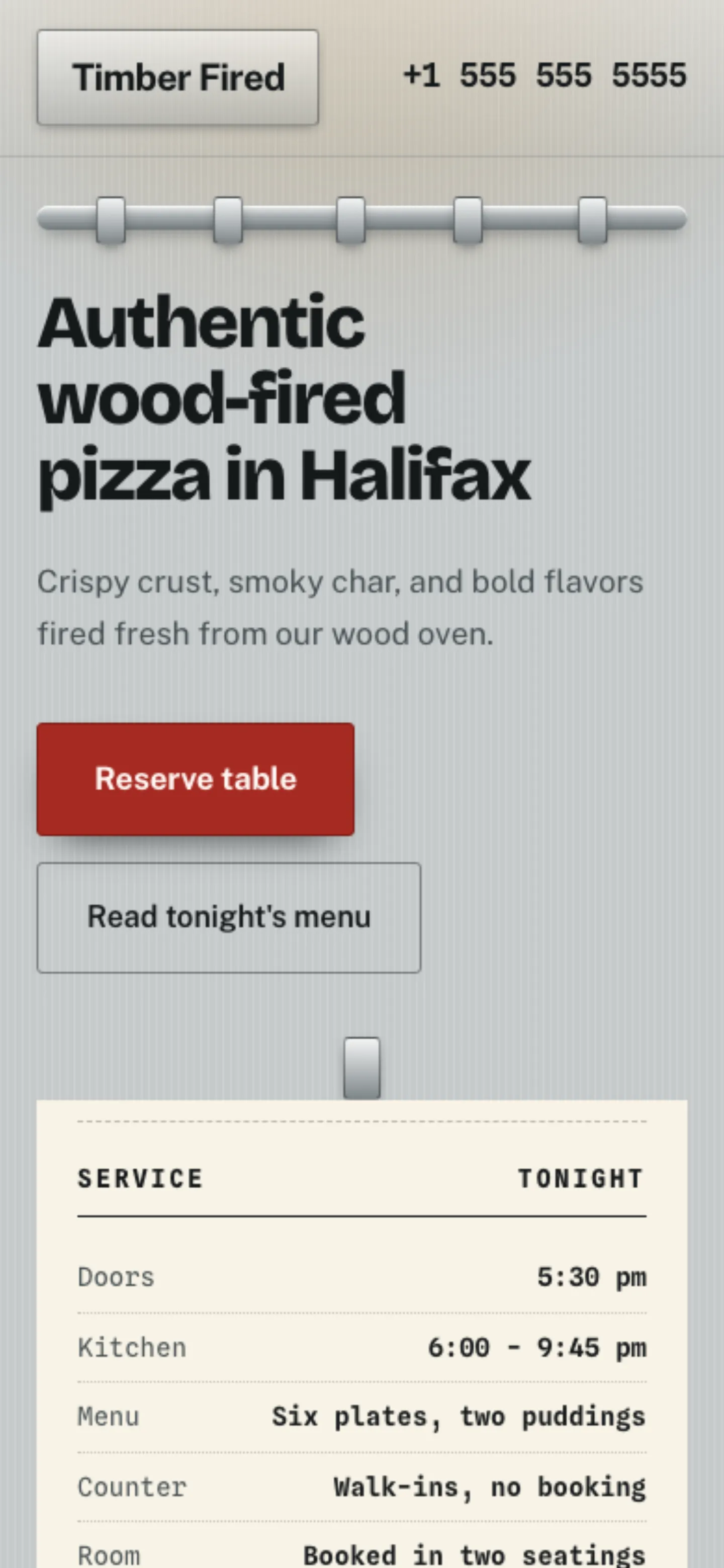
*The same site on a phone. Most restaurant visits are on mobile, often in the car park.*
In We.Inc your group runs a branded account. Each concept, or each location when they differ enough to need their own site, is a client account with its own site and domain. Group marketing sees all of them in one register, with tags for concept, city and status.
An accuracy routine that actually happens
Most restaurant website problems are not design problems. They are missed updates. Put a routine in writing and give each item an owner:
| What | When | Owner | Check |
|---|---|---|---|
| Hours, including holidays | Two weeks before each holiday; any change | General manager | Site matches your listing on map and review sites |
| Menu | Every menu change | Chef or kitchen manager, with group review for prices | Site menu is text, not only a PDF |
| Allergen statement | Every menu change | Chef | Statement and contact route are on the menu page |
| Private dining and events | Monthly | Events or sales manager | Enquiry form works and goes to a monitored inbox |
| Jobs | When hiring | GM or HR | Old posts removed |
| Photos | Twice a year | Group marketing | Dishes still on the menu |
Two details matter more than they look. First, publish menus as text on the page as well as any PDF. Text menus are readable on phones, work with screen readers, and are what search engines understand. Second, make the hours on the site agree with your map and review listings; guests trust whichever they saw last.
Who may publish what
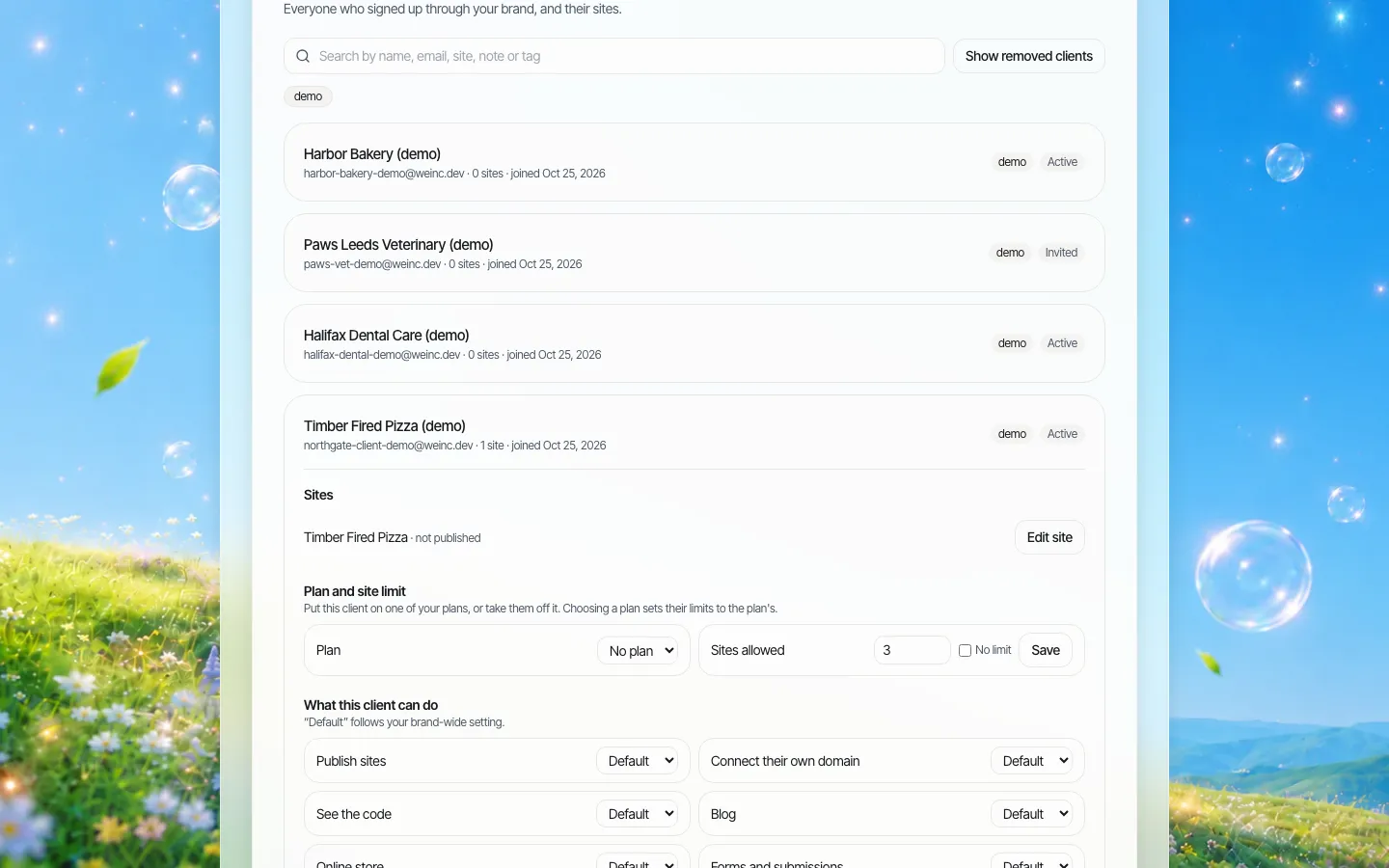
*One concept's settings in the client manager. Each switch can differ per concept.*
For each concept you decide whether its team can publish, connect a domain, see the code, run a blog, an online store, forms and SEO settings. Group marketing can also require approval before publishing: a single-step check before a concept's site goes live, as a group default with overrides per concept.
A pattern that suits most groups: approval on for a new concept until it opens and for a month afterwards, then off, so a chef can fix tonight's menu without waiting. Keep domain and SEO settings with group marketing.
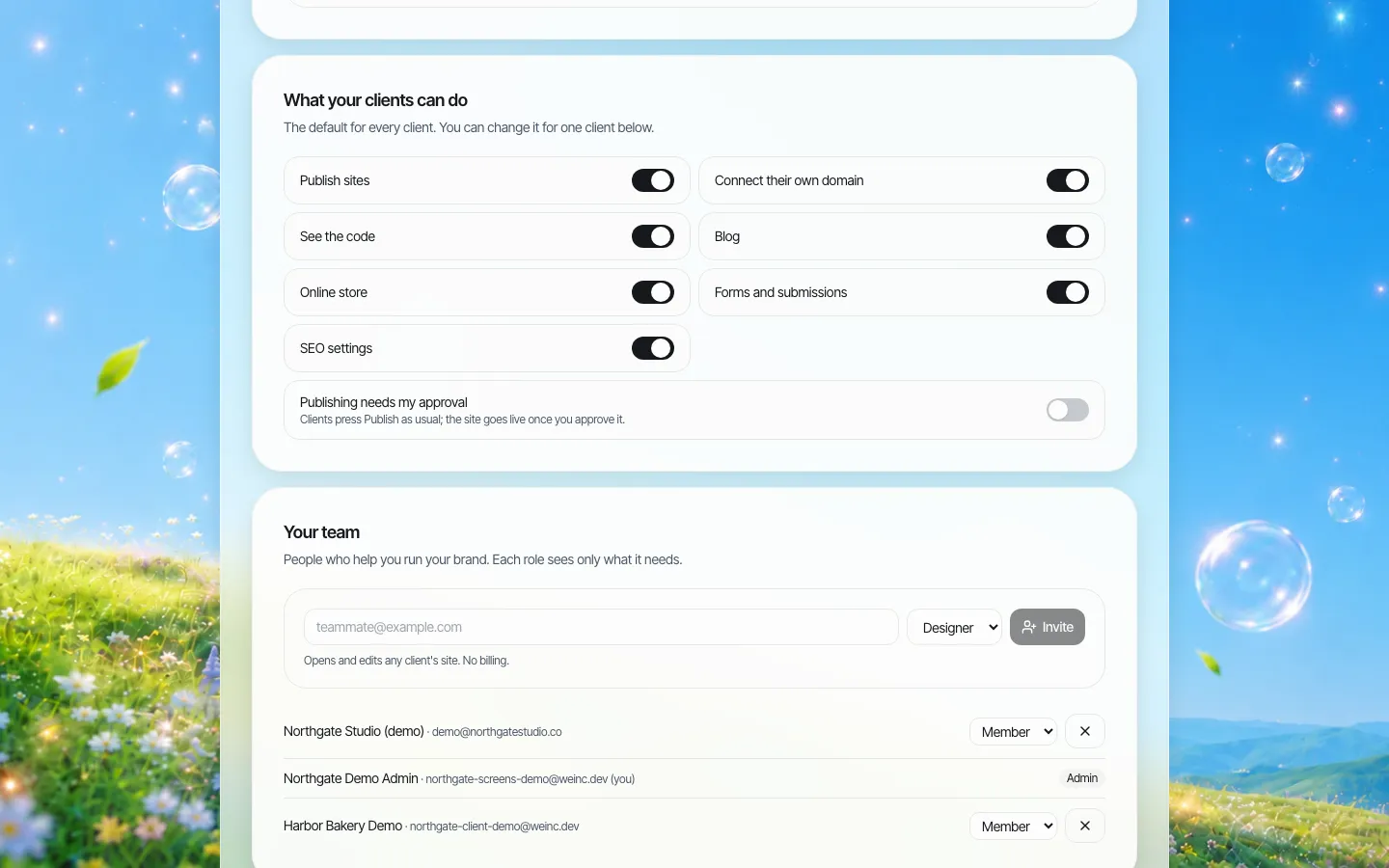
*Group-wide defaults. New concepts start from these settings.*
Menu labeling for chains
General information, not legal advice.
In the US, the FDA's menu labeling requirements apply to restaurants and similar retail food establishments that are part of a chain with 20 or more locations, doing business under the same name and offering substantially the same menu items. Covered establishments must disclose calories on menus and menu boards, among other duties. A multi-concept group may have one concept that crosses the threshold and others that do not. Whether and how the rules reach that concept's online menu is a question for your counsel; the FDA's own guidance is the place to start. Either way, the group should know which concepts are covered and make sure their menu pages are reviewed by someone who knows the rules.
What stays in your restaurant tools
We.Inc builds and runs the websites. It does not include online ordering, table reservations, POS, delivery or loyalty. Keep those in the systems you already use and link to them from clear buttons ("Book a table", "Order pickup"). That is usually better anyway: reservation and ordering tools hold your guest data and integrations, and changing website platform should not touch them.
Things that do run on the site:
- Forms and submissions for private dining, events and catering enquiries (when the forms switch is on).
- A blog for events, seasonal menus and chef notes.
- An online store for products the group sells directly, such as gift merchandise, sauces or class tickets, using physical or digital products, discounts and shipping rates, with payments through the store's connected Stripe account.
- Structured data for the restaurant as a local business, added from the SEO panel.
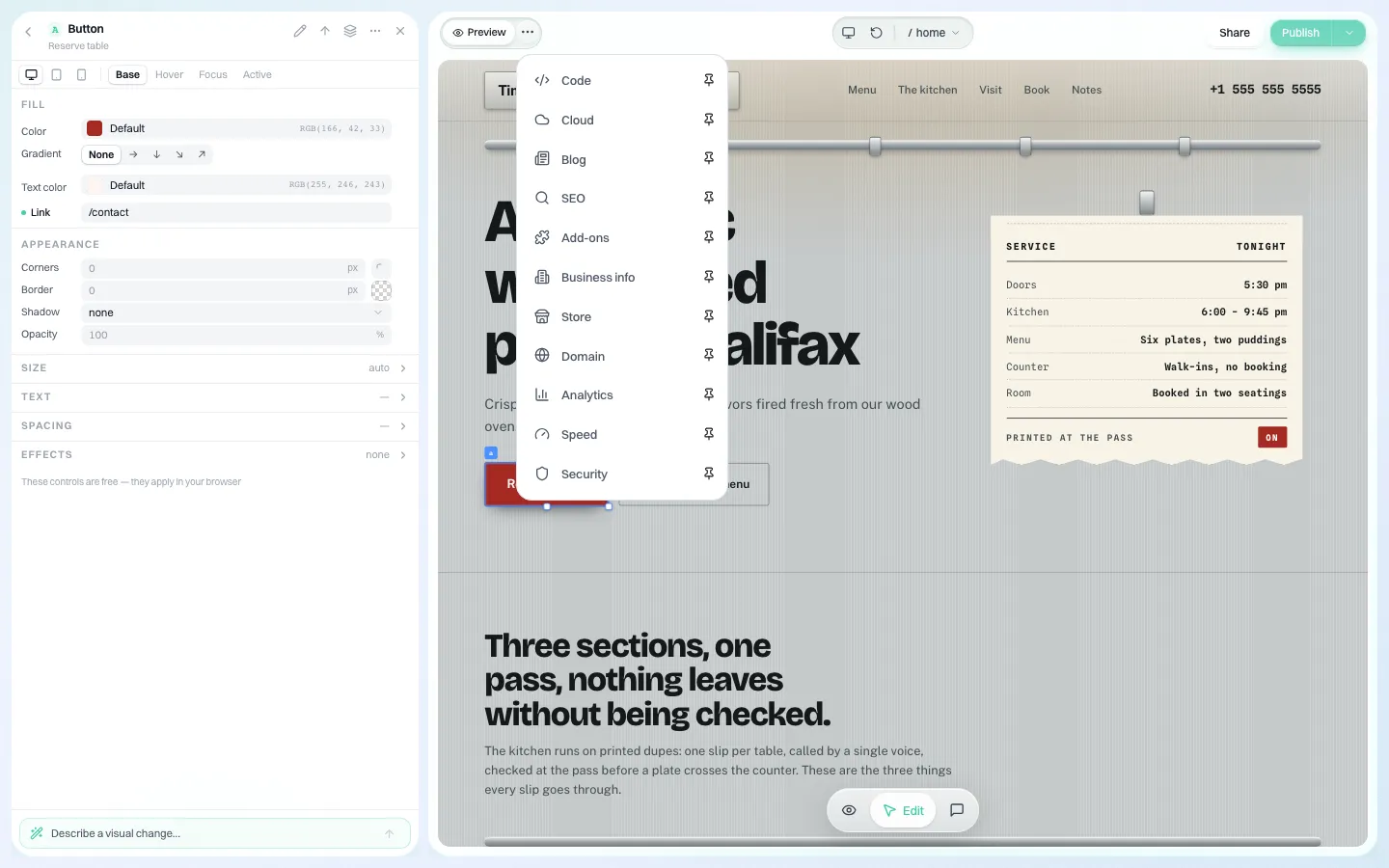
*The panels available in each site's editor, including Blog, SEO, Store and Domain.*
Opening and closing locations
Opening: create the concept or location as a client account months ahead and build a "coming soon" site with an email sign-up form. Connect the domain early so it is indexed by the time you open. Keep approval on through opening week.
Closing: do not just delete the site. Change it to a clear closing notice for a few months, pointing guests to the group's other concepts nearby, then remove it. Update map listings the same day. If you are selling a concept rather than closing it, download its site code (ZIP or GitHub) and transfer the domain with the sale.
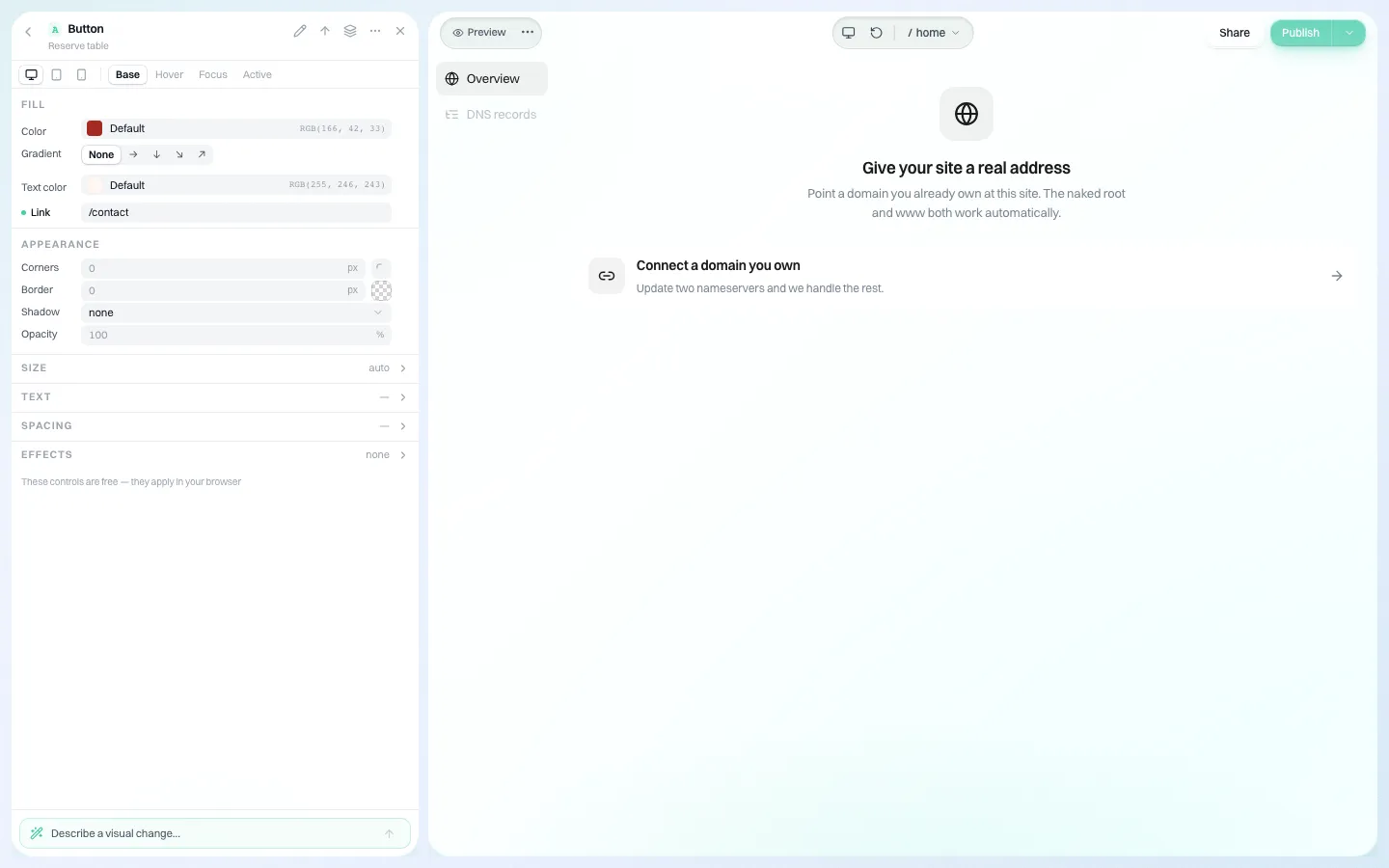
*Connecting a concept's own domain from its editor. Group marketing can switch this off for concepts that live on the group's domain.*
Questions to answer before a demo
- Which concepts have their own website today, and who can log in to each?
- Who owns each concept's domain?
- Who updates menus and hours at each concept, and how does the group know it happened?
- Which concepts, if any, are part of a 20-plus location chain?
- Which ordering and reservation tools must each site link to?
Book a demo and bring your two most different concepts. We will set both up so you can see one group account running two personalities.
Sources
Last checked 2026-10-25.
- U.S. Food and Drug Administration, Menu Labeling Requirements.
This section is general information, not legal advice.
Book a demo. Pricing is tailored to your volume and setup, and you get your exact price on the call. 0% transaction fee.
Frequently asked questions
Should each restaurant in a group have its own website?
Usually each concept should, because guests search for the restaurant by name and each concept has its own personality. Locations of the same concept can share a site with a page per location unless they differ a lot.
Does We.Inc do online ordering or reservations?
No. Online ordering, reservations, POS, delivery and loyalty stay in the tools you already use, and the site links to them. Forms for private dining and catering enquiries can run on the site.
Which restaurants must show calories on their menus in the US?
The FDA menu labeling requirements apply to restaurants and similar retail food establishments that are part of a chain with 20 or more locations under the same name offering substantially the same menu items. Ask your counsel whether they reach your online menus. This is general information, not legal advice.
Can group marketing check a concept's changes before they go live?
Yes. Approval before publishing can be the group default and switched off per concept, for example on during an opening and off once the team is settled. It is a single approval step.
What happens to a restaurant's website when we close it?
Replace it with a closing notice that points to your nearby concepts for a few months, then remove it. If the concept is sold, download its code as a ZIP or GitHub export and transfer the domain with the sale.
Keep reading
- White label website builder: the We.Inc platform
- White-label websites for franchisors
- Client permissions: what each site owner can do
- Manage many client websites from one account
- Website platform procurement checklist
More in White Label
- Embedding a website builder in your product: how the pieces fit
- Simvoly white label: what it costs, and the AI alternative
- Handover is a process, not a password in an email
- The SiteSwan alternative for resellers who want AI to build the sites
- Your content earns the click. Make sure it lands somewhere good.
- One league, forty clubs, a new volunteer every season
- Branch sites, specialty divisions and hiring campaigns, under one brand
- Twenty startups, twenty weeks, and half of them still have a placeholder homepage
We.Inc is an AI-powered website builder you can resell under your own brand. Launch a branded client dashboard, bill on Stripe Connect, and deliver AI-generated websites in minutes. White-label pricing is tailored to your volume and setup: book a 30-minute demo for a quote.
Product
- AI Website Builder: Describe a site in plain English; it's live in minutes
- White Label Platform: Your brand, your domain, your margin
- Enterprise: SSO, custom SLAs, and dedicated support
- Developer API: Embed site generation into your SaaS
Who It's For
- For Agencies: Resell under your brand
- For Freelancers: Your own branded builder
- For Hosting Providers: Add a builder to your stack
- For SaaS Platforms: Embed site creation via API
- For Startups
- For Financial Services
- For Healthcare
Features
- Drag & Drop Editor
- Built-in SEO Tools
- Custom Branding
- Client Dashboard
- Reseller Billing (Stripe Connect)
Resources
- Blog
- Help Center
- Free Business Tools
- Free UI Components
- Website Templates
- Template Collections
- Website Examples
- Guides
- Comparisons
- Alternatives
- Best Lists
- Reviews
- Pricing Guides
- Use Cases
- Glossary & Guides
- Integrations
- Developers
- Benchmark
- Windows App