Affiliate websites when every affiliate has its own board
A federation is not a company with branches. Each local affiliate is usually its own legal entity, with its own board, its own fundraising and its own opinions, licensed to use a shared name. That changes what a central website platform can and should control. This page is about giving affiliates good websites under the federation brand while respecting that they are independent.
TL;DR
- The national office is the brand owner; each affiliate is a client with its own site, editors and switches.
- Write a brand licence that says what the platform enforces (look, defaults, approval on launch) and what it leaves to the affiliate (content, donations, domain).
- Every affiliate site can be downloaded or synced to GitHub, which makes disaffiliation clean instead of hostile.
- Donations stay in each affiliate's own processor. Book a demo with three affiliates of different sizes.
Federation, association, chain: why the difference matters
We have a separate page on chapter websites for associations, where chapters are usually part of one membership organisation and run by volunteers. Federations are different in ways that matter for a website platform:
| Membership association chapters | Nonprofit federation affiliates | |
|---|---|---|
| Legal status | Often part of, or closely tied to, the national body | Usually separate nonprofits with their own boards |
| Who runs the site | Volunteers who turn over | Paid local staff, often a communications or development person |
| Money | Dues flow to national | Each affiliate raises and keeps its own funds |
| Brand | National owns it outright | National licenses it under an affiliation agreement |
| Leaving | Chapter dissolves | Affiliate may disaffiliate and keep operating under a new name |
That last row is the one most federations forget until it happens.
What the shared platform should control, and what it should not
Write the answer into your affiliation agreement or brand standards before you choose software. A starting split:
| Area | National controls | Affiliate controls |
|---|---|---|
| Logo, colours, typeface | Yes, through the brand settings | No |
| Site structure for required pages (about, governance, contact) | Sets the expectation in brand standards | Writes the content |
| Local stories, programmes, events, staff | No | Yes |
| Donations | No (beyond requiring a link) | Yes, in its own processor |
| Domain | Policy (for example affiliate.federation.org or the affiliate's own) | Owns its own domain if the policy allows |
| First launch | Approves | Submits |
| Ongoing changes | Spot checks | Publishes directly |
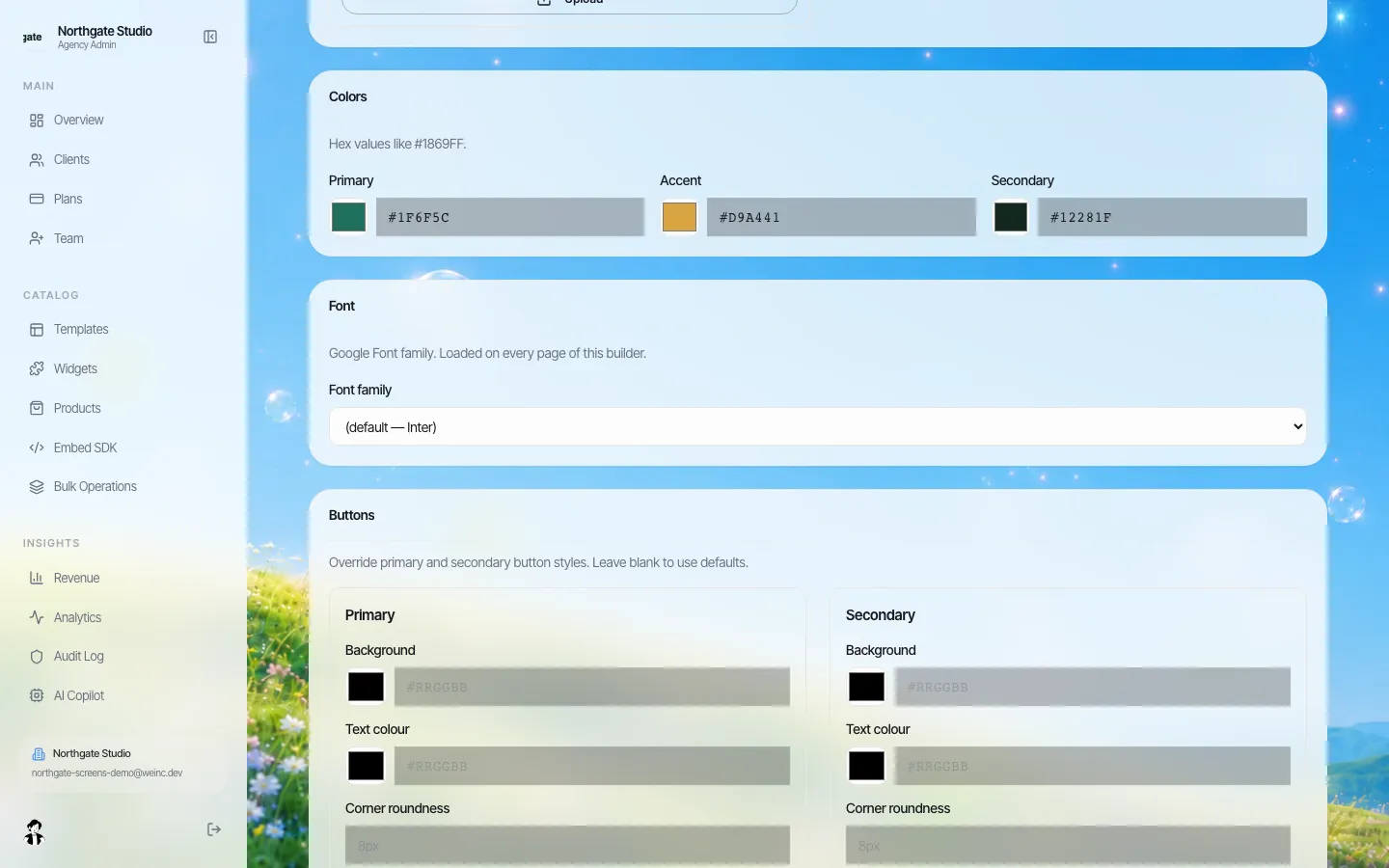
*Brand settings on a demo brand. The shared look is set once by the national office and applies to every affiliate's portal.*
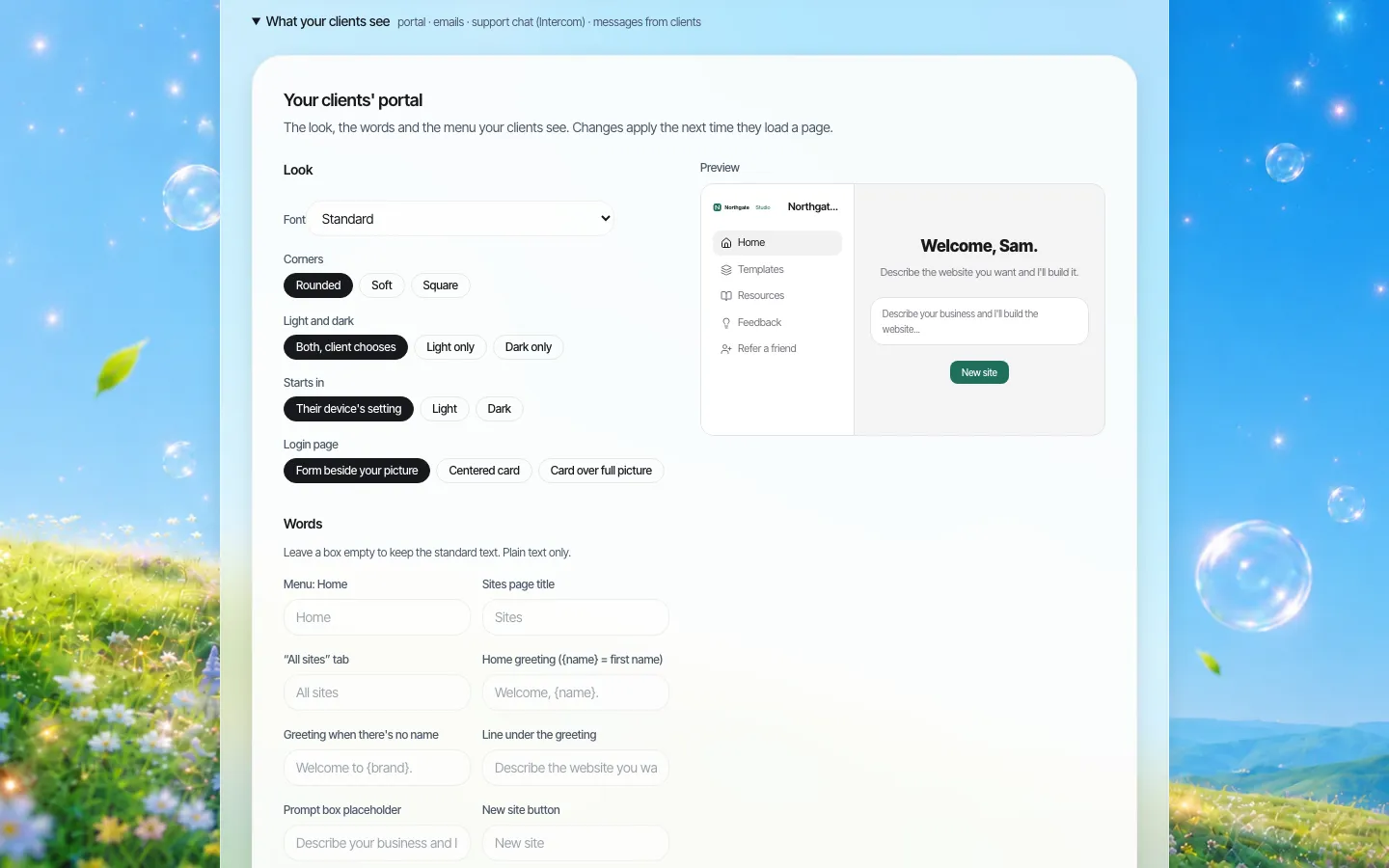
*The portal affiliates sign in to can be shaped to the federation: menu order, layout and light or dark look.*
Setting it up for affiliates of very different sizes
Federations often include a large metro affiliate with a full marketing team and a rural one with a single director. One setting does not fit both.
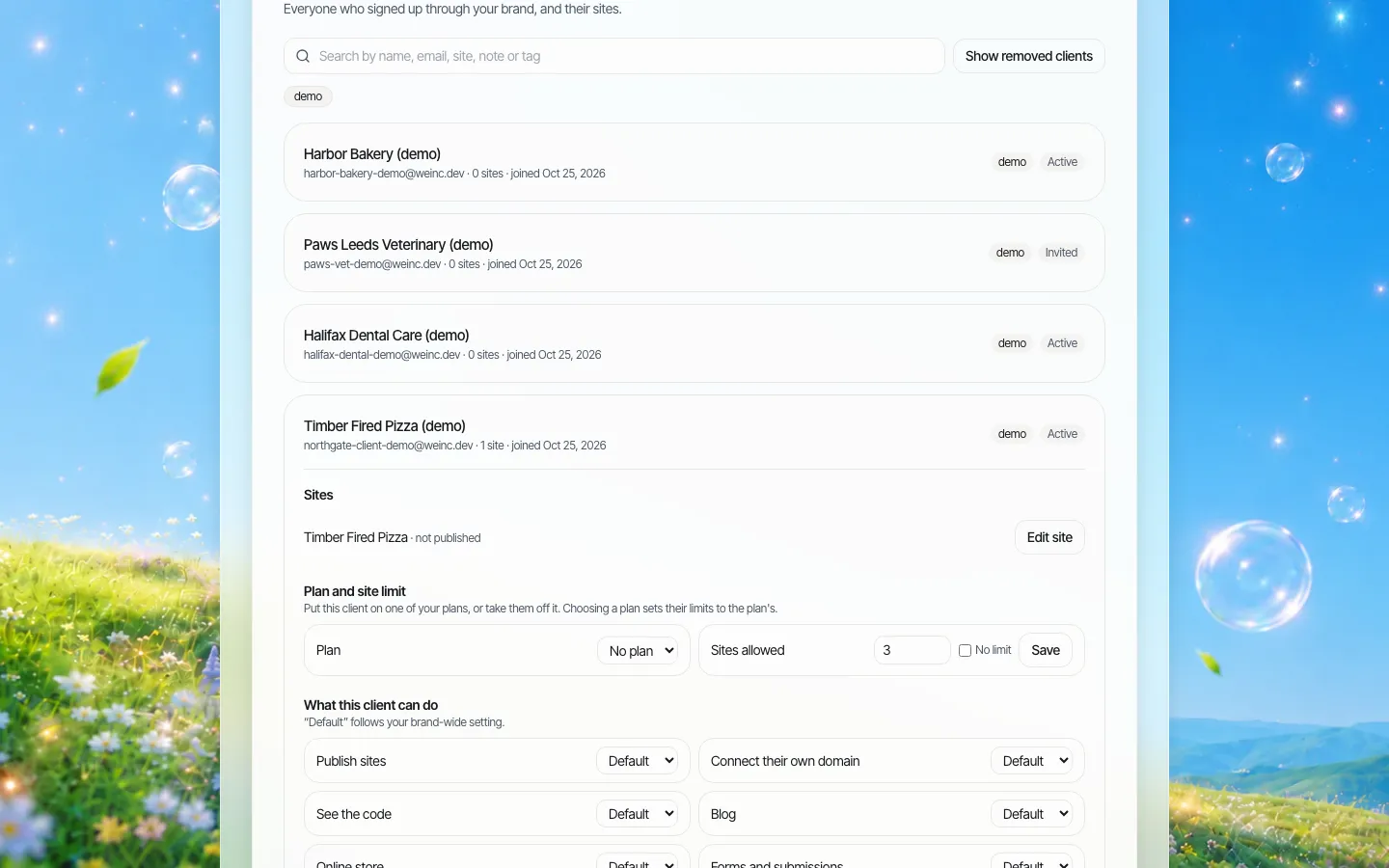
*Per-affiliate settings. The large affiliate can have more sites and code access; the small one can keep approval on until it is ready.*
- Large affiliates: a higher site limit (main site plus campaign sites), code access for their own developer, approval off once the first launch is approved.
- Small affiliates: one site, approval on for launch, help from a national staff member with the designer preset, who can open and edit any affiliate's site.
- New affiliates in their first year: approval on, a review date in the notes, and a tag so the national team can see them as a group.
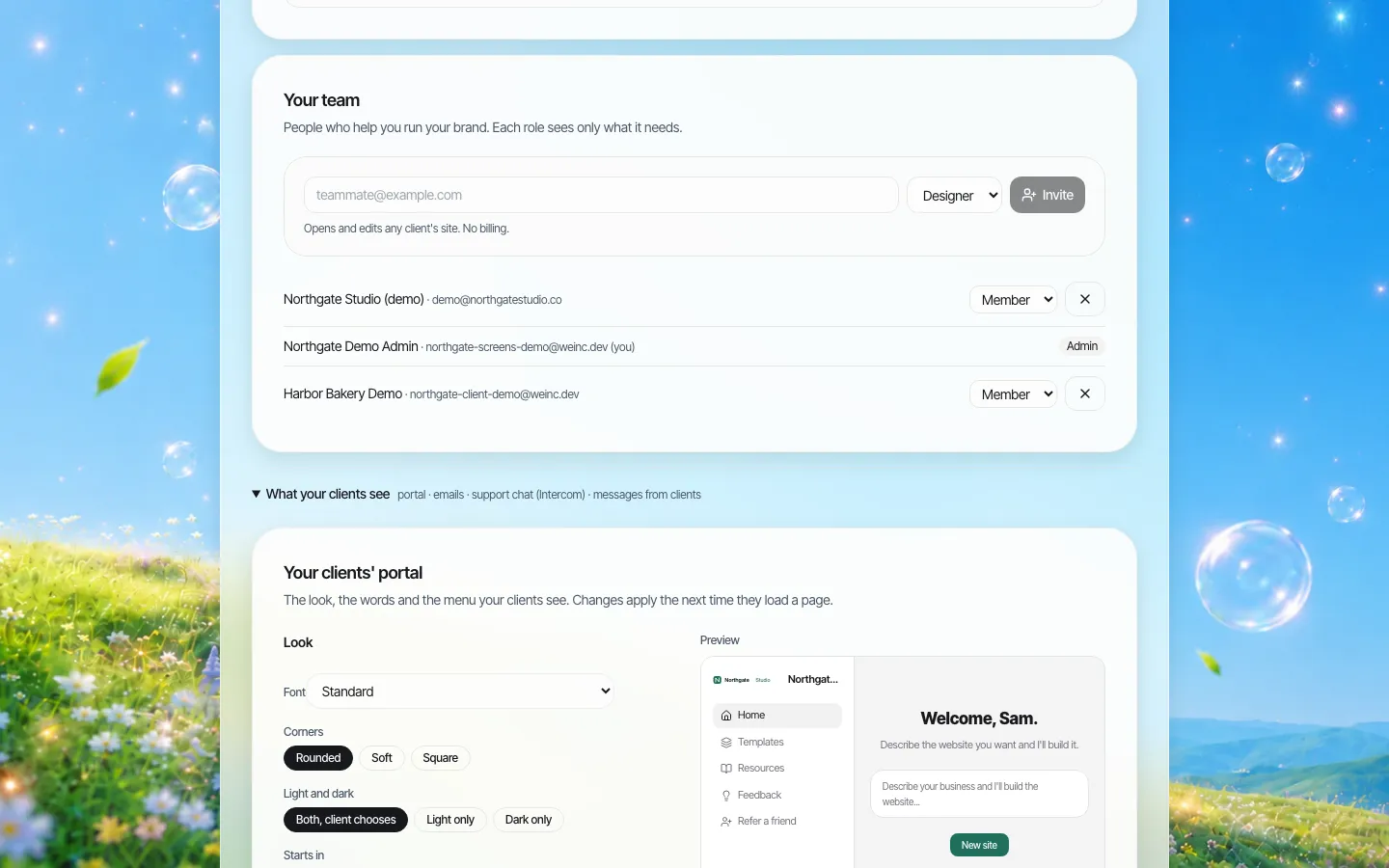
*The national team. A designer opens and edits any affiliate's site without billing access; roles are a fixed set, not a custom builder.*
Group exemptions: a reason to keep a clean register
Some federations hold a group exemption from the IRS, under which affiliated organisations are recognised as tax-exempt through a central organisation. The IRS says a group exemption letter "has the same effect as an individual exemption letter", and current procedures are in Revenue Procedure 2026-8. If you run one, you already maintain a list of subordinates. Keeping the platform's client register in step with that list (one client per subordinate, tagged with its status) gives you a second, practical check that the list is current. *General information, not tax advice; ask your counsel.*
Disaffiliation without a fight
Sooner or later an affiliate leaves, merges or is removed. The website is often the most visible part of the dispute: the affiliate wants its content and donors' trust; the national office wants its name off the site. Decide in advance:
- Content belongs to the affiliate. Its stories, photos and programme pages are its work.
- The brand belongs to the national office. Logo, name and shared design come off within an agreed period.
- Export is offered, not negotiated. The affiliate gets a download of its site's full code or a sync to its own GitHub repository.
- The domain follows the policy. If it is a subdomain of the federation's domain, it redirects to a "find your local affiliate" page; if it is the affiliate's own, they keep it.
- The account is paused, then removed. Paused first, so nothing is lost while the transition happens.
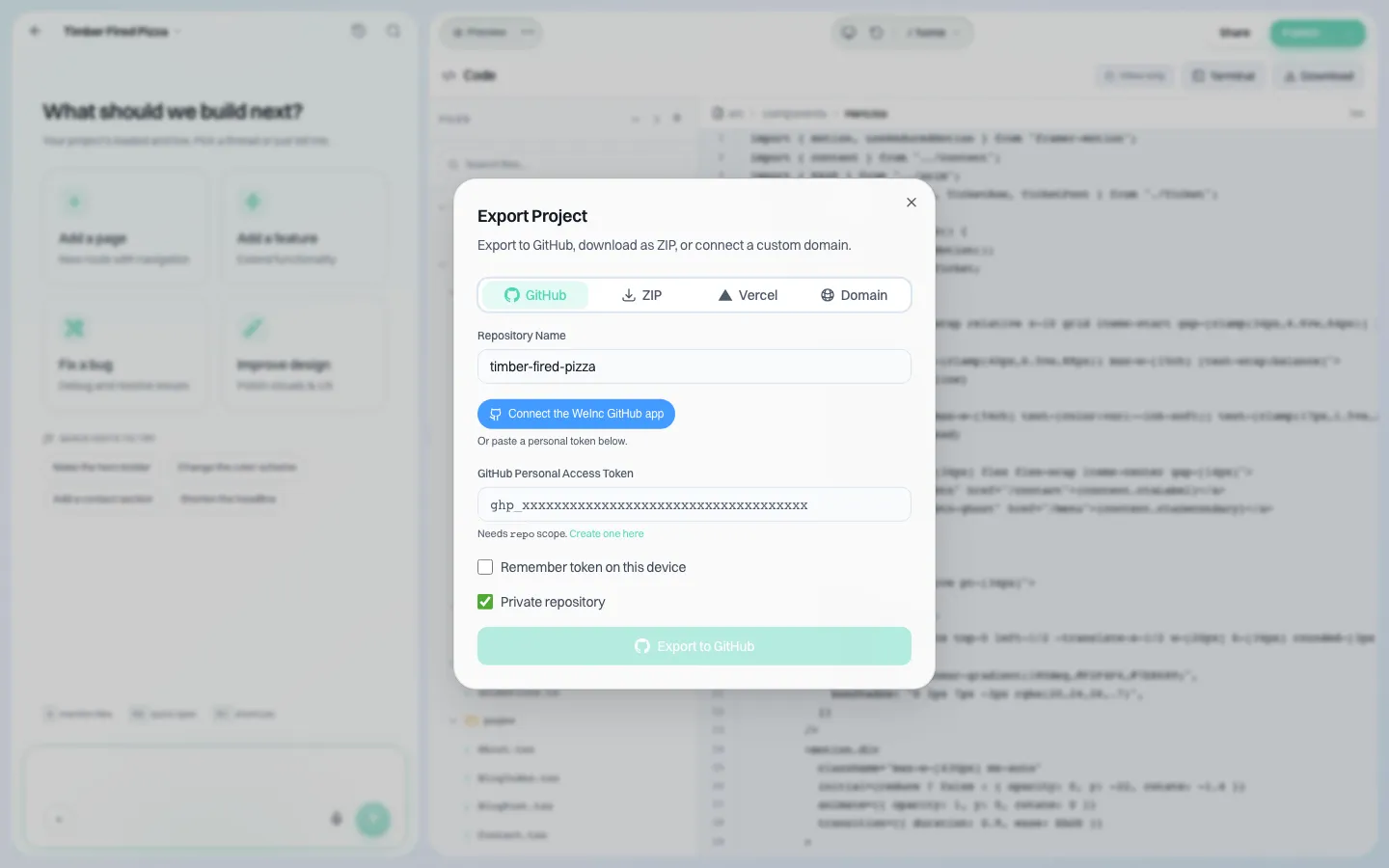
*Export to GitHub or ZIP. Offering this up front lowers the temperature of a disaffiliation.*
Fundraising and donor data
Each affiliate keeps its own donation platform and donor database. Affiliate sites link to the affiliate's own donation page, not to a shared one, unless your federation pools donations by agreement. Do not collect donor payment details through general site forms. The platform does have a store and payment features, but for donations most federations are better served by the tools their development teams already use.
The audit trail you will want later
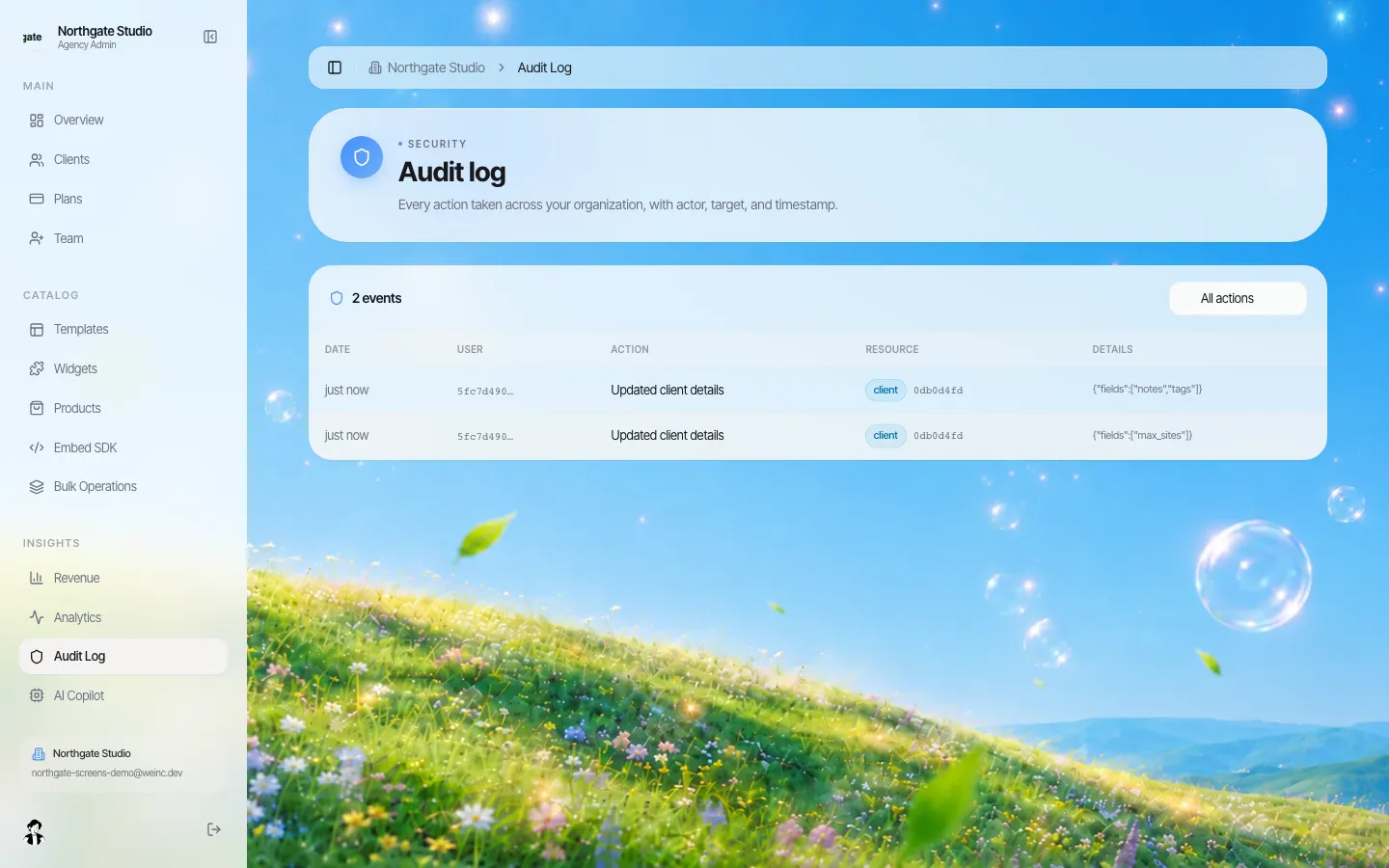
*The audit log records account actions such as switches changed and approvals granted.*
When an affiliate asks "who turned approval back on for us?", the log answers it. It is a record of account actions, not of every edit to a page, and we make no claims about how long entries are kept.
Where We.Inc fits
- Good fit: federations with tens to hundreds of affiliates, many of them small, where the national office wants a consistent look and a fair launch check without running every site.
- Less good: a federation that wants one central site with affiliate pages managed entirely by national staff. An enterprise CMS may suit that better.
- Not offered: shared-content syndication to all affiliates at once, multi-stage approval, certifications, hosting-region choice or an uptime figure.
Book a demo and bring three affiliates: your largest, your smallest, and your newest.
Sources
Last checked 2026-10-25.
- IRS, Group exemptions: what a group exemption is.
- IRS, Group exemption resources: Revenue Procedure 2026-8.
Book a demo. Pricing is tailored to your volume and setup, and you get your exact price on the call. 0% transaction fee.
Frequently asked questions
Can each affiliate have its own website under the federation brand?
Yes. Each affiliate is a client of the national brand with its own sites and editors, under defaults the national office sets, with approval before launch if you switch it on.
Can a large affiliate have more freedom than a small one?
Yes. Site limits, code access, store, blog, forms, domain connection and approval can all be set per affiliate, overriding the brand defaults.
What happens to an affiliate's site if it disaffiliates?
The platform lets you download the site's full code or sync it to the affiliate's own GitHub, then pause and remove the account. Your affiliation agreement should set the timing.
Do donations go through the platform?
Most federations keep each affiliate's own donation platform and link to it. That keeps donor data with the affiliate that raised it.
Keep reading
- Chapter websites for associations
- Brand governance across many websites
- Client permissions: what each site owner can do
- Audit log for a white-label website platform
- Website governance policy template
- Website vendor exit plan
More in White Label
- Your instructors want a website. Make sure it is yours, not a competitor’s
- Should a payments company give its merchants a website?
- Candidate websites for every customer on your campaign platform
- White-label website builder pricing
- You already made their logo, cards and sign. The website is the next thing they ask about.
- A website for every building, run by the company that manages them
- Agents want their own site. The brokerage needs it to stay on-brand. Both can be true.
- How to resell websites under your own brand
Product
Who It's For
- For Agencies
- For Freelancers
- For Hosting Providers
- For SaaS Platforms
- For Startups
- For Financial Services
- For Healthcare
Features
Resources
- Blog
- Help Center
- Free Business Tools
- Free UI Components
- Website Templates
- Template Collections
- Website Examples
- Guides
- Comparisons
- Alternatives
- Best Lists
- Reviews
- Pricing Guides
- Use Cases
- Glossary & Guides
- Integrations
- Developers
- Benchmark
- Windows App