Should a payments company give its merchants a website?
A merchant with a website on your platform is harder to lose than a merchant who only runs cards through you. That is the case for adding websites. The case against is real too: websites are a support burden, and a poor one makes your brand look worse. This page lays out the decision for processors, POS vendors and ISOs, and is honest about where We.Inc fits.
TL;DR
- Websites help retention only if merchants actually publish them. Measure published sites, not accounts created.
- You can build, partner with a white-label builder, or point merchants elsewhere. Each has a different cost and a different support load.
- We.Inc runs under your brand with your own client plans and API provisioning. Its built-in store connects to Stripe, not to your processor, which matters for you.
- If your product is restaurant ordering or deep inventory sync, a builder made for that is the better fit.
The retention argument, stated carefully
The pitch you will hear is that a merchant website "increases stickiness". It can, but only for merchants who publish a site, keep it current, and would lose something by switching providers. An account created on day one and never touched does nothing for retention. Before any vendor conversation, agree on the metric: the share of active merchants with a published site 90 days after signing.
Some of your competitors already include websites. Square, for example, offers a free online store builder to its sellers. That sets an expectation in merchants' minds that a website comes with the card machine, which is worth knowing when you decide how much to invest.
Build, partner or point elsewhere
| Option | What it costs you | What merchants get | When it is right |
|---|---|---|---|
| Build your own | A product team for years | Exactly what you design | Websites are central to your product |
| White-label a builder | Integration work plus a vendor fee | A full builder under your brand | You want websites soon without a new product line |
| Refer out | Almost nothing | A link to someone else | Websites are not part of your strategy |
Partnering looks cheapest on paper and often is, but count the integration. A merchant should be able to start a site from your dashboard without a second sign-up, and your support team needs to know which questions are yours and which are the builder's.
What a merchant website should actually do
Most small merchants need fewer things than a builder offers. Use this as the brief:
- Be findable. The business name, address, hours, phone and a map, correct and current.
- Say what they sell, with photos the merchant took.
- Let people get in touch: a form, a phone link, directions.
- Optionally take money, if the merchant sells online.
- Be easy to update by someone who is busy serving customers.
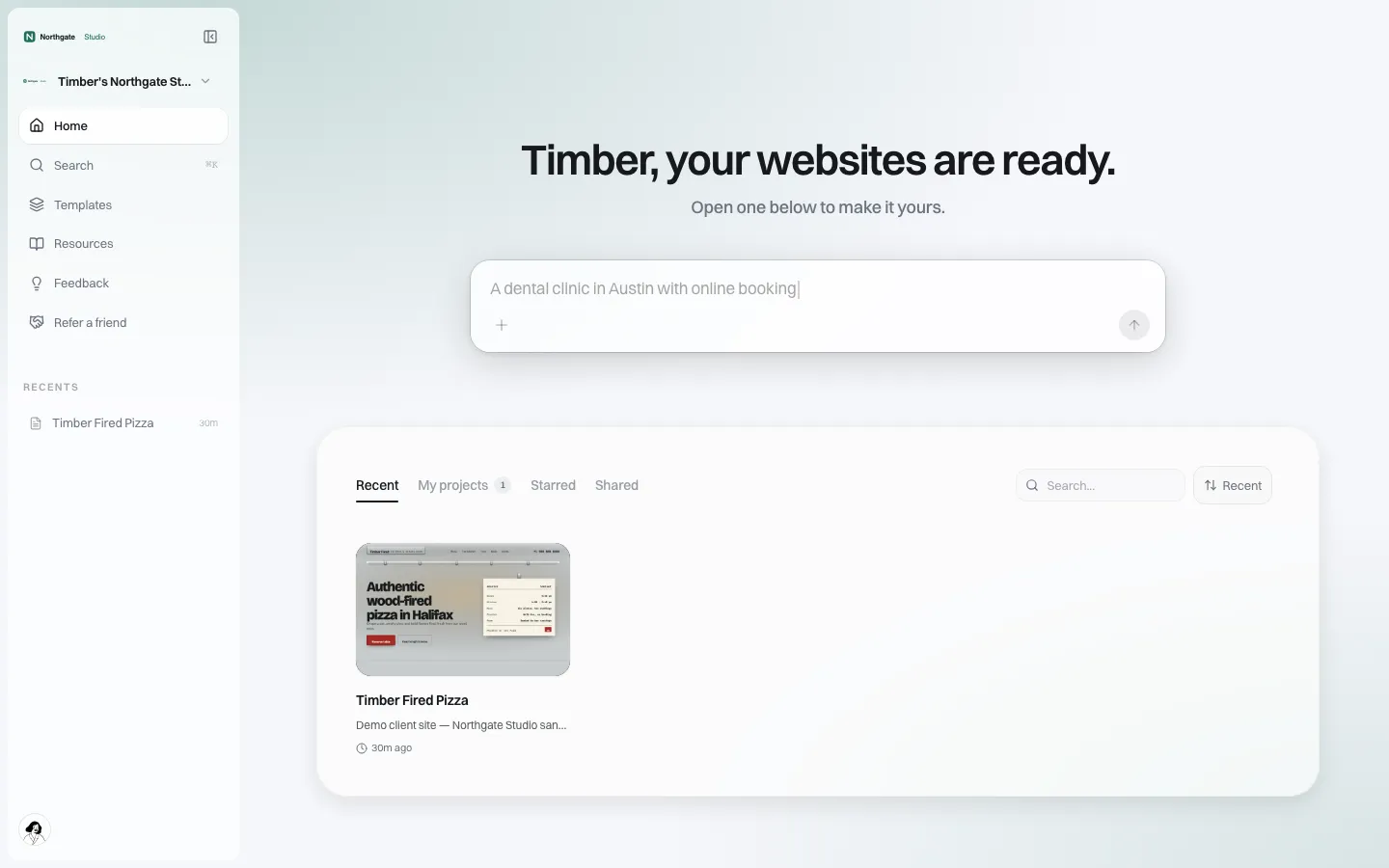
*What a merchant sees after signing in under a provider's brand. They describe their business and get a first draft to edit.*
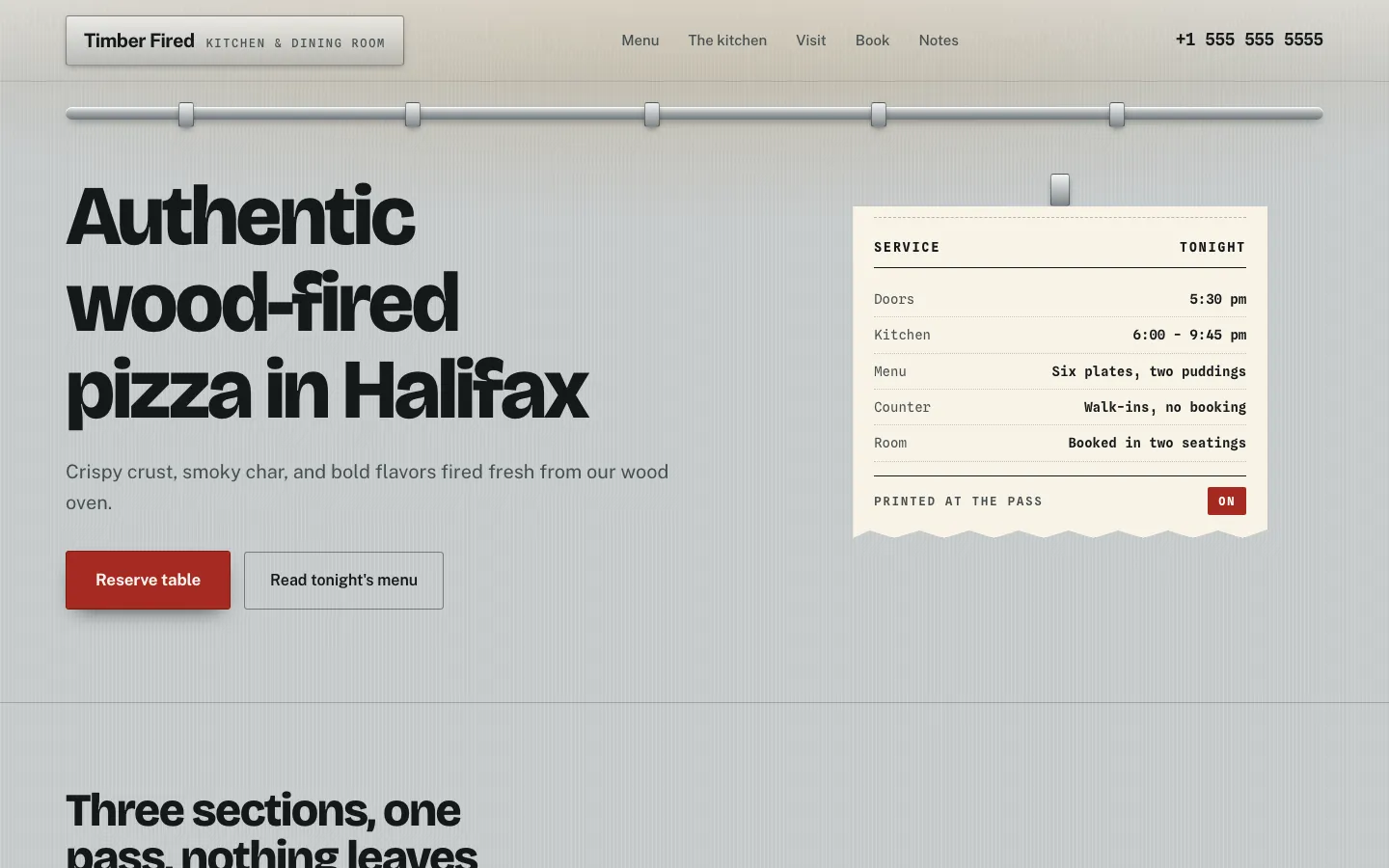
*A sample merchant site from a template, as previewed in the editor.*
The Stripe question
Be clear on this before you go further. The online store inside We.Inc sites connects to Stripe for payments. If you are a processor, you probably want your merchants' online payments to run through you, and today the built-in store does not plug into another processor. There are two ways to handle that:
- Leave the store off. Use the per-merchant switch to turn the store off, and link the site's "Order" or "Pay" button to your own hosted checkout or payment links.
- Allow it where it does not conflict, for example for an ISO whose merchants already use Stripe.
Either way, this is a conversation for the demo. We would rather you know now than find it in month three.
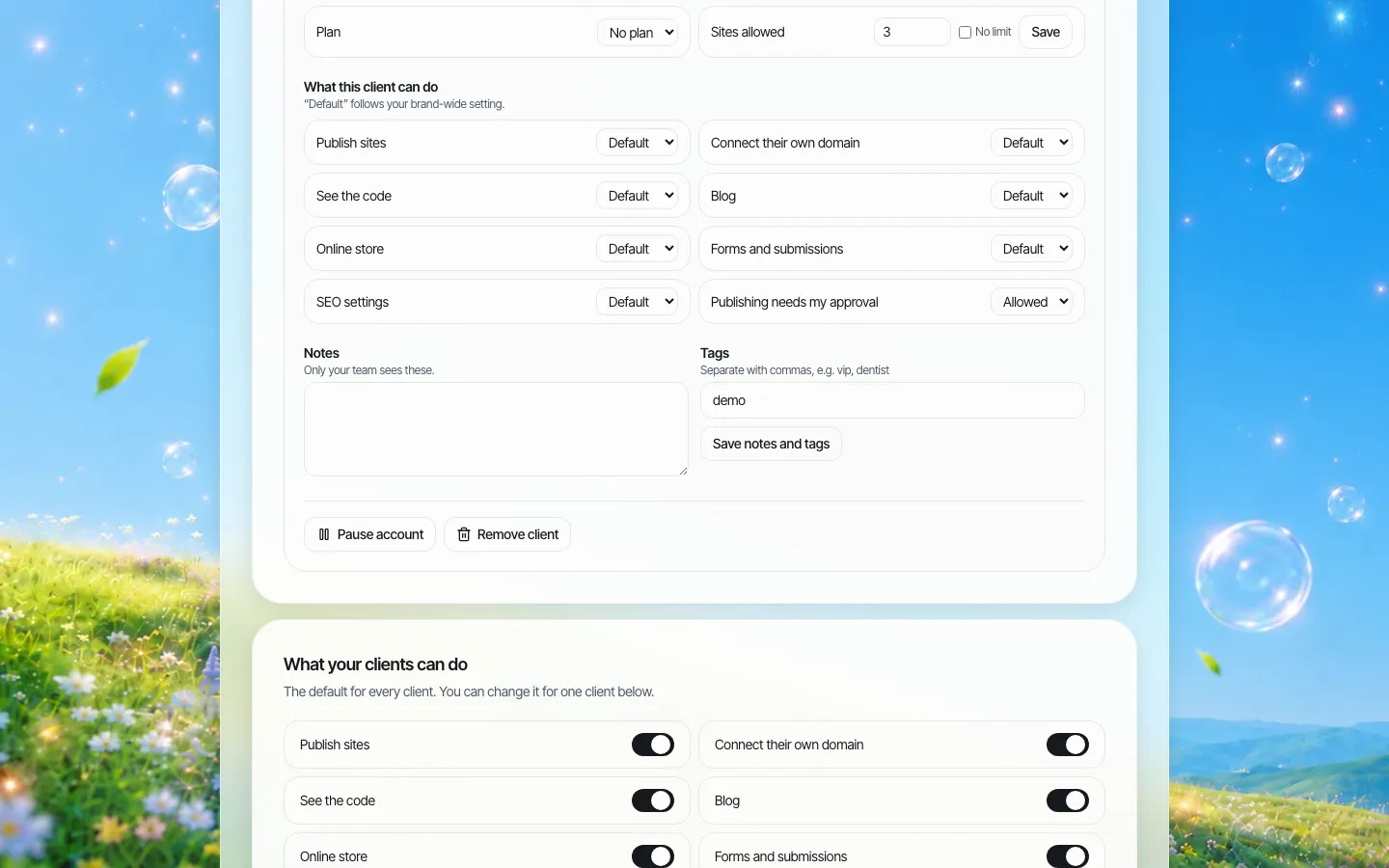
*Per-merchant switches. The online store is one switch, so you decide merchant by merchant.*
Wiring it into your platform
- Accounts. Your back end can create merchant accounts through the API when a merchant is approved, so there is no second sign-up.
- Events. Webhooks tell your systems when a merchant signs up, creates a first site, publishes, or has not published seven days after joining. The last one is the event your success team will use most.
- Inside your dashboard. If you want the builder to appear inside your merchant portal, there is an embedded mode with server-side sessions; see the embedded builder guide.
- Your brand everywhere. Sign-in, emails and the dashboard domain carry your name.
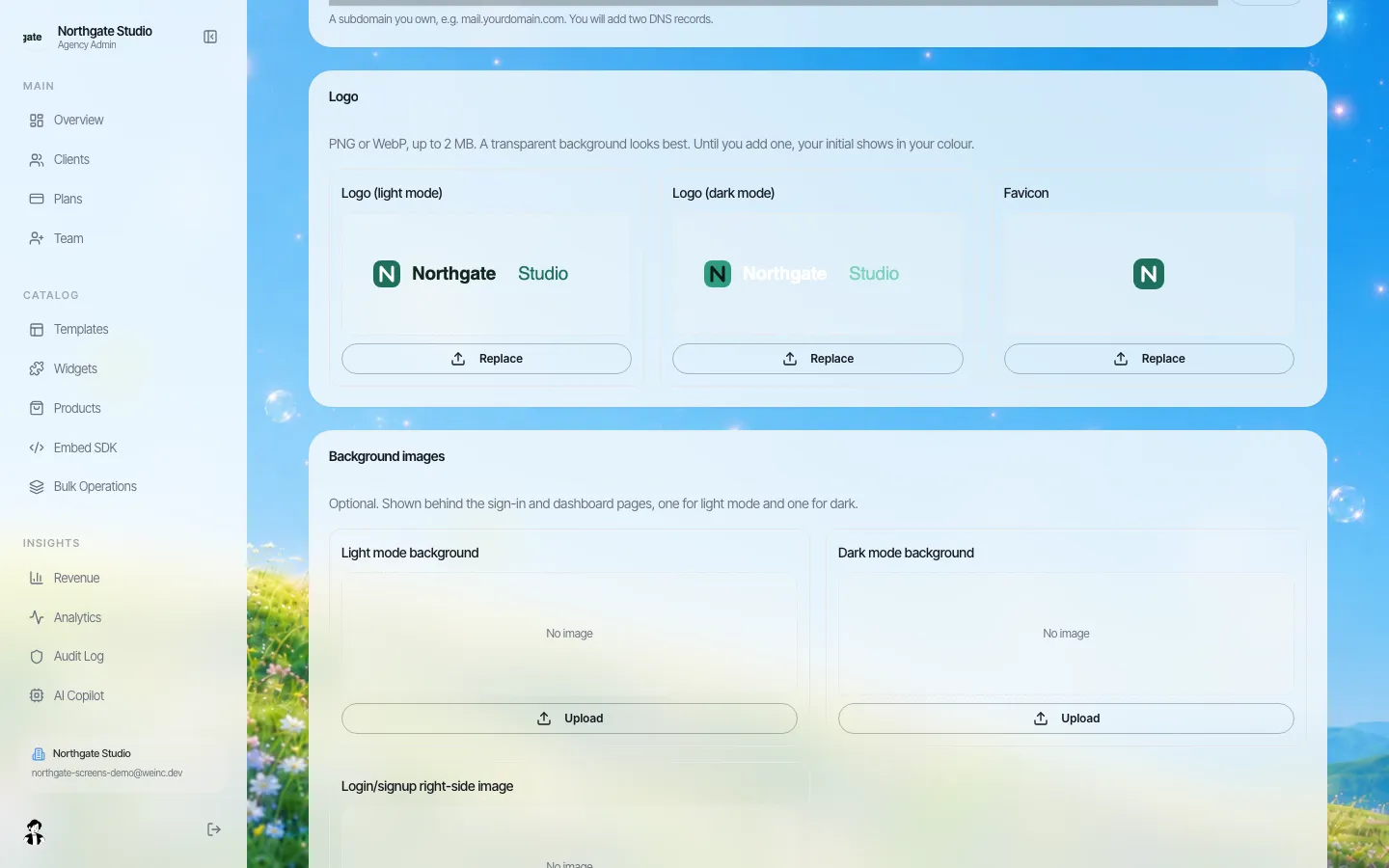
*Brand settings. Your logo, colours and fonts are set once for every merchant.*
Charging for it, or bundling it
Some processors bundle a basic site into a plan; some charge a monthly add-on. You can set your own client plans in We.Inc and collect through your own connected Stripe account, or bill in your own system and keep plans in step through the API. Our prices to you are quoted in a demo.
Support: decide the split before launch
| Question type | Who answers |
|---|---|
| "My card reader is down" | You |
| "How do I change my opening hours?" | Help pages under your brand, then your first-line support |
| "My domain is not connecting" | Your support with ours behind it |
| "Can you redesign my site?" | Your services team, a partner agency, or nobody: decide in advance |
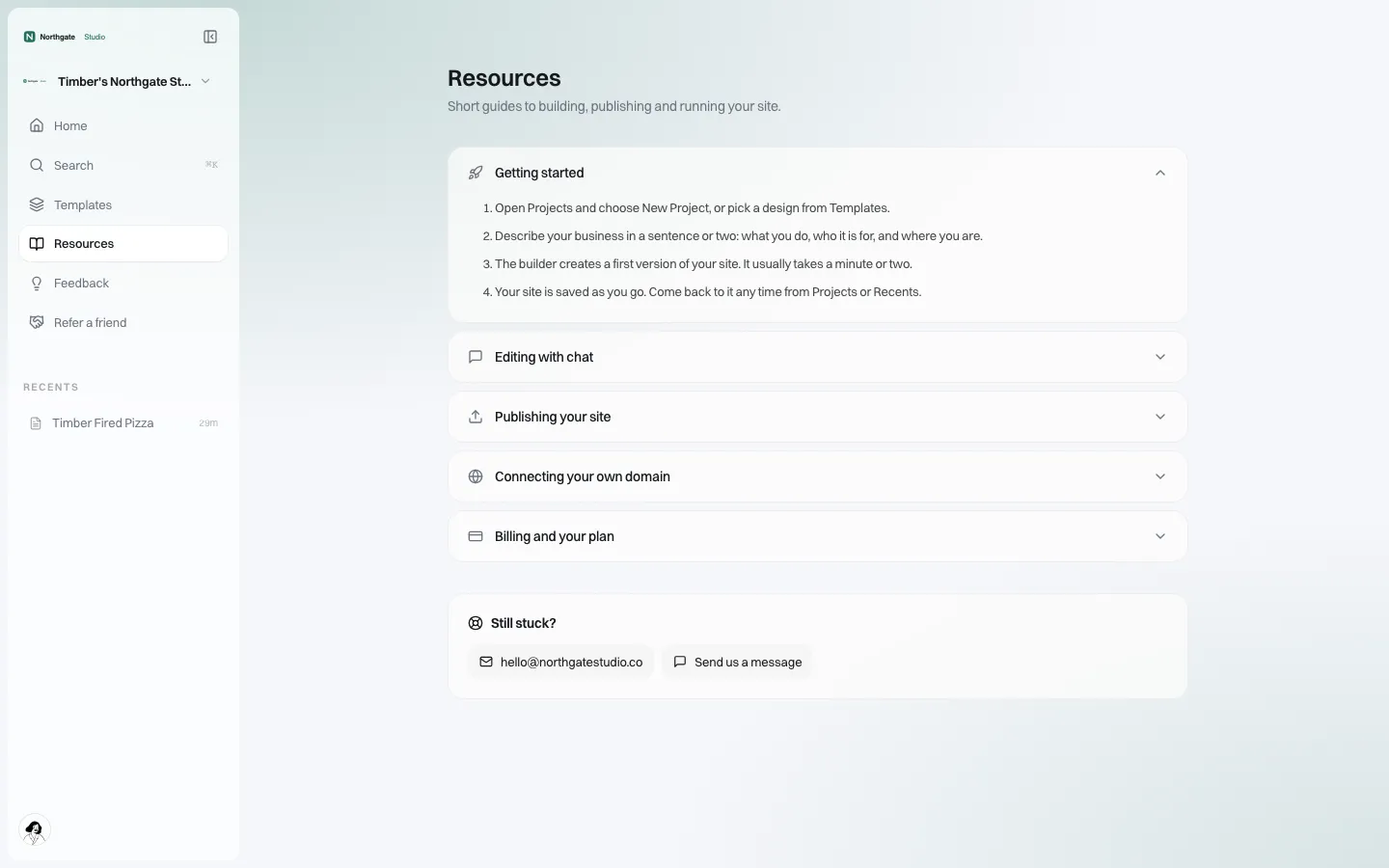
*Help pages show your support address, so merchants contact you, not us.*
A 90-day pilot before a full launch
Do not announce websites to every merchant at once. A pilot answers the questions your leadership will ask:
| Days | What happens | What you learn |
|---|---|---|
| 1-14 | Brand the builder, connect the API to merchant onboarding, set defaults (store off or on) | How much engineering it really takes |
| 15-30 | Offer it to 50 to 100 merchants in one segment, such as salons or retail | Uptake: how many start a site when offered |
| 31-60 | Success team works the "not published after 7 days" list | Whether a nudge moves merchants to publish |
| 61-90 | Compare churn and support tickets for merchants with and without a published site | Whether websites are worth a wider launch |
Pick a segment where the website matters to the merchant: appointment-based services and independent retail usually care more than businesses that live on walk-in trade. Keep the pilot merchants' feedback; the client inbox collects feedback merchants send from their portal.
Where We.Inc fits, and where it does not
Good fit: an ISO, processor or POS vendor serving local service and retail businesses that need a credible, easy site, where the website supports retention rather than being the main product.
Better served elsewhere:
- Restaurant ordering tied to the POS menu and kitchen. A product built for restaurant ordering will serve those merchants better.
- Deep inventory sync between POS and an online shop. We do not claim a POS inventory integration.
- Payments through your own processor inside the site's checkout, unless you link out as described above.
Merchants can leave with their site: code can be downloaded or synced to GitHub. The embedded builder guide covers the engineering side.
Book a demo. Bring your merchant mix and we will tell you honestly which segments the builder suits.
Sources
Last checked 2026-10-25.
- Square, Online store and website builder: Square describes it as a way to build a free online store or ecommerce website.
Book a demo. Pricing is tailored to your volume and setup, and you get your exact price on the call. 0% transaction fee.
Frequently asked questions
Can merchants take payments through our processor on the site?
Not through the built-in store, which connects to Stripe. You can turn the store off per merchant and link to your own hosted checkout or payment links instead.
Can we create merchant accounts automatically?
Yes. The API can create client accounts, and webhooks report sign-ups, first sites, publishing and merchants who have not published after seven days.
Does it sync with our POS inventory or menu?
No. We do not claim a POS inventory or menu integration.
Keep reading
- White label website builder: the We.Inc platform
- Embed a website builder in your SaaS
- Client permissions: what each site owner can do
- White-label reseller billing
- Resell websites under your own brand
- Website vendor exit plan: contract clauses
More in White Label
- Candidate websites for every customer on your campaign platform
- White-label website builder pricing
- You already made their logo, cards and sign. The website is the next thing they ask about.
- A website for every building, run by the company that manages them
- Agents want their own site. The brokerage needs it to stay on-brand. Both can be true.
- How to resell websites under your own brand
- Website Builder Reseller Program & Billing
- White-Label Reseller Dashboard
Product
Who It's For
- For Agencies
- For Freelancers
- For Hosting Providers
- For SaaS Platforms
- For Startups
- For Financial Services
- For Healthcare
Features
Resources
- Blog
- Help Center
- Free Business Tools
- Free UI Components
- Website Templates
- Template Collections
- Website Examples
- Guides
- Comparisons
- Alternatives
- Best Lists
- Reviews
- Pricing Guides
- Use Cases
- Glossary & Guides
- Integrations
- Developers
- Benchmark
- Windows App