Give business customers and members a website, under your institution's name
Community banks and credit unions compete for small-business relationships with fintechs that bundle payments, payroll and a web presence. A branded website builder is one of the few benefits a local institution can add without building software. This page is about how that offer works in practice, who is responsible for what, what your vendor review will ask, and where the risks are.
TL;DR
- The offer: a business customer or member signs in on your branded portal, builds a site for their own business, and owns it. You provide the tool; you do not write their content.
- Decide early whether it is free with an account, part of a business package, or a paid add-on. The platform supports all three, including no charge at all.
- Bank regulators (Federal Reserve, FDIC, OCC) published interagency third-party risk guidance in June 2023; NCUA has its own guidance for credit unions. Expect a vendor review against them.
- We.Inc gives you a branded sign-in, dashboard and emails, per-customer switches, an audit log, and code each customer can take with them. Book a demo to walk through it.
Why an institution would offer websites at all
A small business needs four things in its first year: an account, a way to take payments, somewhere to keep the books, and a website. Banks and credit unions handle the first and increasingly the second. The website is where the customer goes elsewhere, often to a platform that also sells them payments, a card reader and eventually a loan.
Offering a website builder under your name is a way to stay in that first-year conversation. Typical places it shows up:
- Business account opening. "Your account comes with a website for your business."
- Small-business packages. Bundled with treasury services, merchant services or a business credit card.
- Member benefits. Credit unions that serve self-employed members, gig workers or a field of membership with many sole traders.
- Community programmes. Small-business workshops, main-street revitalisation, minority-owned and women-owned business initiatives.
- Lending relationships. New SBA or microloan borrowers who need a credible web presence.
None of this needs to be a revenue line. For most institutions the measure is deposits and relationships, not website fees.
The responsibility split, in one table
The single most important design decision: the institution provides the tool, the customer builds and owns the site. Your staff should not be writing a bakery's menu or approving a plumber's prices. Put that in writing before launch.
| Area | Institution | Customer or member | Platform vendor |
|---|---|---|---|
| Brand on the portal, emails and sign-in | Owns and approves | Sees it | Provides the controls |
| The customer's site content | Not responsible; does not edit | Writes, owns and publishes | Provides the editor |
| The customer's domain | No role | Buys and owns it | Lets them connect it |
| Who can sign up | Decides (invite only, or all business customers) | Accepts the invitation | Enforces invite settings |
| Support for the website tool | First line, or hands off | Asks for help | Second line to the institution |
| Charging for the service | Decides (free, packaged, paid) | Pays if charged | Provides client billing if used |
| Leaving | Can end the programme | Can download their site's code | Provides the export |
Two notes. First, if a customer's site says "provided by" your institution, that is a reputational link even when you do not edit it, so a short acceptable-use policy is worth having. Second, be careful the website offer never looks like a condition of credit; your compliance team will have views on how it is described in lending conversations.
What your vendor review will ask
Federally regulated banks will review a website platform against the Interagency Guidance on Third-Party Relationships: Risk Management, issued in June 2023 by the Federal Reserve, the FDIC and the OCC. It describes a life cycle: planning, due diligence and selection, contract negotiation, ongoing monitoring, and termination. Federally insured credit unions have NCUA's own guidance on evaluating third-party relationships, which covers risk assessment and planning, due diligence, and risk measurement, monitoring and control.
The depth of review is supposed to match the risk. A website tool that holds no account data and is not connected to core banking is usually lower risk than a payments or lending partner, and you can keep it that way by design:
- No integration with core or online banking. Customers sign up with an email, not their banking credentials.
- No account data shared. You invite a business by email; you do not send the platform account numbers, balances or transaction history.
- No institution-branded forms collecting financial information. The customer's site is about their business.
Questions to have ready answers to, taken from the guidance's life cycle:
- Planning: what is the benefit (relationships, deposits), and what happens to customers' sites if you end the programme?
- Due diligence: what data does the vendor hold (names and emails of invited customers, their site content), and who at the vendor can see it?
- Contract: who owns customer sites and code, what notice is given before changes, and what data is returned or deleted at the end?
- Monitoring: who at the institution watches sign-ups, complaints and site content?
- Termination: can every customer leave with their site? (With We.Inc each site's code can be downloaded or synced to GitHub.)
Our procurement checklist and vendor exit plan cover the contract wording. We do not hold SOC 2 or similar certifications and we do not make uptime or data-region commitments; ask us for what we can provide in writing and judge it against your own risk rating.
What your customers see
The portal, sign-in page, dashboard and emails carry the institution's name, logo and colours. The customer never needs to know who the platform vendor is.
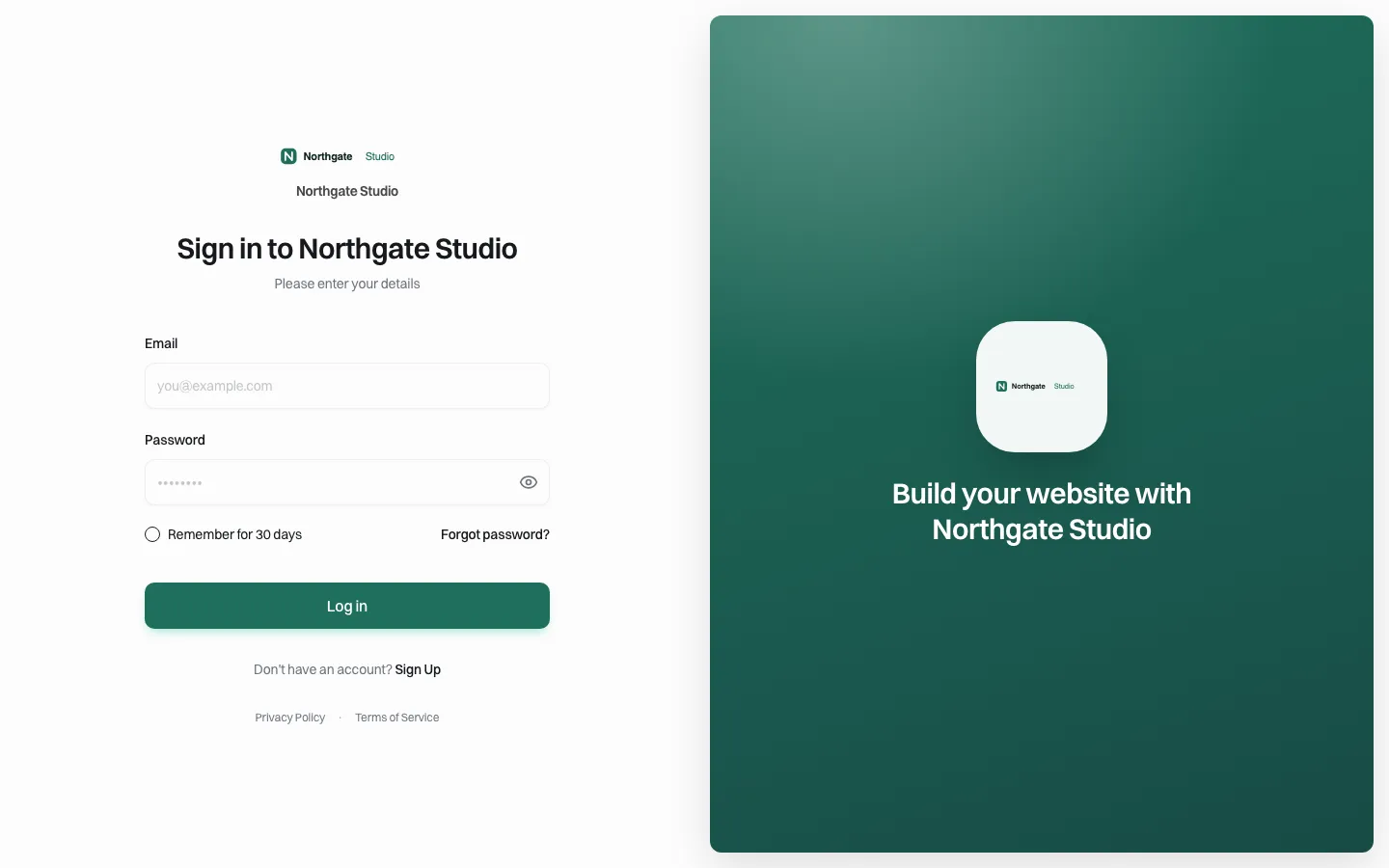
*A branded sign-in page (demo brand). Your institution's name and colours replace these.*
After signing in, the customer lands on their own dashboard, describes their business in plain English, and the AI builds a first version of the site that they then edit.
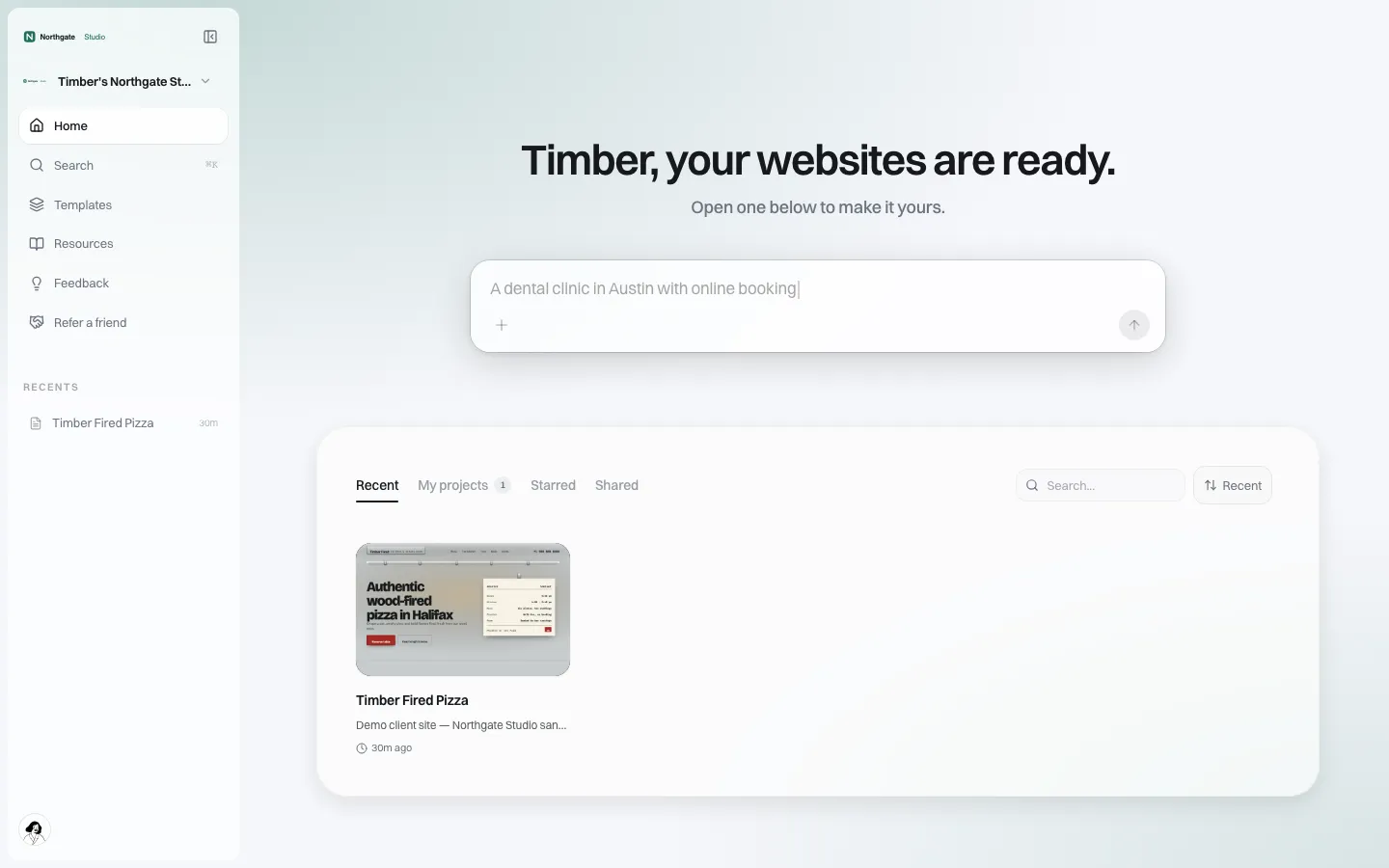
*The customer's dashboard on the brand's own web address.*
If you include the website free with an account, no plan or price needs to be set; the billing page simply says who provides access.
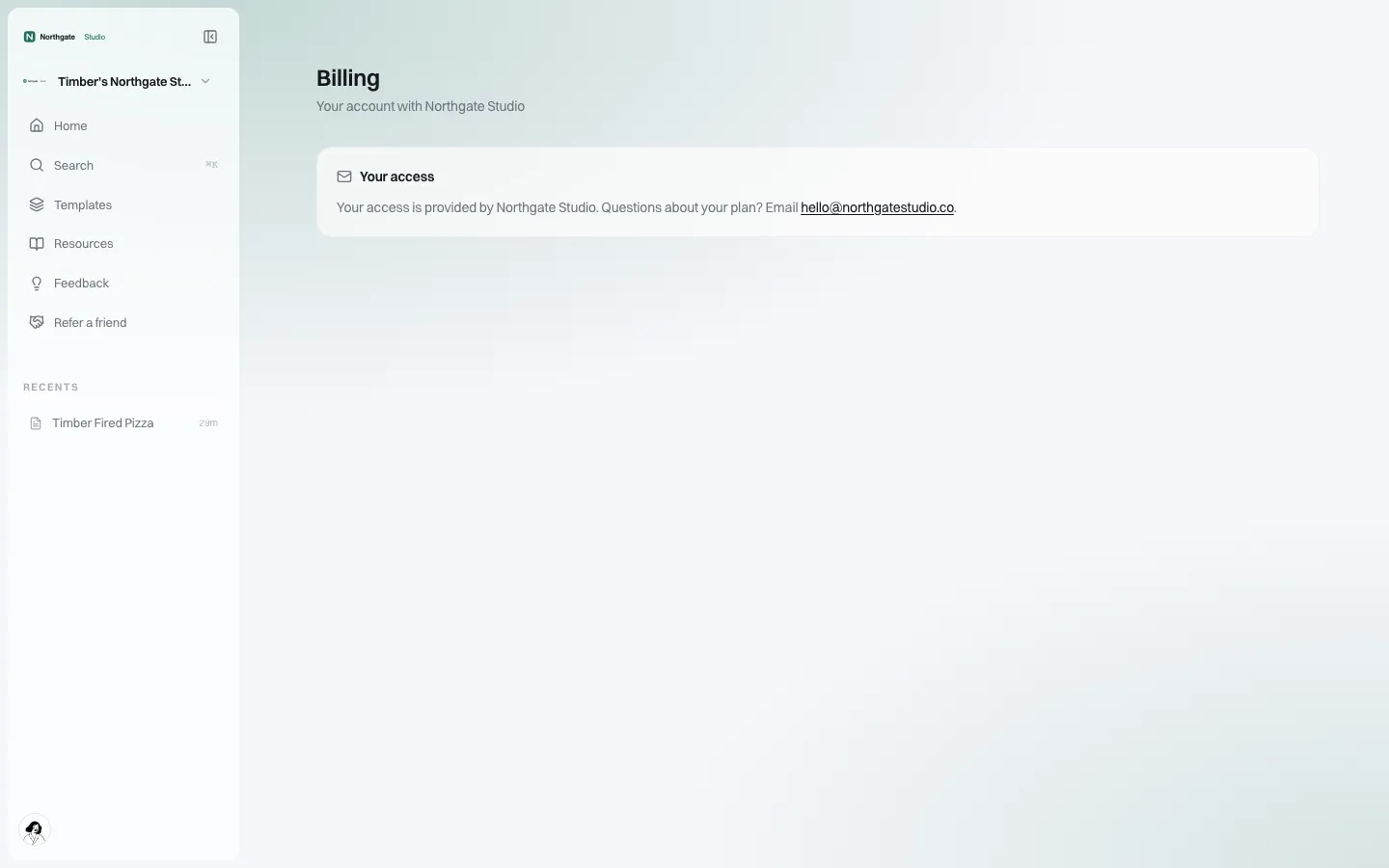
*Billing as the customer sees it when no plan is set: access is provided by the institution.*
Emails such as invitations and "your website is ready" go out with the institution's branding, and can be sent from your own domain once it is set up.
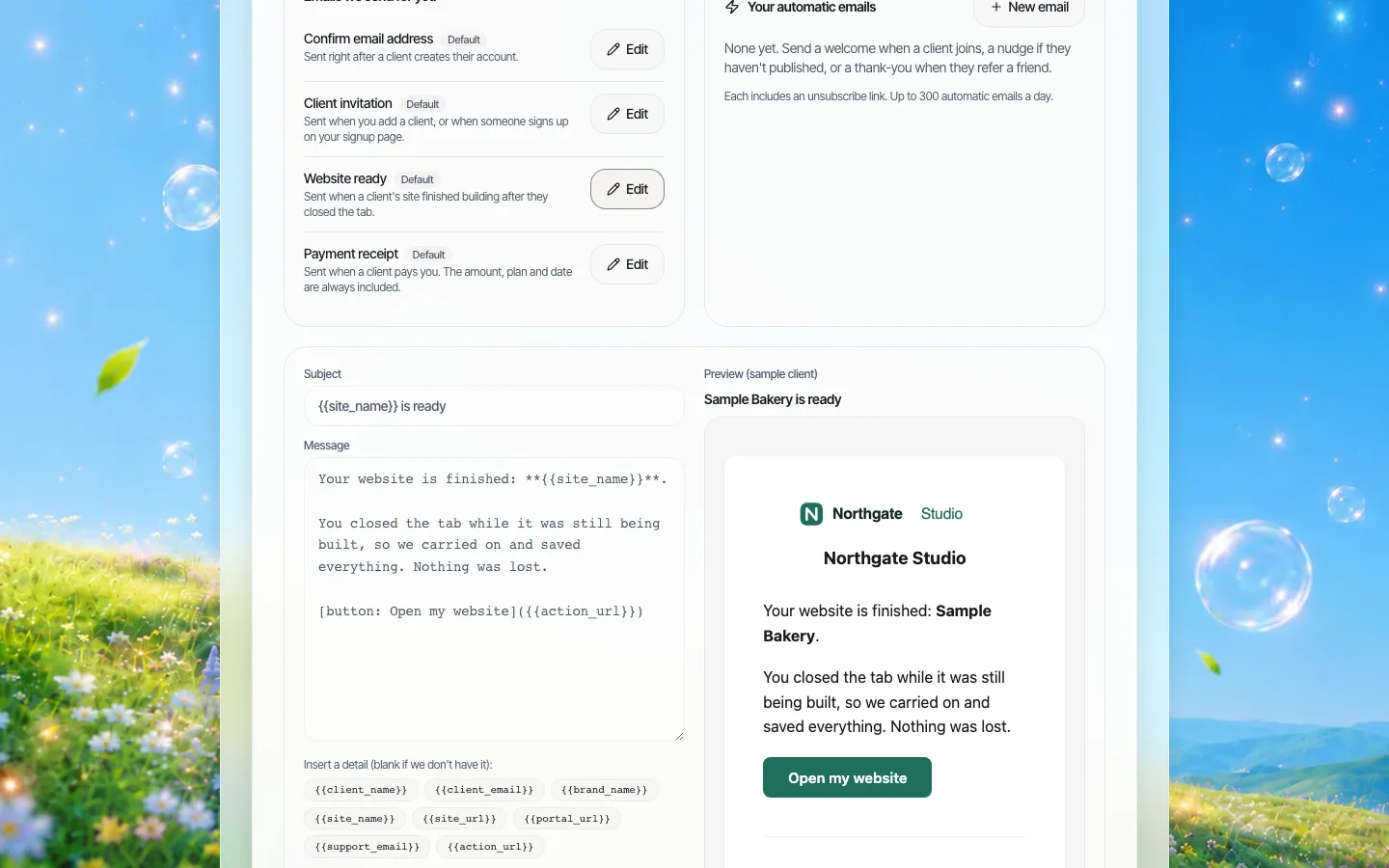
*A branded "website ready" email in the editor preview.*
Guard-rails you control
Default switches apply to every customer, and you can change them per customer. A sensible starting point for a bank programme: publishing on, own domain on, store off unless you have a merchant-services tie-in, and forms on but with your acceptable-use policy covering what they may collect.
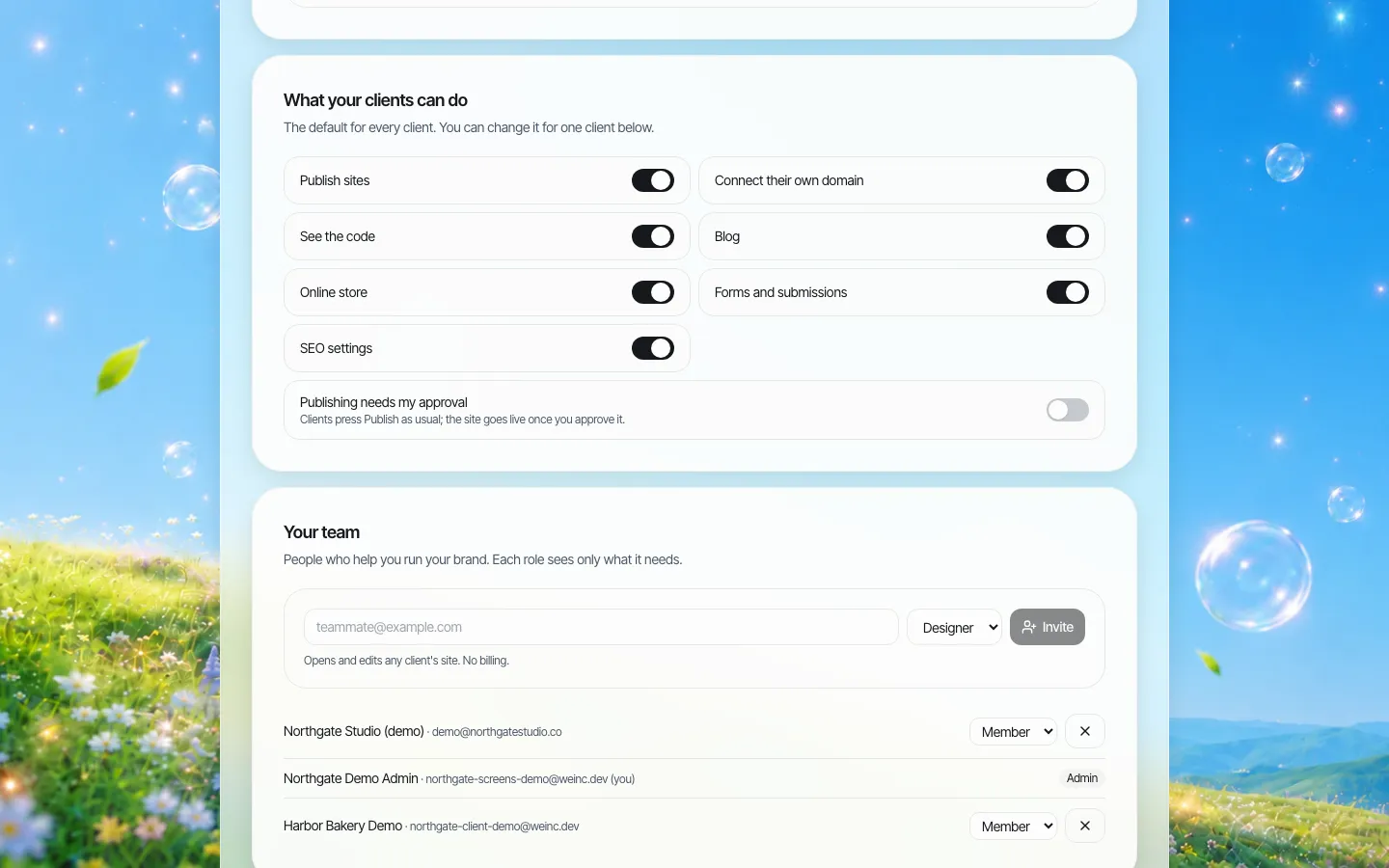
*Brand-wide defaults for every customer, set once.*
Staff access has three levels: owner, admin and member. Keep owners to the programme lead and one deputy. Branch staff who only invite customers do not need admin rights.
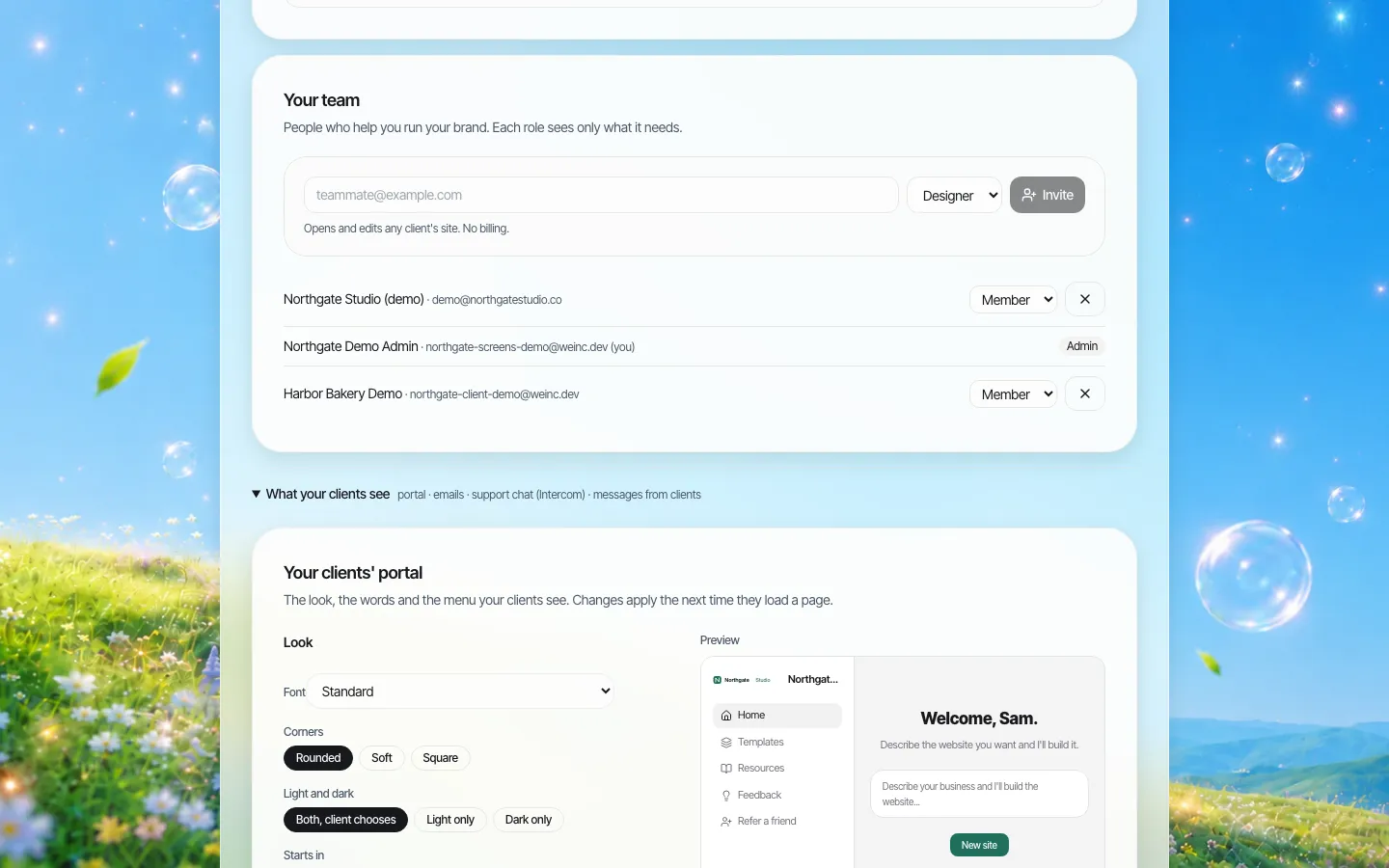
*The team panel. Roles are owner, admin and member; there are no custom roles.*
The audit log records organisation actions such as changes to a customer's settings, which helps when the monitoring stage of your vendor review asks who did what.
The customer's exit, not just yours
A business that leaves the institution should be able to take its website with it. On We.Inc each site's code can be downloaded as a ZIP or pushed to a GitHub repository, and the customer's own domain stays theirs. That is a fairer offer than a site that disappears when an account closes, and it is a simpler termination story for the vendor review.
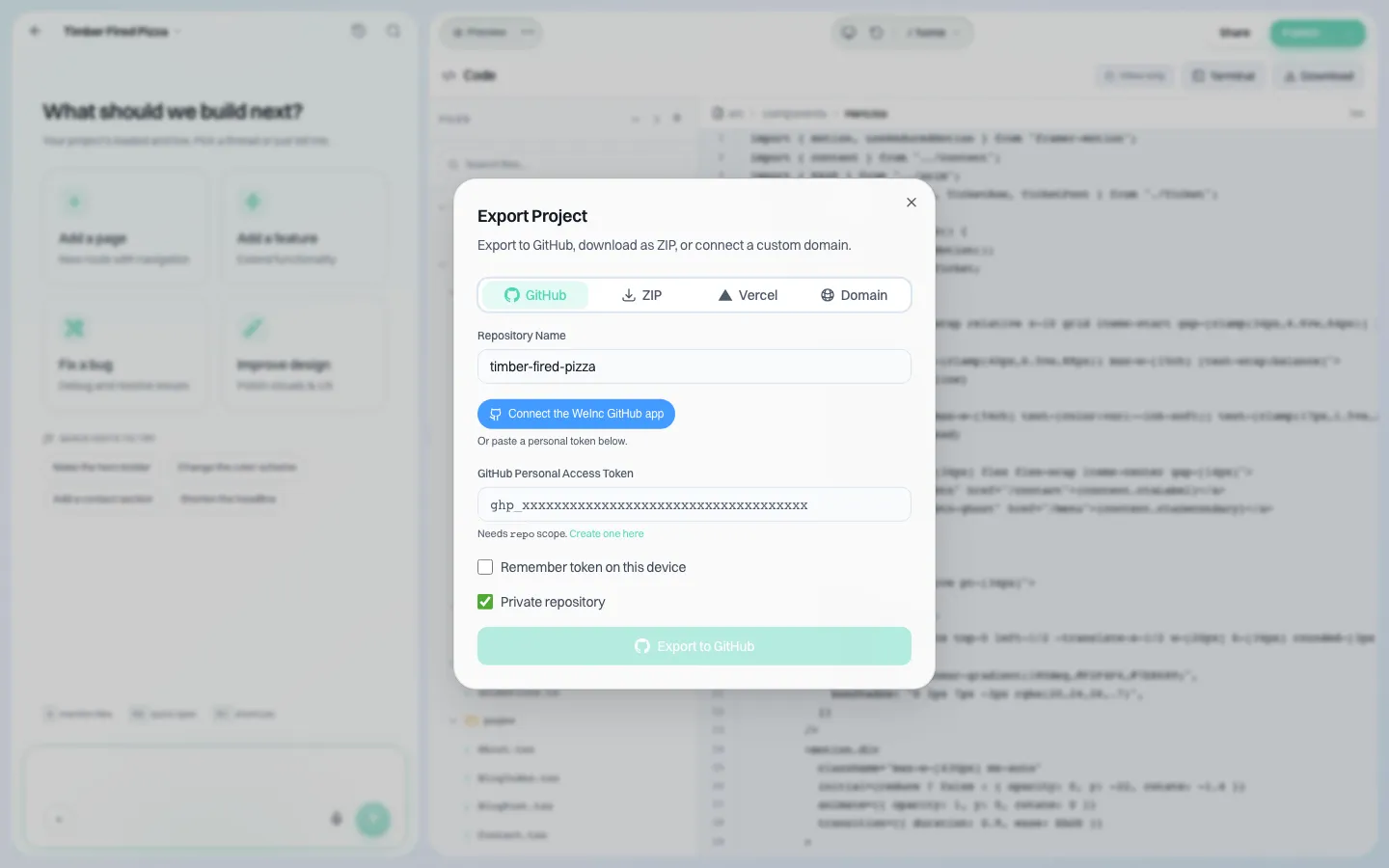
*Exporting a site's code to GitHub or as a ZIP.*
Launch plan for a first cohort
- Pick 20 to 50 existing business customers or members who have asked for help with a website.
- Write the one-page acceptable-use and responsibility note from the table above.
- Set defaults, invite the cohort, and run one live workshop where they build their first page together.
- After 60 days, count published sites, support questions, and any content you were uncomfortable with. Adjust the defaults before widening the offer.
Book a demo and we will walk through the portal with your branding.
Sources
Last checked 2026-10-25.
- Board of Governors of the Federal Reserve System, FDIC and OCC, Interagency Guidance on Third-Party Relationships: Risk Management, Federal Register, June 9, 2023 (88 FR 37920).
- National Credit Union Administration, Evaluating Third Party Relationships, Letter to Credit Unions 07-CU-13.
This page is general information, not legal or regulatory advice. Confirm your obligations with your compliance team and counsel.
Book a demo. Pricing is tailored to your volume and setup, and you get your exact price on the call. 0% transaction fee.
Frequently asked questions
Does the institution have to edit or approve customers' websites?
No, and we recommend it does not. The customer builds and owns the site. The institution controls the branded portal, who is invited and which features are switched on.
Can we offer the websites free with a business account?
Yes. No client plan or price needs to be set. The customer's billing page then says that access is provided by your institution. You can also package it or charge for it.
Which third-party risk guidance applies to a website vendor?
For banks, the June 2023 Interagency Guidance on Third-Party Relationships from the Federal Reserve, FDIC and OCC. For federally insured credit unions, NCUA's guidance on evaluating third-party relationships. The depth of review should match the risk of the relationship.
Does the platform connect to our core or online banking?
No. Customers sign up with an email invitation. No account data needs to be shared with the platform, which keeps the relationship low risk.
What happens to a customer's site if they leave the institution?
Each site's code can be downloaded as a ZIP or synced to GitHub, and the customer keeps their own domain.
Keep reading
- White label website builder: the We.Inc platform
- Website platform procurement checklist
- Website vendor exit plan: contract clauses
- Website governance policy template
More in White Label
- Keep every site on-brand without approving every comma
- Every email your clients get, in your name
- The page your clients see most should not say someone else's name
- Brizy white label pricing, and the AI alternative
- The same fix on forty websites, without opening forty editors
- Your clients need a website halfway through your programme. Give them one under your name.
- The moment someone forms a company, they need a website. You are already there
- A member website programme your chamber can actually run
Product
Who It's For
- For Agencies
- For Freelancers
- For Hosting Providers
- For SaaS Platforms
- For Startups
- For Financial Services
- For Healthcare
Features
Resources
- Blog
- Help Center
- Free Business Tools
- Free UI Components
- Website Templates
- Template Collections
- Website Examples
- Guides
- Comparisons
- Alternatives
- Best Lists
- Reviews
- Pricing Guides
- Use Cases
- Glossary & Guides
- Integrations
- Developers
- Benchmark
- Windows App