
How to Sell Websites to Local Businesses: A Repeatable Playbook
A step-by-step way to sell websites to local businesses: define one service-business offer, show a labelled demonstration, hold permission-based needs conversations, price transparently and onboard with a checklist. With worksheets.
To sell websites to local businesses, define one clear offer for one kind of service business, show a clearly labelled demonstration site in that trade, hold a needs conversation with owners who have agreed to talk, and price the setup and monthly work transparently. Specific beats clever: an owner who can see a finished example for their own trade on a phone does not need a long pitch.
TL;DR: Pick one kind of service business, write one offer, build a labelled demonstration site, and talk to owners who have agreed to talk. Ask about their needs first, price setup and monthly work in writing, and onboard with a checklist. No unsolicited outreach campaigns.
Book a demo of the white-label builder: your agency's own AI website builder under your brand. Pricing is tailored to your volume and setup, so you get your exact price on the call. How white-label pricing works.
Why local businesses are a good market
There are 36.2 million small businesses in the United States, according to the SBA Office of Advocacy's 2026 FAQ. Most are local: trades, clinics, salons, restaurants, shops. Many owners know they need a better site and do not have time to build one. They buy from someone they trust, who explains things simply and charges a price they can predict.
Step 1: Define a service-business offer
Choose one type of business to start. Good first niches share three things: customers find them through search, one new customer is worth a lot to them, and they sell a service that is easy to show on a page. Examples: plumbers, roofers, dentists, cleaners, landscapers. Our guides for plumbers, roofers and dentists show what each needs.
Then write the offer in one sentence, and fill in the worksheet below. The filled column is a labelled demonstration for a fictional seller serving plumbers; the prices are assumptions, not market rates.
| Offer item | Demonstration entry | Your entry |
|---|---|---|
| Niche | Plumbers in one metro area | |
| One-sentence offer | "A five-page site with services, service area, reviews you supply and a quote form, live within a week of receiving your content." | |
| Pages included | Home, Services, About, Reviews, Contact | |
| Setup fee | $500 (assumed) | |
| Monthly plan | $79 for hosting, SSL, small edits (assumed) | |
| Not included | Copywriting, photography, ads |
Step 2: Build a clearly labelled demonstration
Build one example site for a fictional business in your niche, and label it as an example everywhere you show it. It proves you can deliver without using a real owner's name, photos or reviews without permission.
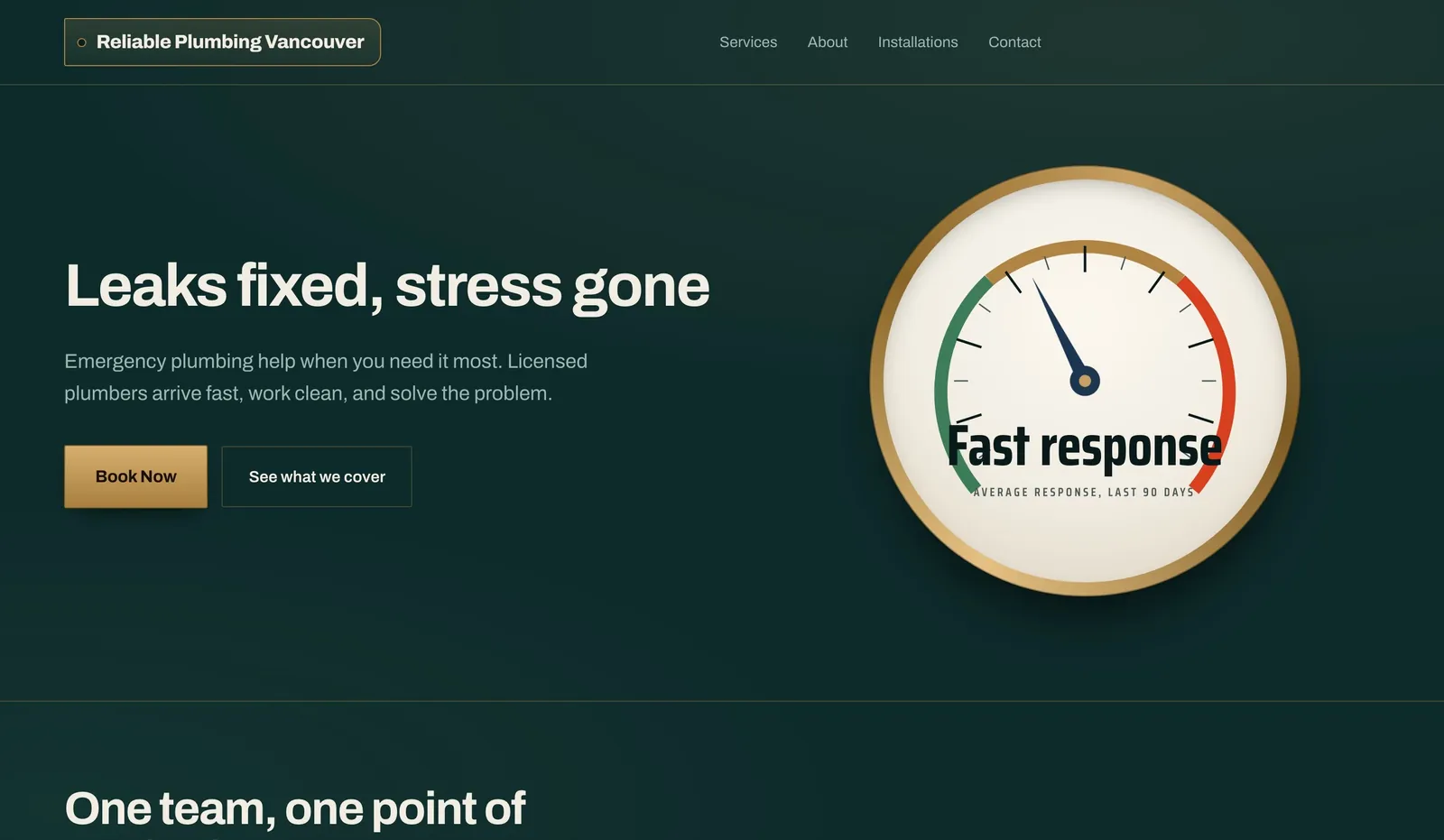
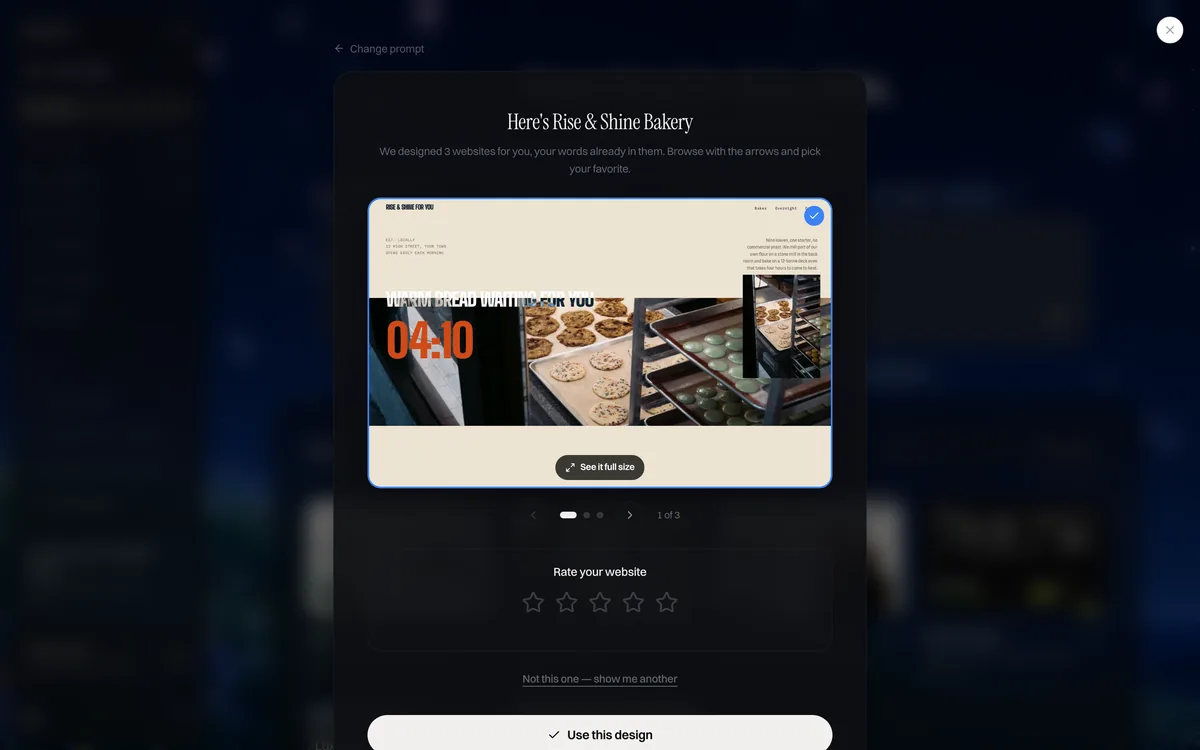
On We.Inc you can start from one of the business website templates, replace the sample content with your fictional business, and publish it on a we.inc address on the free plan. If you want AI to draft it from a description, that needs a paid plan.
Step 3: Run a permission-based needs conversation
Talk to owners who have said yes to a conversation: past clients and their referrals, people you already know, local business groups, trade associations, and anyone who contacts you after seeing your work. Then ask before you pitch:
- How do new customers find you today?
- What do they ask on the phone that the website should answer?
- What would you want someone to do after visiting the site: call, book or request a quote?
- Who will supply the text and photos, and by when?
- What is your budget for setup, and for monthly upkeep?
If they want to see where their current site stands, run it through the free website grader together and talk through what it flags.
Step 4: Price scope and ongoing work transparently
| Option | Example price | What it covers |
|---|---|---|
| Setup fee | $500 | Building the pages in the offer, from content the owner supplies |
| Monthly plan | $79 | Hosting, SSL, small edits, form checks |
| Premium add-on | $149 a month | Monthly page updates and Business Profile posts |
These are examples. Adjust to your area and niche, and put scope, exclusions and cancellation terms in writing. Use the website cost calculator to sanity-check the setup price. On We.Inc's white-label plans, clients pay you through your own Stripe, with a 0% transaction fee.
Step 5: Onboard with a checklist
`` ONBOARDING CHECKLIST Client: ________________ Launch target: ________ [ ] Signed scope, price and cancellation terms [ ] Domain login (or who holds it) confirmed [ ] Text for each page received / approved [ ] Own photos received (no stock unless agreed) [ ] Reviews: only real ones the owner supplies [ ] Draft reviewed on the owner's phone [ ] Forms tested to the owner's inbox [ ] Domain connected, SSL active, site published [ ] Monthly plan start date and first report date set ``
Track your own numbers as you go: conversations held, proposals sent, clients won. Do not plan around someone else's conversion rates.
What to do after the sale
- Launch within a week, while the owner is excited.
- Ask for a Google review for your agency once they are happy.
- Ask who else they know, and whether you may mention their name when you get in touch. Local owners talk to each other.
Related reading
Start building your business website. Create your account to build your demonstration site. The free plan publishes up to 3 template sites on a we.inc address (no AI credits, no custom domain); AI building and custom domains start on Starter at $20 a month. See pricing, or the white-label platform to sell under your own brand.
Book a demo of the white-label builder. Your own domain, your brand, and a 0% transaction fee on what clients pay you. Pricing is tailored to your volume and setup. Book a 30-minute demo and you get your exact price on the call. See how white-label pricing works.
Frequently asked questions
How do I sell websites to local businesses?
Define one clear offer for one kind of service business, build a clearly labelled demonstration site for a fictional business in that trade, and talk to owners who have agreed to talk: referrals, people you already know, local business groups and people who reply to your own content. Ask about their needs before you pitch, price setup and monthly work in writing, and onboard with a checklist.
Where do I find local businesses that want a website?
Start with people who have opted in to a conversation: past clients and their referrals, contacts you already have, local chamber or networking groups, trade associations, and owners who reach out after reading your posts or seeing your demonstration. Ask each happy client for one introduction.
How much should I charge a local business for a website?
Many local businesses prefer a small setup fee plus a monthly plan to a large one-off invoice. This guide uses $500 setup and $79 a month as a worked example. That is an assumption to adjust for your market, not a standard rate. For fuller guidance, see our post on how much to charge for a website.
Should I build a site for a business before it agrees to pay?
Show a demonstration instead: a site for a fictional business in the same trade, clearly labelled as an example. It shows the owner what they would get without using their name, photos or reviews without permission. Build their real site once they have agreed.
Is cold calling or cold email a good way to sell websites?
This guide does not recommend unsolicited outreach campaigns. Permission-based conversations (referrals, introductions, events and inbound enquiries) are slower to start but easier to close and keep. If you ever email businesses, follow the anti-spam law in your country, such as CAN-SPAM in the U.S.
What should I include in a monthly website plan for local businesses?
Hosting, SSL, the site itself, small edits, and a contact form that emails the owner. Optional extras include Google Business Profile updates and a monthly report. Keep the plan simple enough to explain in one sentence.
More in Blog
- How to Set Up an Email Drip Campaign (Step by Step)
- How to Start a Web Design Business in 2026 (Built for the AI Era)
- How to Start an Online Business in 2026: A Practical, No-Hype Guide
- How to Write Website Copy That Sells (With Examples)
- How We.Inc Helps Teams Scale From 10 to 10,000
- HVAC Website Design: How to Build a Site That Books Calls
- Introducing We.Inc 2.0: The AI Website Builder That Builds for You
- Invoicing Best Practices: How Freelancers Get Paid Faster
Website builders for the businesses in this article
Related guides and tools
Start building
- how to make a website
- best website builders for small business
- AI website builder
- free website builder
- website templates
Related guides
How we research, test and update this page: our editorial policy. We.Inc is our own product.
Product
Who It's For
- For Agencies
- For Freelancers
- For Hosting Providers
- For SaaS Platforms
- For Startups
- For Financial Services
- For Healthcare
Features
Resources
- Blog
- Help Center
- Free Business Tools
- Free UI Components
- Website Templates
- Template Collections
- Website Examples
- Guides
- Comparisons
- Alternatives
- Best Lists
- Reviews
- Pricing Guides
- Use Cases
- Glossary & Guides
- Integrations
- Developers
- Benchmark
- Windows App