One brand, hundreds of dealers, and a website for each
A manufacturer wants every dealer site to show the current range, the right logos and nothing that will embarrass the brand. A dealer wants their own people, their own service department and their own offers. A dealer group wants both, across several brands. This page is for the people who run dealer networks: how to split control, which rules apply to the offers on those sites, and an honest view of where a general white-label builder fits next to dedicated automotive platforms.
TL;DR
- Split every dealer site into corporate-owned parts (brand, range, legal text) and dealer-owned parts (people, service, local events).
- Finance and lease offers are the riskiest content on a dealer site. In the US, Regulation Z trigger terms require extra disclosures.
- We.Inc gives each dealer a client account under your brand, with switches, single-step approval before going live, roles and an audit log.
- We do not provide vehicle or equipment inventory feeds. For dealers whose site is mainly an inventory search, a dedicated automotive or equipment website platform is the better fit.
First decide what the dealer site is for
Dealer websites fall into two very different jobs, and many networks have both.
| Site type | Main job | Most important feature | Typical buyers |
|---|---|---|---|
| Inventory-led | Help shoppers find a specific unit in stock | Live inventory search, pricing, finance calculators | Car dealers, used equipment dealers |
| Service-led | Show a local business that sells, services and supports a range | Range pages, service booking, parts enquiries, people | Agricultural, construction, outdoor power, marine, powersports, specialist dealers |
Be honest about which your dealers need. If shoppers arrive looking for "the blue one with 30,000 miles", the website is an inventory product, and the platforms built around inventory feeds are the right tools. If shoppers arrive looking for "who services my tractor near me", the website is a local business site with a brand frame, and that is where a white-label builder works well. Our car dealership website guide covers the single-dealer view.
Split the site into corporate and local
The most useful document in a dealer website program is a single table that says who owns each part of the site. Copy this one and adjust it.
| Part of the site | Owner | Can the dealer edit it? | Review |
|---|---|---|---|
| Logo, colours, typefaces | Manufacturer | No | Set once in the brand |
| Model or range pages | Manufacturer, adapted by dealer | Local notes only | Annual |
| Offers and finance | Manufacturer for national offers; dealer for local | Local offers yes | Every offer, before it goes live |
| Legal text: privacy, disclaimers | Manufacturer and dealer's counsel | No | When rules change |
| Team, opening hours, departments | Dealer | Yes | None |
| Service, parts and hire | Dealer | Yes | None |
| Local news, events, open days | Dealer | Yes | Spot checks |
| Reviews | Dealer, only real reviews | Yes | Spot checks |
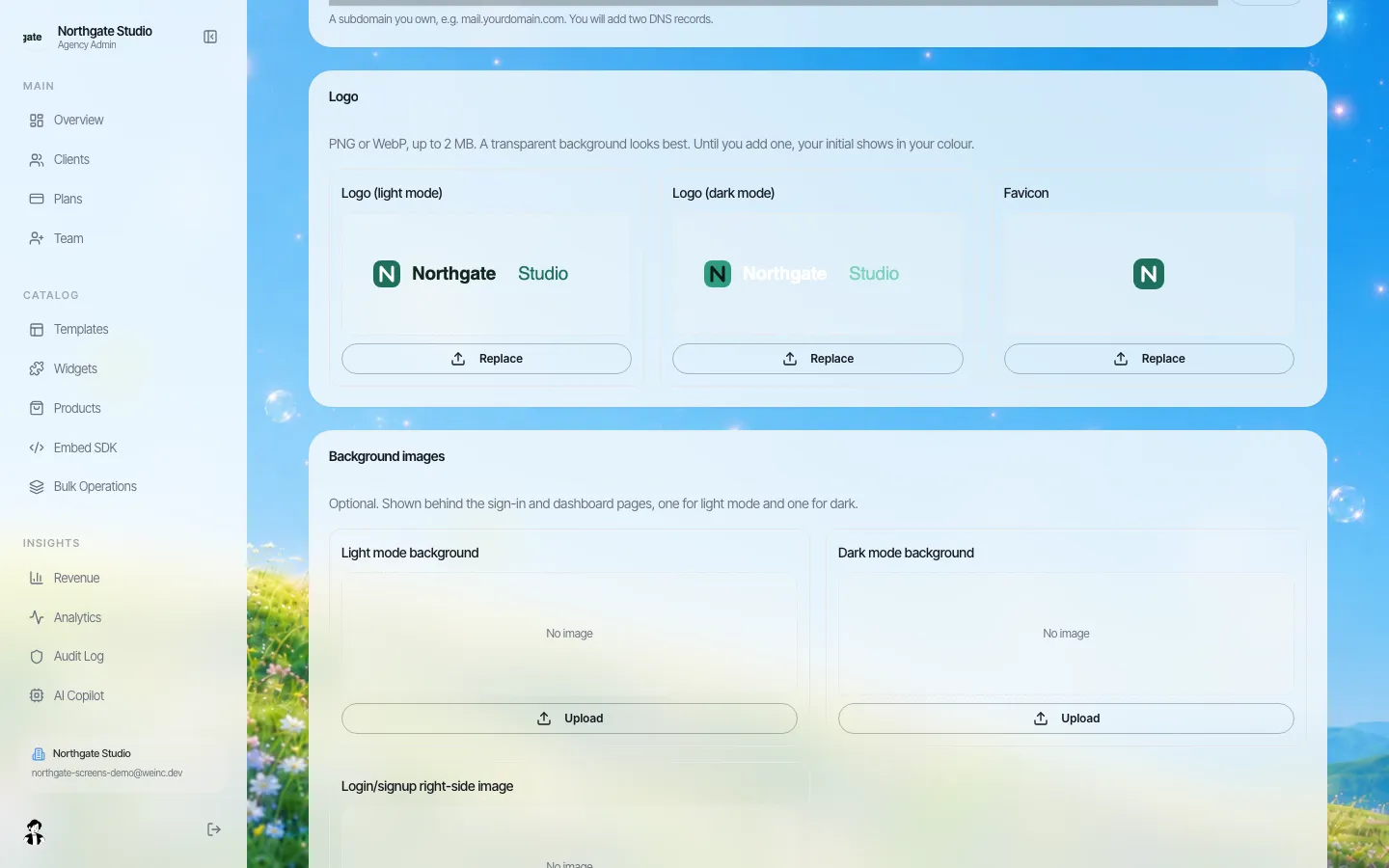
*Brand settings. Logo, colours and fonts are set once for the network, so dealers start from the right look.*
The rules that bite: offers and finance
The content that gets dealers into trouble is rarely the "About us" page. It is the offer banner. A few points to build into your review process (US examples; check the rules where your dealers trade):
- Credit advertising triggers. Under Regulation Z (12 CFR 1026.24), if a closed-end credit ad states a down payment, the number of payments or repayment period, a payment amount or a finance charge, it must also state the down payment, the repayment terms and the annual percentage rate, using that term. "Only $299 a month" on a homepage banner is a trigger term.
- Leases have their own rules, under Regulation M, with similar trigger-and-disclose logic. Your compliance team will have a standard disclosure block; make it part of the template.
- The FTC CARS Rule is not in force. The US Court of Appeals for the Fifth Circuit vacated it on January 27, 2025, finding the FTC skipped a required procedural step. The FTC Act's general ban on deceptive practices still applies to dealer advertising, and many states have their own dealer advertising rules.
- Offers expire. Every offer on a dealer site needs an end date and someone responsible for taking it down.
In practice this means offers are the one area where review before going live earns its keep. Many programs let dealers edit everything else freely and route anything with a price, payment or rate through the manufacturer or group marketing team.
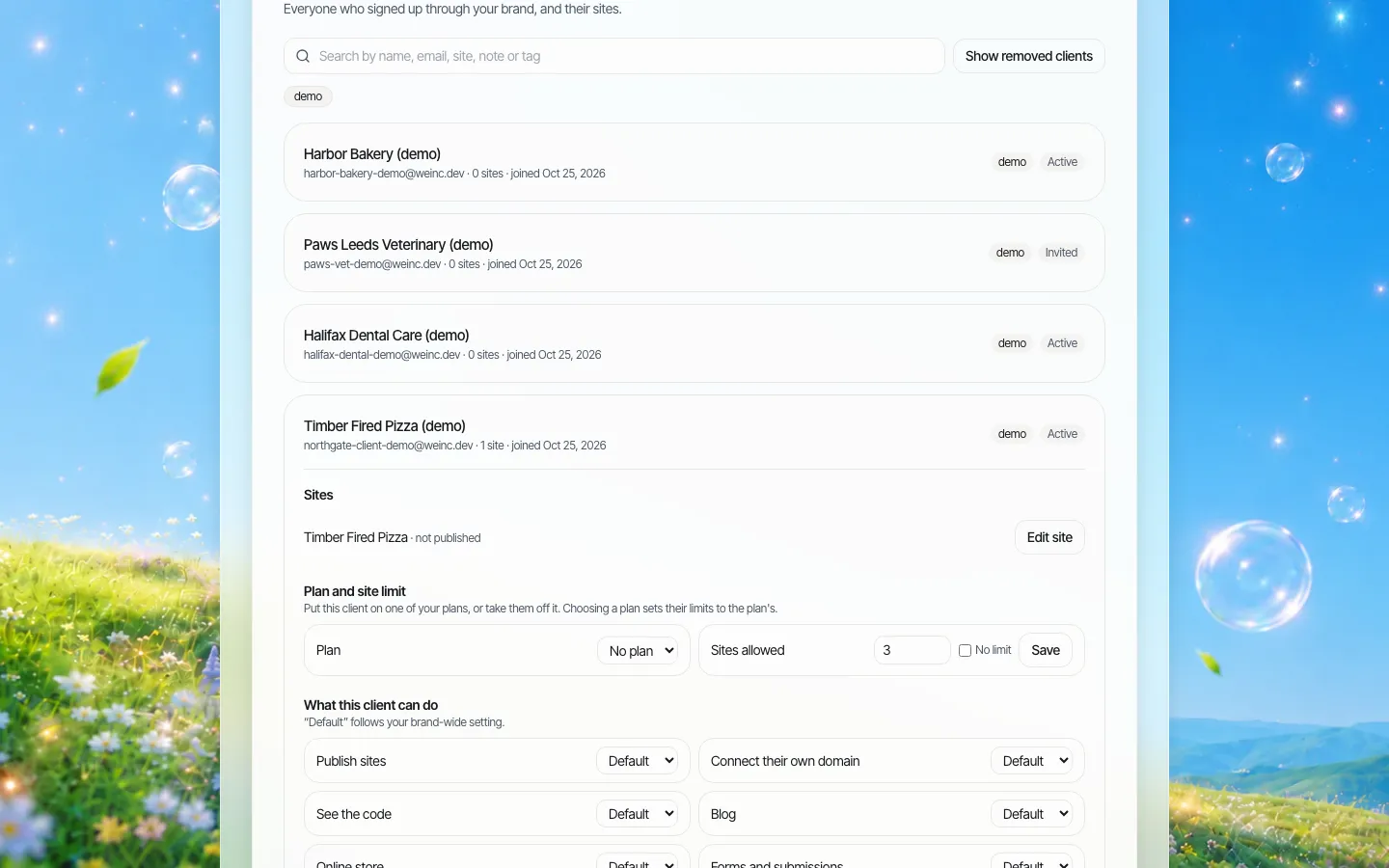
*One dealer's settings. Publishing approval can be on for dealers with a history of offer problems and off for the rest.*
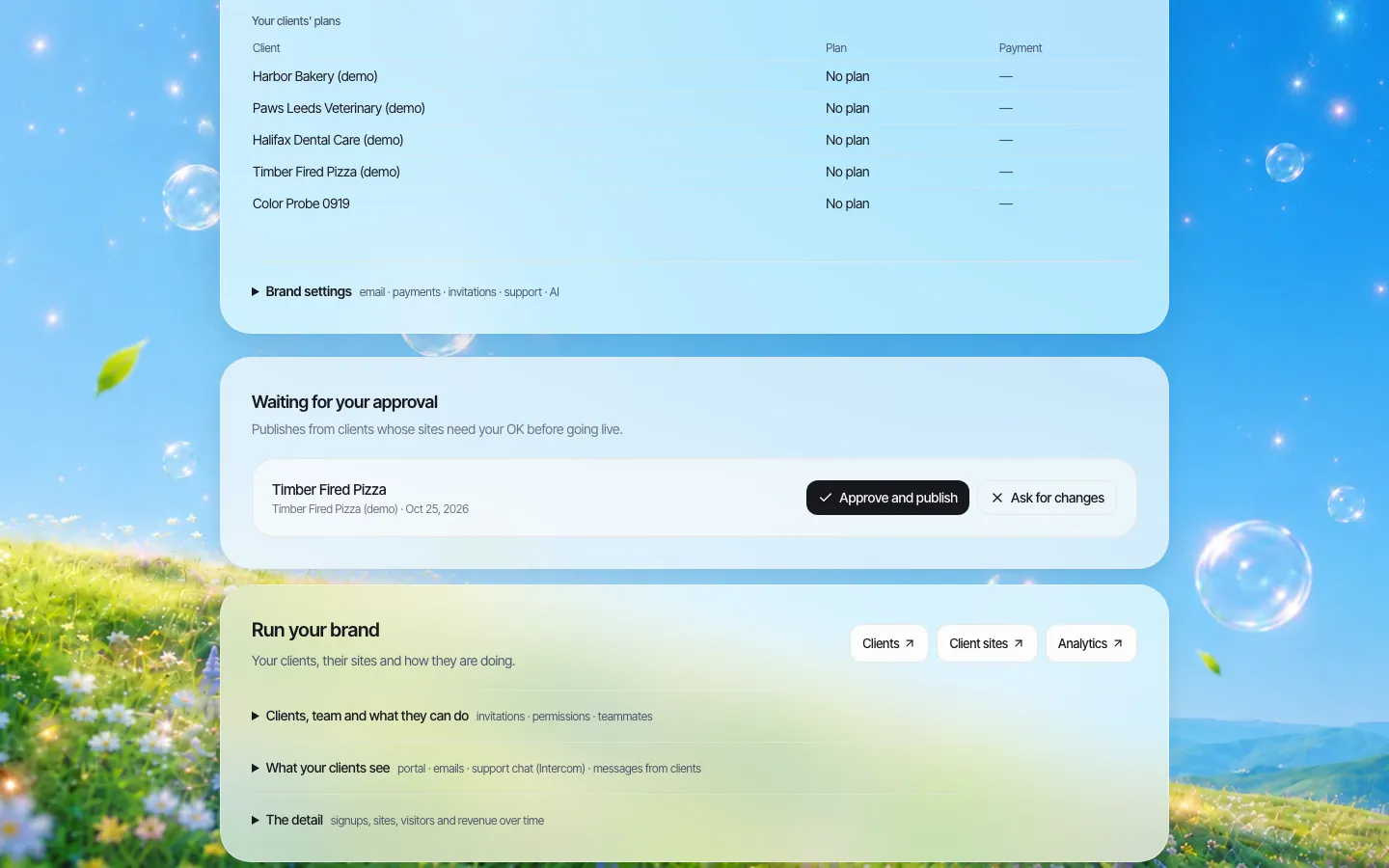
*The approval queue. This is a single step: your team approves the site or asks for changes. It is not a multi-stage legal workflow, so keep your own offer sign-off record.*
Dealer groups: several brands, one team
A dealer group running stores for several manufacturers has a different problem. Each store must follow its manufacturer's rules, but the group's marketing team does the work.
- One brand account per manufacturer program, or one for the group. If stores must look like their manufacturer, keep a template per manufacturer. If the group has its own brand, use that and add the manufacturer frame per store.
- Tags. Tag each store by manufacturer, region and general manager, so the team can filter "all stores for brand X" when an offer changes.
- Team roles. Group marketing staff can edit any store's site; general managers can be clients who edit their own store within the switches.
- The audit log records organisation actions, so you can answer "who changed the Springfield store page and when?"
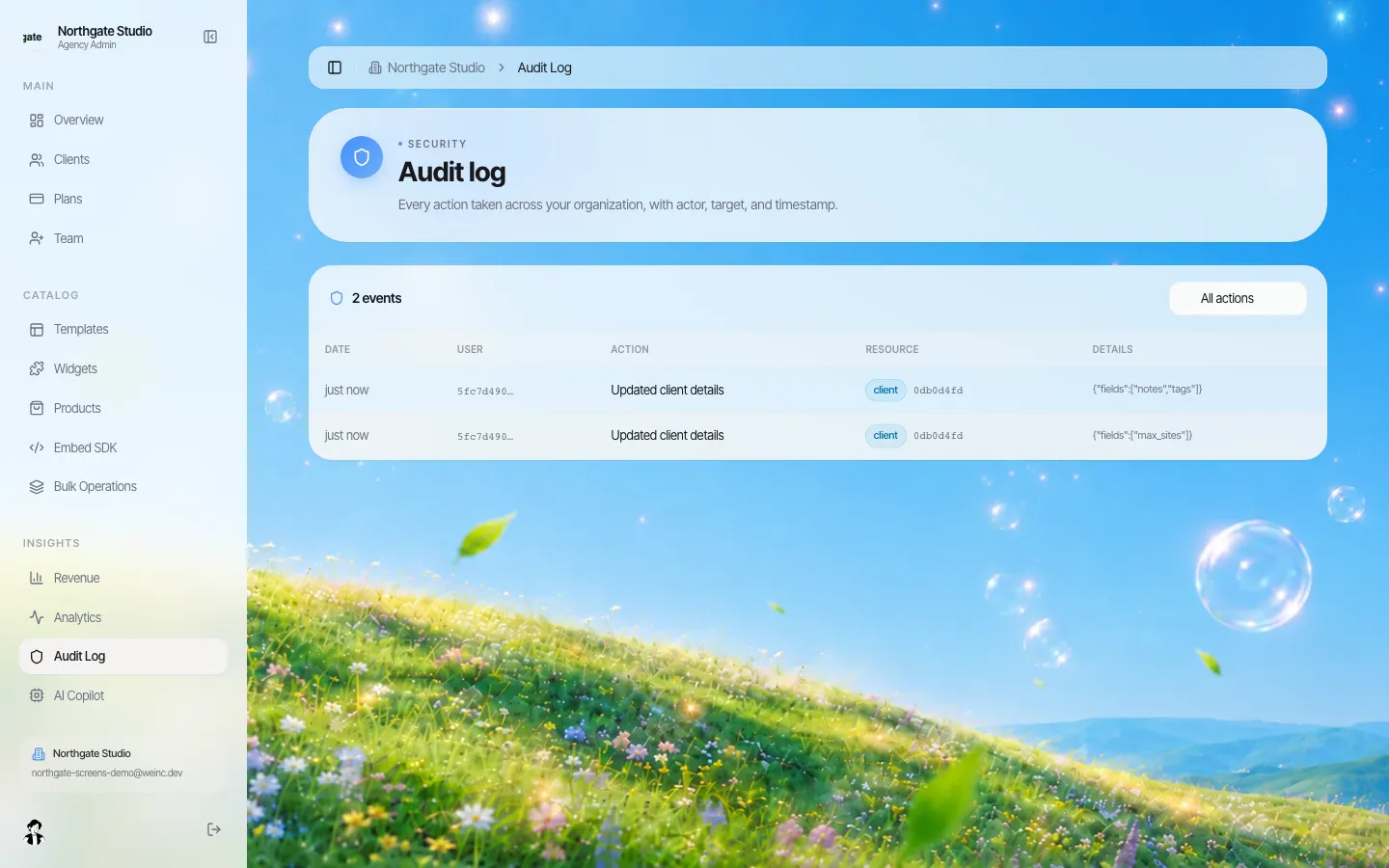
*The audit log of organisation actions. Note that it does not replace an offer approval record, and we make no retention claim for it.*
Domains and dealer ownership
Dealer agreements end. Plan for it on day one.
- The dealer's own domain belongs to the dealer. The manufacturer's brand terms decide whether the brand name may appear in it.
- Network subdomains belong to you. If dealers use an address under your domain, it stays with you when the dealer leaves.
- Leaving dealers can take their own content. Site code can be downloaded or synced to GitHub; strip brand assets they no longer have the right to use.
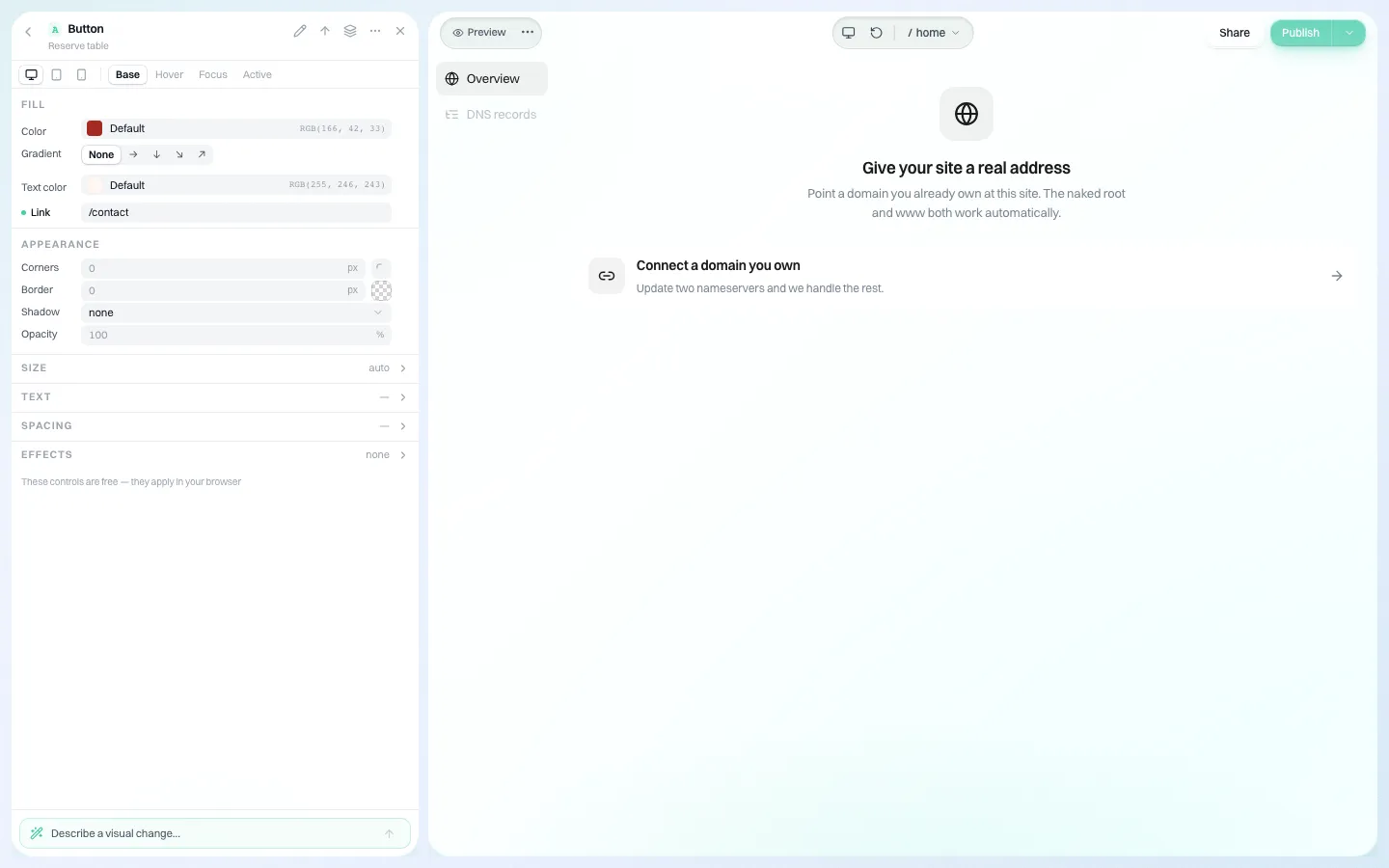
*Connecting a dealer's own domain from inside their editor.*
Rollout for a network
| Phase | Dealers | Focus |
|---|---|---|
| Pilot | 10 to 20 dealers, mixed sizes | Templates, the offer review process, how much help dealers need |
| Wave 1 | Dealers without a site, or with the weakest sites | Publishing rate and review turnaround time |
| Wave 2 | Everyone else who opts in | Migration from existing sites, redirects from old addresses |
| Steady state | All participating dealers | Quarterly brand audit, offer expiry checks |
Do not force dealers who already have a good inventory site onto a new platform in wave 1. Win them with a better service site, or leave them alone.
Where We.Inc fits, and where it does not
A good fit: manufacturers and dealer groups whose dealers need service-led local sites: equipment, agricultural, marine, powersports, outdoor power and specialist dealers, plus service and parts sites for car dealers whose sales inventory lives elsewhere.
Better served elsewhere:
- Inventory-led car sales sites. We do not provide vehicle inventory feeds, VIN decoding or finance calculators tied to lenders. Dedicated automotive website platforms are built around those, and some manufacturers require a certified provider for their dealer program. Check yours first.
- Online sales of units. The built-in store connects to Stripe and suits parts or merchandise, not vehicle or equipment sales.
- Multi-stage legal approval. Our approval is a single step. If your offers need several sign-offs with records, keep that process in your own system and use our step as the last gate.
Book a demo. Bring your corporate-versus-local table and one real offer, and we will walk it through.
Sources
Last checked 2026-10-25. This page is general information, not legal advice.
- eCFR, 12 CFR 1026.24, Advertising (Regulation Z): trigger terms in paragraph (d)(1) and required disclosures in (d)(2).
- Holland and Knight, Fifth Circuit strikes down FTC's auto retail rule: CARS Rule vacated January 27, 2025, for a skipped advance notice of proposed rulemaking.
Book a demo. Pricing is tailored to your volume and setup, and you get your exact price on the call. 0% transaction fee.
Frequently asked questions
Does We.Inc include vehicle or equipment inventory feeds?
No. For dealers whose site is mainly an inventory search, a dedicated automotive or equipment website platform is the better fit.
Can the manufacturer review dealer offers before they go live?
Yes, with a single-step approval: the dealer site waits in your queue until your team approves it or asks for changes. It is not a multi-stage workflow.
What happens to a dealer site when the dealer leaves the network?
You decide in your agreement. Dealer-owned domains stay with the dealer, and site code can be downloaded or synced to GitHub; remove brand assets they may no longer use.
Is the FTC CARS Rule still something dealer sites must follow?
The Fifth Circuit vacated it on January 27, 2025. General FTC Act rules on deceptive advertising, Regulation Z and state rules still apply. Ask your counsel.
Keep reading
- White label website builder: the We.Inc platform
- White-label websites for franchisors
- Brand governance across many websites
- Car dealership website builder guide
- Custom domains for every client
- Client permissions: what each site owner can do
More in White Label
- Give business customers and members a website, under your institution's name
- Keep every site on-brand without approving every comma
- Every email your clients get, in your name
- The page your clients see most should not say someone else's name
- Brizy white label pricing, and the AI alternative
- The same fix on forty websites, without opening forty editors
- Your clients need a website halfway through your programme. Give them one under your name.
- The moment someone forms a company, they need a website. You are already there
Product
Who It's For
- For Agencies
- For Freelancers
- For Hosting Providers
- For SaaS Platforms
- For Startups
- For Financial Services
- For Healthcare
Features
Resources
- Blog
- Help Center
- Free Business Tools
- Free UI Components
- Website Templates
- Template Collections
- Website Examples
- Guides
- Comparisons
- Alternatives
- Best Lists
- Reviews
- Pricing Guides
- Use Cases
- Glossary & Guides
- Integrations
- Developers
- Benchmark
- Windows App