A Granicus govAccess alternative, judged on the microsite problem
Granicus govAccess is a mature government website platform: drag-and-drop templates, a mobile designer, built-in forms with signatures and payments, and departmental microsites, with design components and a developer toolkit on top. Agencies that choose it usually choose it for the main site and the depth of its government features. This page looks at one specific job, many departmental and programme sites owned by different people, and where a white-label builder handles that job differently.
TL;DR
- Granicus says govAccess offers drag-and-drop templates, live editing, a mobile designer, forms with digital signatures and payment gateways, location-based services and departmental microsites.
- If you need forms with payments and signatures, or deep government features, govAccess is the stronger product.
- We.Inc lets each department or programme owner build their own AI-made site under your brand, with per-owner switches, single-step approval and an audit log.
- Good fit for agencies with many small sites and few web staff; less good for complex transactional forms.
What govAccess offers
The govAccess page on Granicus's site, checked today, describes a platform that aims to "make website editing simple for users of all technical levels". It lists:
- Customisable admin dashboards for editors.
- Drag-and-drop templates, live editing and a mobile designer that can reorder or hide content on small screens.
- Built-in digital forms with digital signatures and multiple payment gateways.
- Location-based services for amenities and schedules.
- Departmental microsites.
- Automatic posting of website content to Facebook or Twitter.
- A design component library, page designer, custom widgets and a developer toolkit.
Granicus also says subscriptions include ongoing technical, security and accessibility enhancements. It does not publish a customer count on that page, and neither will we invent one.
So the question is not "is Granicus good?" It plainly covers a lot. The question is whether you need what it covers for every site you run.
The microsite problem, stated plainly
Departmental microsites are where government web estates sprawl. The pattern is familiar:
- A department asks for "its own site" for a programme, campaign or board.
- The central team either builds it (and becomes its permanent editor) or hands over access and hopes.
- Two years later, the programme has ended, the staff member has left, and the site is still live with out-of-date contact details.
Any platform can host a microsite. What decides whether the estate stays healthy is: who owns each site, what they are allowed to change, who signs off before it goes live, and whether anyone can see the whole list. Those are the parts We.Inc is built around.
How We.Inc handles many owners
Each department or programme is an account under your organisation's brand. Owners sign in to a portal that carries your logo and colours, describe the site they need and get an AI-built first version they can edit visually.
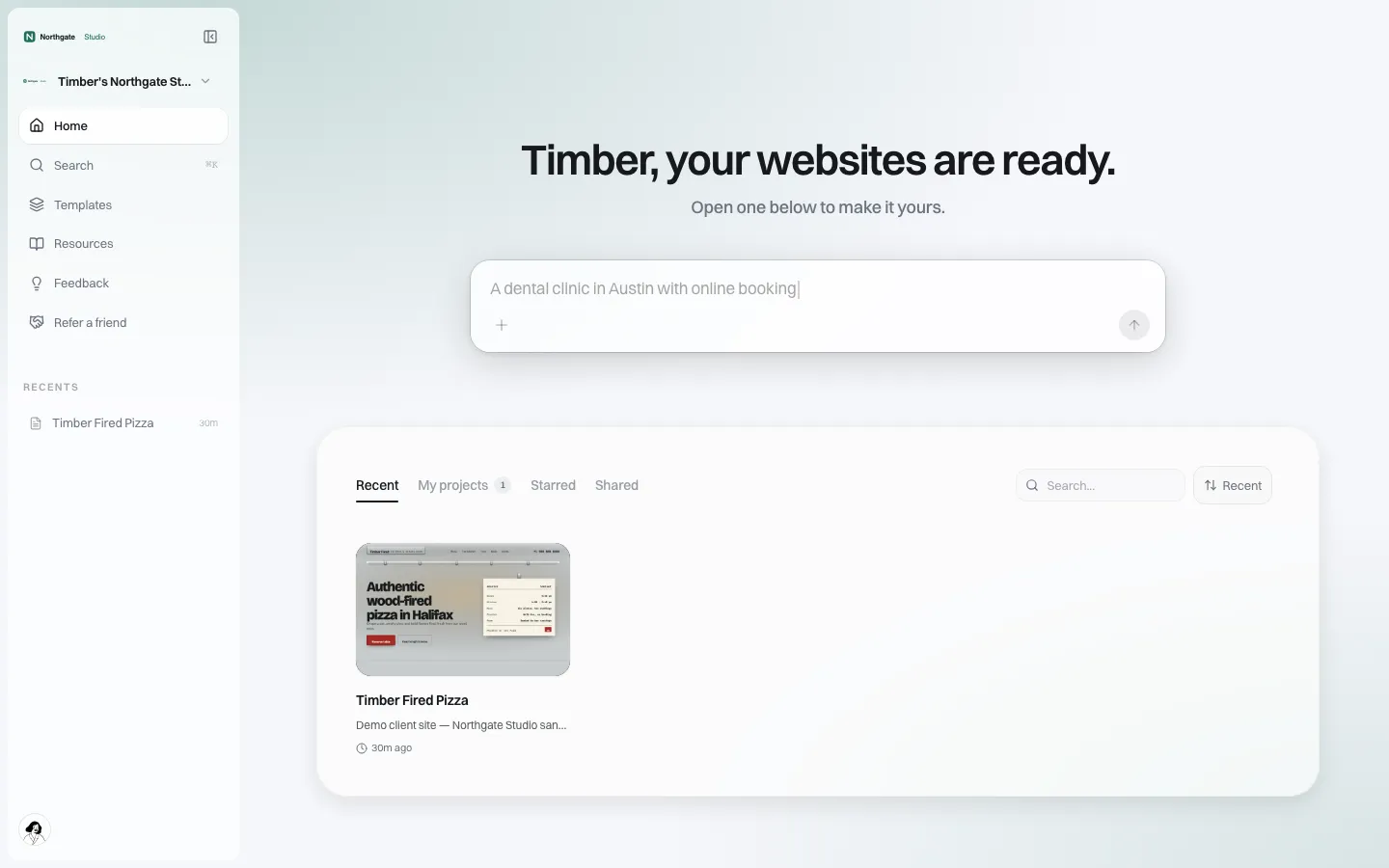
*What a programme owner sees: your brand, a prompt box and their own sites.*
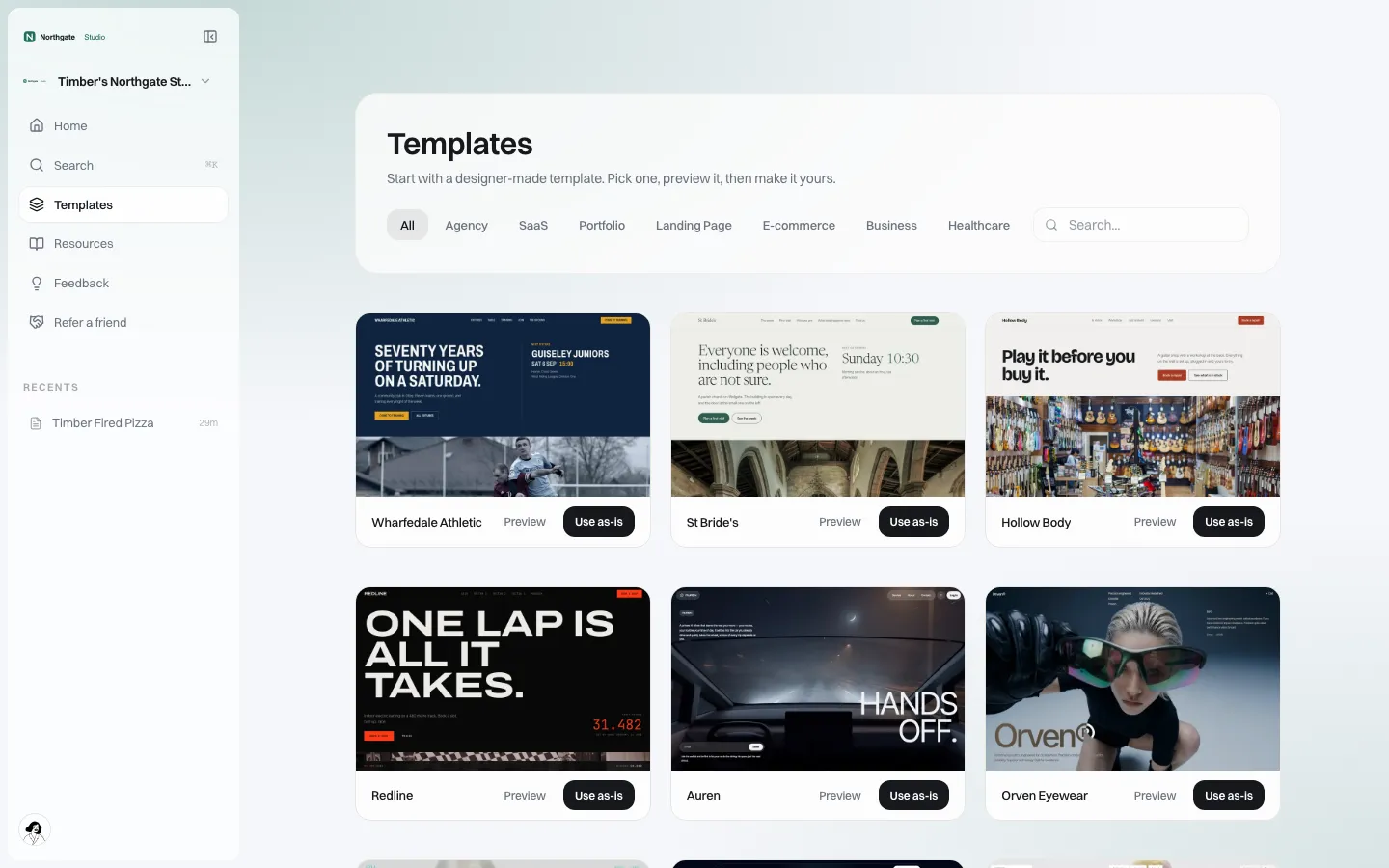
*Owners can also start from a template instead of a description.*
Centrally, you decide what every owner may do, then make exceptions.
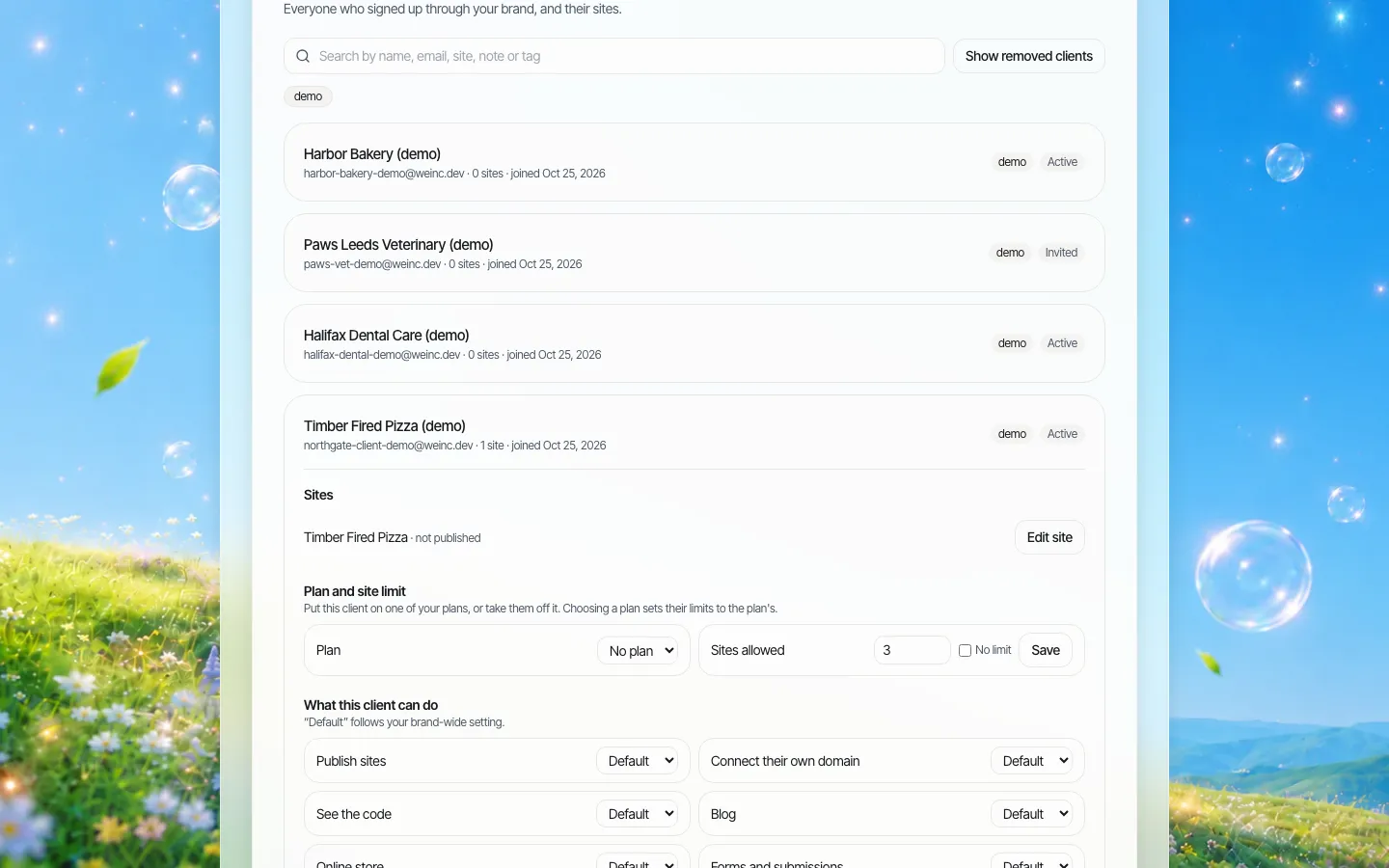
*One department's settings: how many sites, which features, and whether publishing waits for approval.*
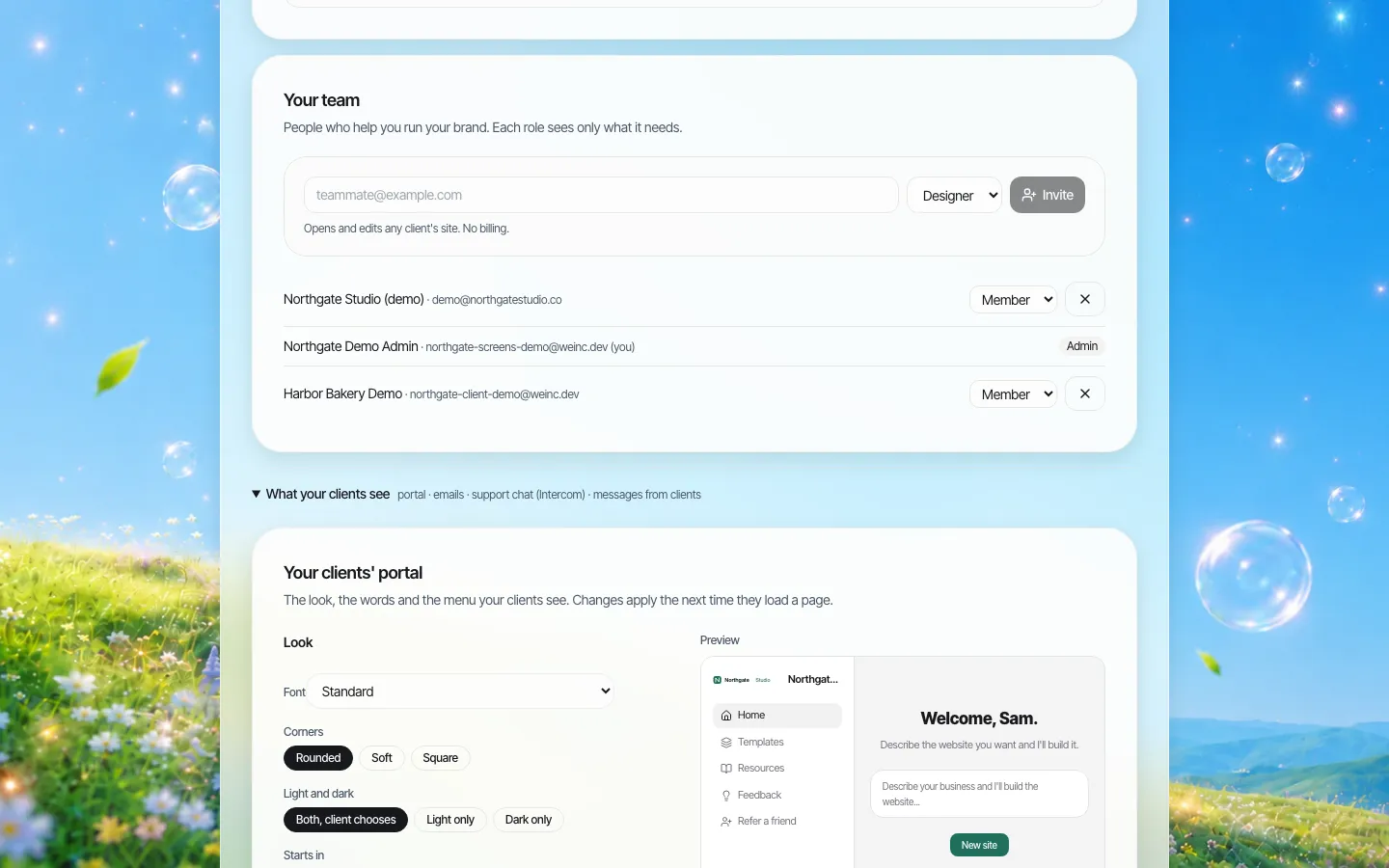
*Your central web team is separate from site owners: owners, admins and members, with fixed presets such as designer or support.*
Side by side on the microsite job
| Need | Granicus govAccess (from its page) | We.Inc |
|---|---|---|
| Departmental microsites | Listed | Core: each owner gets their own site and portal under your brand |
| Who builds the site | Editors with templates and drag-and-drop | Owner describes it; AI builds; owner edits visually |
| Forms with signatures and payments | Built in, with multiple payment gateways | Forms and submissions yes; no digital signatures or service-payment gateways |
| Mobile layout control | Mobile designer to reorder or hide content | Breakpoint controls in the visual editor |
| Social auto-posting | Facebook and Twitter | Not offered |
| Approval before publishing | Ask Granicus about its workflow options | Single-step approval by the brand owner |
| Record of setting changes | Ask Granicus | Audit log of organisation actions |
| Leaving | Ask about export terms | Download code or sync to GitHub |
| Certifications | Ask Granicus | We claim none; ask for our security documentation |
Where Granicus is the better fit
- Your main site needs transactional forms with payments and signatures.
- You want one government-specialist vendor for the website and related services.
- You have web staff who will use the design component library and developer toolkit.
- You value the "worry-free" accessibility positioning and ongoing enhancements included in a subscription. (Whatever any vendor says, test your own sites.)
Where We.Inc is the better fit
- You run many small sites with different owners and a small central team.
- Owners are not web professionals and need to get a decent site without a ticket queue.
- You want a clear register, per-owner rules and a single approval step before a site goes live.
- You want each site's code to be yours to take.
A microsite lifecycle you can adopt this quarter
Platform choice matters less than having a lifecycle every microsite follows. This one works on any platform, and maps directly onto the screens above if you use ours:
| Stage | Rule | Evidence you keep |
|---|---|---|
| Request | A department asks for a site with a purpose, an owner and an end date (or "ongoing") | The request, filed with the site's notes |
| Approve the site | The web team decides whether a page on the main site would do instead | A yes or no with a reason |
| Build | The owner builds; the web team sets limits and features | The owner's settings |
| Check | Content, plain language and accessibility tested before launch | The approval, recorded in the audit log |
| Review | Owner confirms the site is accurate every six or twelve months | A review date in the notes |
| Retire | At the end date, archive or redirect within an agreed time | The removal, recorded in the audit log |
The second row saves the most work. A good share of microsite requests are better served by a single page on the main site, and saying so early prevents another site to maintain for years.
Running both
A common setup: the main agency site stays on its government platform; departmental and programme microsites move to a builder under the same brand. To keep that tidy:
- One brand standard. Set the logo, colours and font in the builder to match the main site.
- One register. Every microsite in the builder has a named owner and a review date in its notes.
- One retirement rule. When a programme ends, the site is archived or redirected within an agreed time.
- One accessibility check. Use the approval step as the point where someone tests the site.
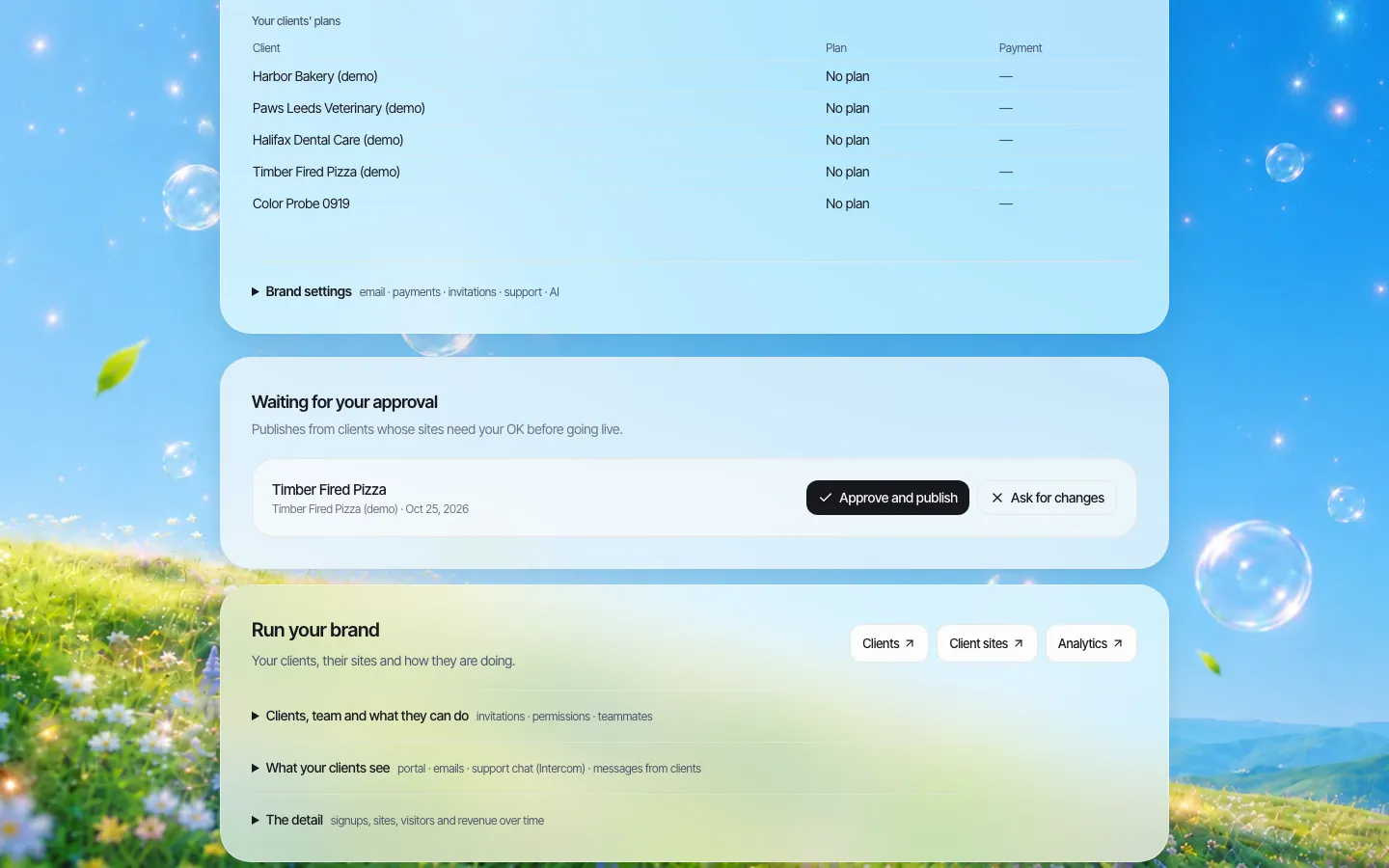
*Single-step approval: the checkpoint where your accessibility and content checks happen.*
Our government RFP template has requirement wording you can use to compare any two platforms on the same terms, and the procurement checklist covers exit, data and support questions.
Book a demo and bring three of your microsites. We will rebuild one live in the call.
Sources
Last checked 2026-10-25.
- Granicus, govAccess: editing, templates, mobile designer, forms with signatures and payment gateways, location-based services, departmental microsites, social publishing, design components and developer toolkit.
Book a demo. Pricing is tailored to your volume and setup, and you get your exact price on the call. 0% transaction fee.
Frequently asked questions
Does Granicus govAccess support departmental microsites?
Yes. Granicus lists departmental microsites among govAccess features on its own site.
Can We.Inc forms take payments and digital signatures?
No. We.Inc sites can have forms and collect submissions, but there are no digital signatures or government service-payment gateways. If you need those, govAccess or a similar platform is the better fit for that site.
How do department owners publish on We.Inc?
They press Publish. If you have switched on approval for that owner, the site goes live once a central owner approves it; otherwise it goes live straight away.
Does We.Inc hold government security certifications?
We do not claim any. Ask for our security documentation in the demo and use your own questionnaire.
Keep reading
- White-label websites for government agencies
- Government website RFP template
- Website platform procurement checklist
- Manage many websites from one account
- Brand governance across many websites
- Audit log for a white-label website platform
More in White Label
- Sites for every hospital, clinic and service line, without losing the system brand
- Property websites for a hotel portfolio that keeps changing
- How to start a website reselling business
- A HubSpot CMS alternative for agencies whose clients are not on HubSpot
- A website for every member agency, without becoming their web designer
- Attorney advertising rules apply to every page. Review has to scale with the sites.
- Your ad reps already sit with every business in town. Sell them a website.
- Your marketing tool is only as good as the website it points to
We.Inc is an AI-powered website builder you can resell under your own brand. Launch a branded client dashboard, bill on Stripe Connect, and deliver AI-generated websites in minutes. White-label pricing is tailored to your volume and setup: book a 30-minute demo for a quote.
Product
- AI Website Builder: Describe a site in plain English; it's live in minutes
- White Label Platform: Your brand, your domain, your margin
- Enterprise: SSO, custom SLAs, and dedicated support
- Developer API: Embed site generation into your SaaS
Who It's For
- For Agencies: Resell under your brand
- For Freelancers: Your own branded builder
- For Hosting Providers: Add a builder to your stack
- For SaaS Platforms: Embed site creation via API
- For Startups
- For Financial Services
- For Healthcare
Features
- Drag & Drop Editor
- Built-in SEO Tools
- Custom Branding
- Client Dashboard
- Reseller Billing (Stripe Connect)
Resources
- Blog
- Help Center
- Free Business Tools
- Free UI Components
- Website Templates
- Template Collections
- Website Examples
- Guides
- Comparisons
- Alternatives
- Best Lists
- Reviews
- Pricing Guides
- Use Cases
- Glossary & Guides
- Integrations
- Developers
- Benchmark
- Windows App