Your ad reps already sit with every business in town. Sell them a website.
Local newspapers, radio groups and city magazines have something most web agencies would pay for: a sales team with standing relationships with hundreds of local businesses, and a brand those businesses trust. Many publishers already resell search ads or social campaigns. A website is often the missing piece, because every campaign has to land somewhere. This page covers how a publisher can offer websites under its own brand, how to package them with advertising, and where the editorial lines sit.
TL;DR
- Advertisers often have weak or no websites, which makes every campaign you sell them perform worse. A site is the landing page your other products need.
- In We.Inc the platform carries the publication's brand; each advertiser is a client account with its own site, billed on your own Stripe account.
- Ad reps can build a first draft in the meeting from a template; a production desk handles approval and domains.
- Keep advertiser sites clearly separate from editorial, and do not trade coverage for website sales. Book a demo to plan the offer.
Why websites fit a local media sales team
Local media sells reach: print pages, airtime, newsletter slots, display and social campaigns. The weak point in most of those campaigns is what happens after the click. A bakery runs a spring promotion with you, and the ad sends people to a Facebook page or a site that has not been touched since it opened. The campaign underperforms, and the advertiser blames the campaign.
A website product fixes that link in the chain, and it changes the relationship. Advertising is bought campaign by campaign; a website is a monthly line that continues between campaigns. For a sales team, that is a reason to visit every month that is not another ad pitch.
Packaging options that sales teams can actually sell
| Package | What it includes | When it sells |
|---|---|---|
| Starter site | A site built from a template, the advertiser's domain connected, one round of edits | New advertisers with no site |
| Campaign bundle | A site plus a campaign page tied to an ad flight | Seasonal and event advertisers |
| Managed site | Your production desk keeps hours, menus and offers current each month | Restaurants, retail, venues |
| Self-serve with support | The advertiser edits their own site; you provide help | Owners who like doing it themselves |
You set the names, contents and prices of these plans yourself and bill them on your own connected Stripe account. The plan an advertiser is on decides their site limit and which features they get.
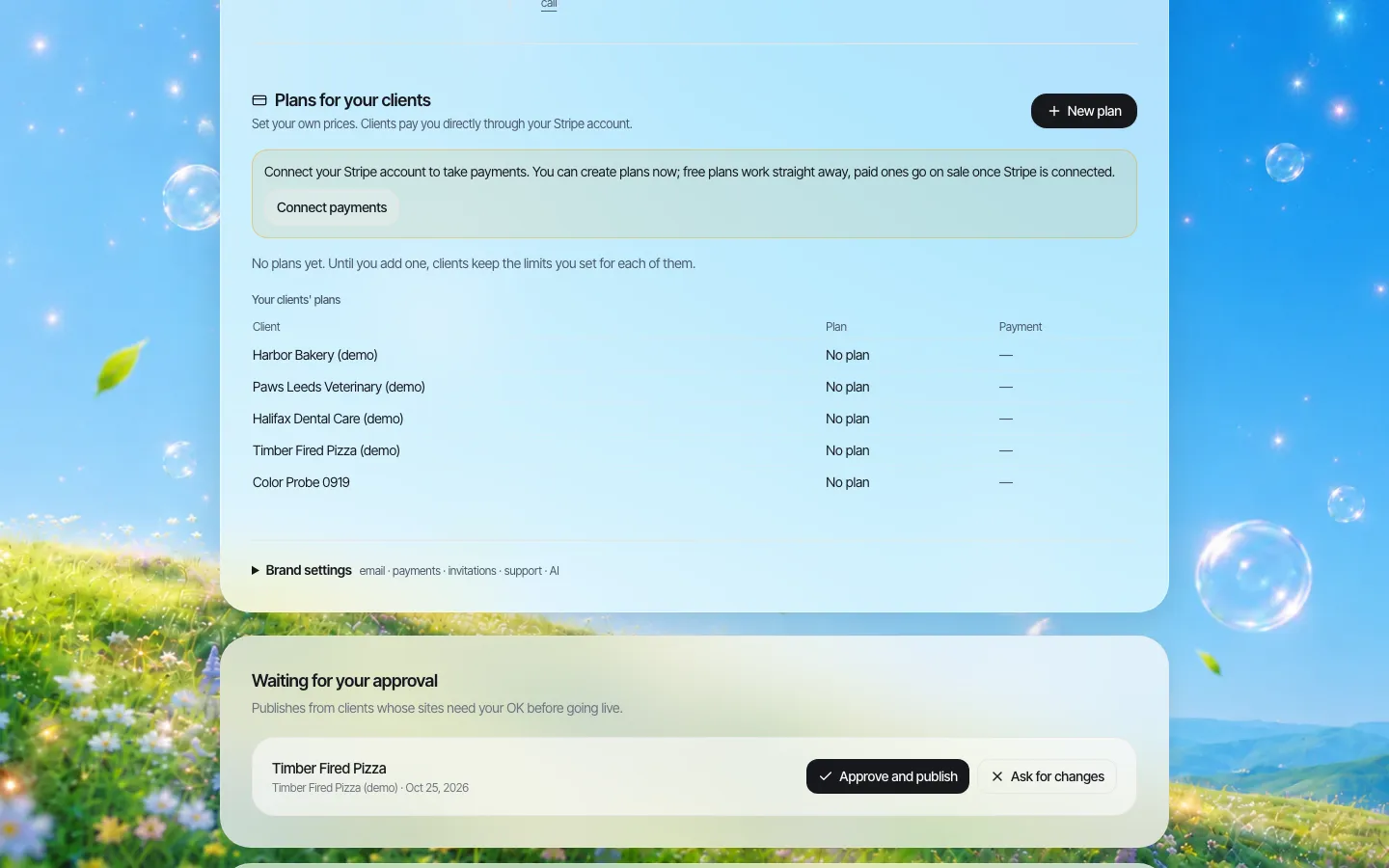
*Plans for advertisers, billed on the publisher's own payment account.*
How the work splits between reps and a production desk
The mistake to avoid is making ad reps into web designers. A split that works:
- Rep, in the meeting: opens the template gallery with the advertiser, picks a direction, and creates the account with an invitation in the publication's name.
- Production desk, that week: builds the first version, connects the domain, checks the copy, and publishes.
- Advertiser, afterwards: edits hours and photos themselves if their plan allows, or asks the desk.
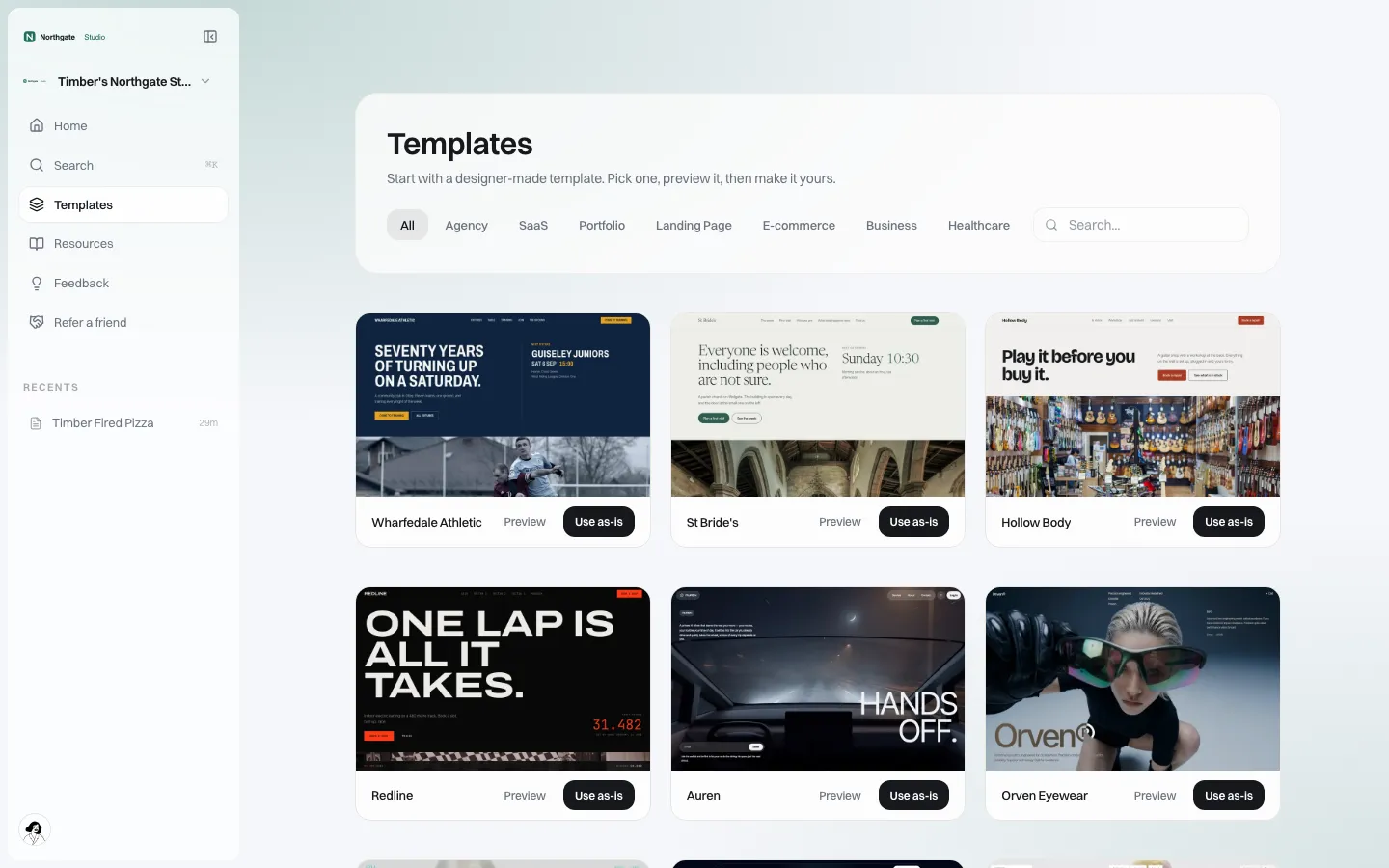
*The template gallery advertisers and reps see, under the publisher's brand.*
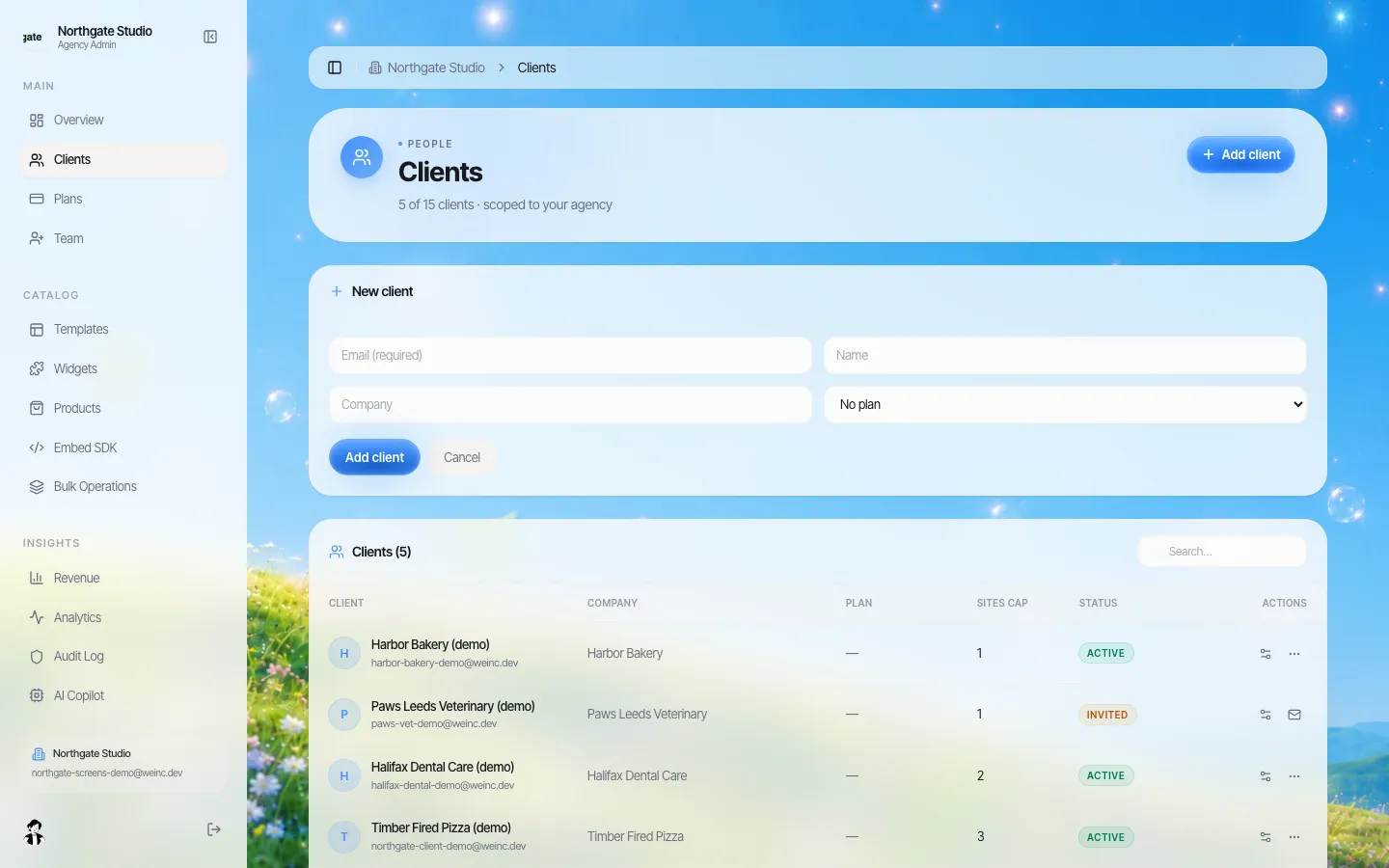
*Adding an advertiser. The invitation email goes out in the publication's name.*
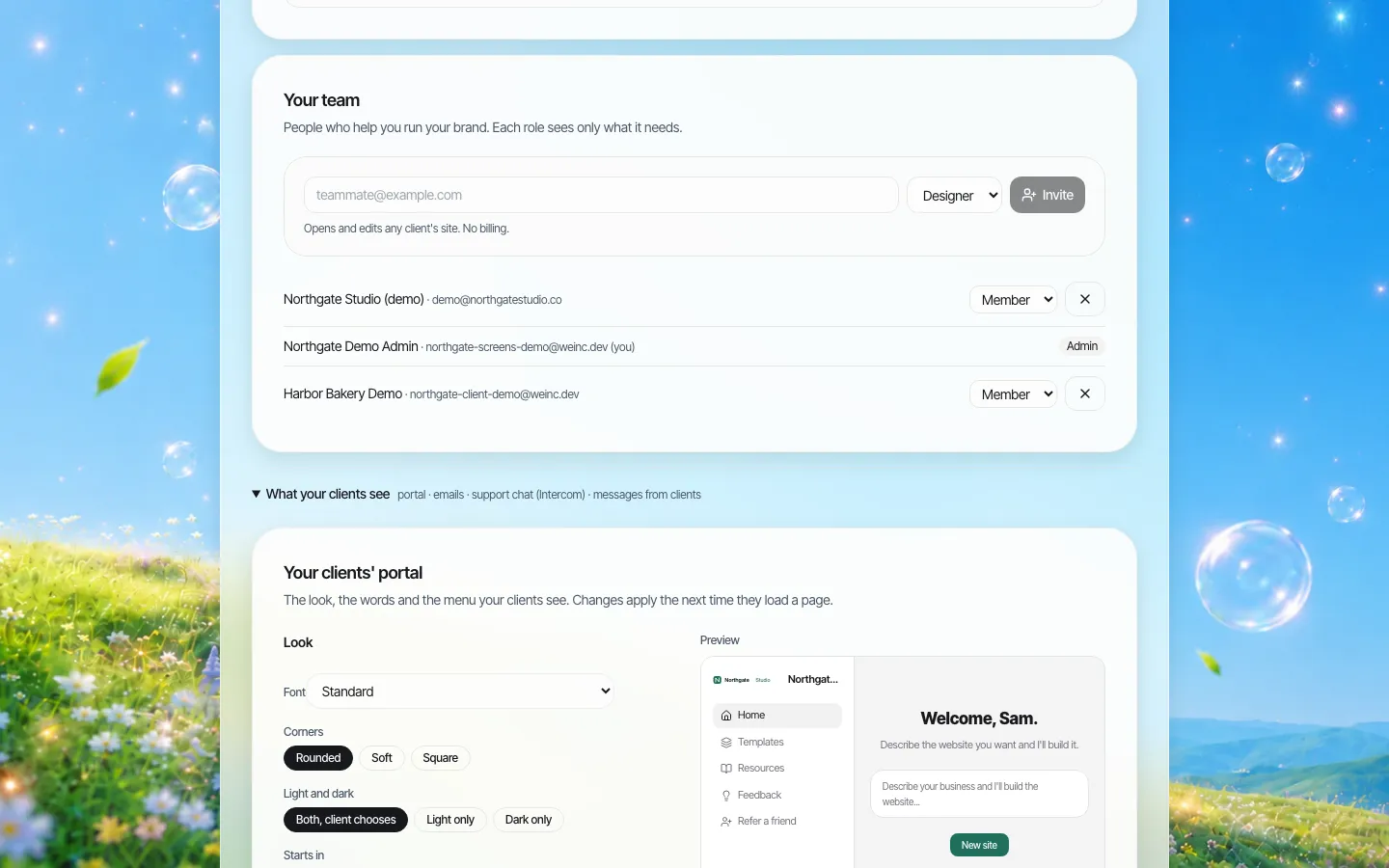
*Your production desk and sales team as staff. A designer role edits any advertiser's site without seeing billing; a billing role handles plans and payments only.*
Editorial independence: write the rules down first
This is the part that matters most for a news organisation, and no software setting replaces it.
- Keep the products separate. Website sales sit with the advertising side. Newsroom staff do not sell or build advertiser sites.
- No coverage for contracts. A business that buys a site gets no editorial consideration, and the contract should say so.
- Label clearly. If you publish anything about advertisers' sites (a showcase, a launch announcement), mark it as advertising.
- Keep advertiser sites off your news domain. Advertiser sites belong on the advertiser's own domain. Hosting a block of third-party business pages on your news site to borrow its ranking strength is what Google's site reputation policy describes, and it can damage the news site.
Reporting that renews the contract
The renewal conversation is easier with numbers. We.Inc can send each advertiser a monthly branded report email about their site; it is off until you switch it on, and it goes out under your brand.
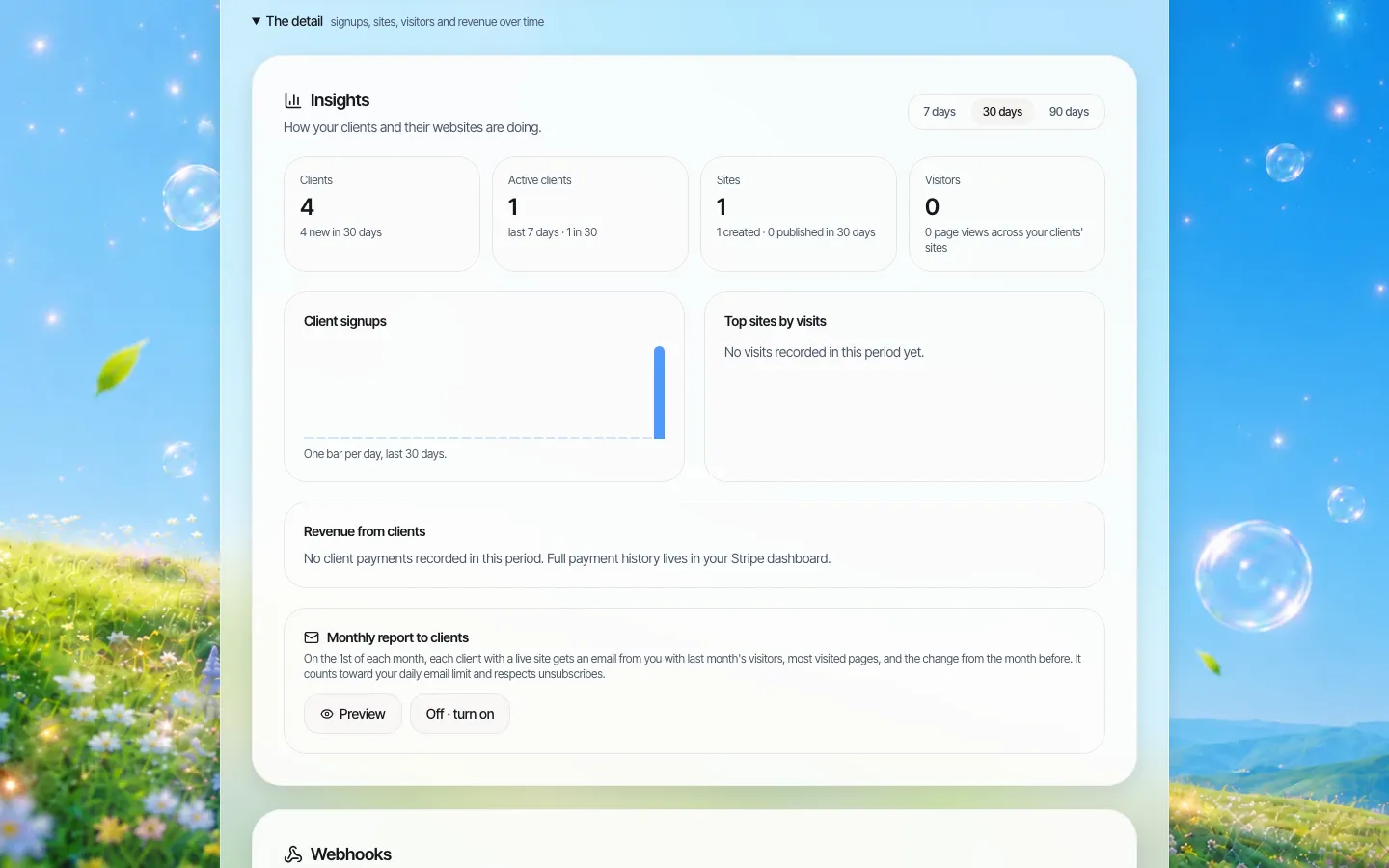
*Insights for the publisher, and the setting for a monthly report email to each advertiser.*
Pair it with your campaign reporting: "your spring campaign ran here, and visits to your site went from this to this". That is a stronger renewal story than either number on its own.
A launch plan for a publisher
| Step | Owner | Done when |
|---|---|---|
| Write the editorial-separation policy for website sales | Publisher and editor | Signed off by both |
| Create two or three plans with clear contents | Advertising director | Reps can explain each in one sentence |
| Brand the platform: name, logo, colours, sign-in page, emails | Marketing | A rep can demo it without mentioning another company |
| Pilot with ten friendly advertisers | Production desk | Ten sites live on their own domains |
| Train reps on the meeting script and the template gallery | Sales manager | Every rep has opened one account |
| Offer it with the next seasonal campaign | Sales | Campaign bundles appear in the pipeline |
Objections reps will hear, and honest answers
- "My nephew does my website." Fine. Offer the campaign page only, on a subdomain of their own domain, and leave the main site alone.
- "I already pay someone for hosting." Ask what they get for it. If the answer is "nothing changes on the site", the managed package is the comparison.
- "What if I stop advertising with you?" Tell the truth: the site is a separate product, and if they cancel it they can download its code and take it elsewhere. That honesty sells better than lock-in.
- "Will you write about my business if I buy it?" No, and say so plainly. This is the editorial line from above, in one sentence.
- "Can I change it myself?" Depends on the plan you sold them; the self-serve plan says yes, the managed plan says your desk does it.
Train reps to say "I'll check" rather than promise features. Anything not on the plan sheet goes to the production desk first.
Where We.Inc fits, and where it does not
Good fit: publishers and broadcasters with a local sales team that wants a website product under the publication's brand, either self-serve or managed by a small production desk.
Better elsewhere: if you want a full local-marketing platform with listings management, reputation tools and ad buying in one console, platforms built for media companies that resell digital marketing bundle those; We.Inc focuses on the websites themselves and the client accounts around them. Some publishers use both.
We do not publish security certifications, uptime figures or customer counts. Advertisers' sites can be downloaded or synced to GitHub if they leave. Read about reselling websites under your brand, then book a demo.
Sources
Last checked 2026-10-25.
- Google Search Central, Spam policies for Google web search: doorway abuse, scaled content abuse, site reputation abuse, thin affiliation.
Book a demo. Pricing is tailored to your volume and setup, and you get your exact price on the call. 0% transaction fee.
Frequently asked questions
Will advertisers see the We.Inc name?
The sign-in page, dashboard, help pages and system emails carry your publication's brand and support contact.
Can we bill advertisers ourselves?
Yes. You create plans and connect your own Stripe account; advertisers pay you directly.
Can our production desk edit every advertiser's site?
Yes. Staff with the designer role open and edit any advertiser's site without seeing billing. Owners and admins manage everything.
Should advertiser sites live on our news domain?
We recommend not. Put each advertiser on its own domain. Hosting third-party business pages on a news domain to borrow its ranking is what Google's site reputation policy targets.
Keep reading
- White label website builder: the We.Inc platform
- Resell websites under your brand
- White-label reseller billing
- Branded client emails
- White-label website builder for agencies
More in White Label
- Your marketing tool is only as good as the website it points to
- Your listed businesses need websites. You already know who they are.
- Every loan officer wants a website. Every one of them is an advertisement.
- Running fifty websites is a different job from running one
- Affiliate websites when every affiliate has its own board
- Your instructors want a website. Make sure it is yours, not a competitor’s
- Should a payments company give its merchants a website?
- Candidate websites for every customer on your campaign platform
We.Inc is an AI-powered website builder you can resell under your own brand. Launch a branded client dashboard, bill on Stripe Connect, and deliver AI-generated websites in minutes. White-label pricing is tailored to your volume and setup: book a 30-minute demo for a quote.
Product
- AI Website Builder: Describe a site in plain English; it's live in minutes
- White Label Platform: Your brand, your domain, your margin
- Enterprise: SSO, custom SLAs, and dedicated support
- Developer API: Embed site generation into your SaaS
Who It's For
- For Agencies: Resell under your brand
- For Freelancers: Your own branded builder
- For Hosting Providers: Add a builder to your stack
- For SaaS Platforms: Embed site creation via API
- For Startups
- For Financial Services
- For Healthcare
Features
- Drag & Drop Editor
- Built-in SEO Tools
- Custom Branding
- Client Dashboard
- Reseller Billing (Stripe Connect)
Resources
- Blog
- Help Center
- Free Business Tools
- Free UI Components
- Website Templates
- Template Collections
- Website Examples
- Guides
- Comparisons
- Alternatives
- Best Lists
- Reviews
- Pricing Guides
- Use Cases
- Glossary & Guides
- Integrations
- Developers
- Benchmark
- Windows App