Attorney advertising rules apply to every page. Review has to scale with the sites.
A network of independent firms, a multi-office firm or a legal marketing group can end up responsible for dozens of attorney websites. Every one of them is lawyer advertising, governed by the rules of each state where the lawyers practise. This page is about running those sites so review is routine, not a scramble, and about the places a website platform cannot help.
TL;DR
- Each firm or office is a client account under your brand, with switches for publishing, domains, blog, forms and SEO.
- Every US jurisdiction prohibits false or misleading communications about a lawyer’s services. A single approval step before publishing is where review happens.
- Contact forms are a source of unintended attorney-client relationships. Keep them short and add a clear notice.
- We do not offer a secure client portal or intake system; link to the one each firm uses.
Three kinds of legal network, three kinds of control
| Network | Who owns the site | What review usually looks like |
|---|---|---|
| Multi-office firm | The firm | Central marketing and the responsible partner approve everything |
| Network or referral association of independent firms | Each member firm | The network sets a standard; each firm is responsible for its own compliance |
| Legal marketing agency running client firms' sites | The client firm | The agency drafts; the firm's lawyer signs off |
Write the ownership answer into the agreement. When a firm leaves a network or an office spins out, its site's code can be downloaded and handed over, or the account paused if the site belongs to you.
The rule every page is written under
The professional conduct rules of US jurisdictions follow the ABA Model Rules in substance on this point. The District of Columbia's Rule 7.1(a), for example, reads: "A lawyer shall not make a false or misleading communication about the lawyer or the lawyer's services." State versions add their own requirements on top: some require the name of a lawyer responsible for the content, some restrict words like "specialist", some regulate testimonials and past results. Check every state where the firm's lawyers practise.
On a website the risky items are predictable:
| Content | Common problem | What to check |
|---|---|---|
| Past results and settlements | Implies the same result for the reader | Your state's rule on results; add the disclaimer it requires |
| "Specialist", "expert" | Many states restrict these words | Certification rules in each state |
| Testimonials and reviews | Must be real; some states add conditions | Permission, accuracy, any required notice |
| Awards and rankings | Can mislead if the basis is not stated | Name the source and year |
| Firm name and offices | Offices that are not real offices | Only list offices that actually exist |
| Responsible lawyer | Some states require a named lawyer | Put it in the footer of every firm site |
Put review where publishing happens
We.Inc has a single approval step. You switch it on for the whole network or for chosen firms. When a firm with approval on presses Publish, the request lands in your queue; your reviewer approves and publishes it or asks for changes.
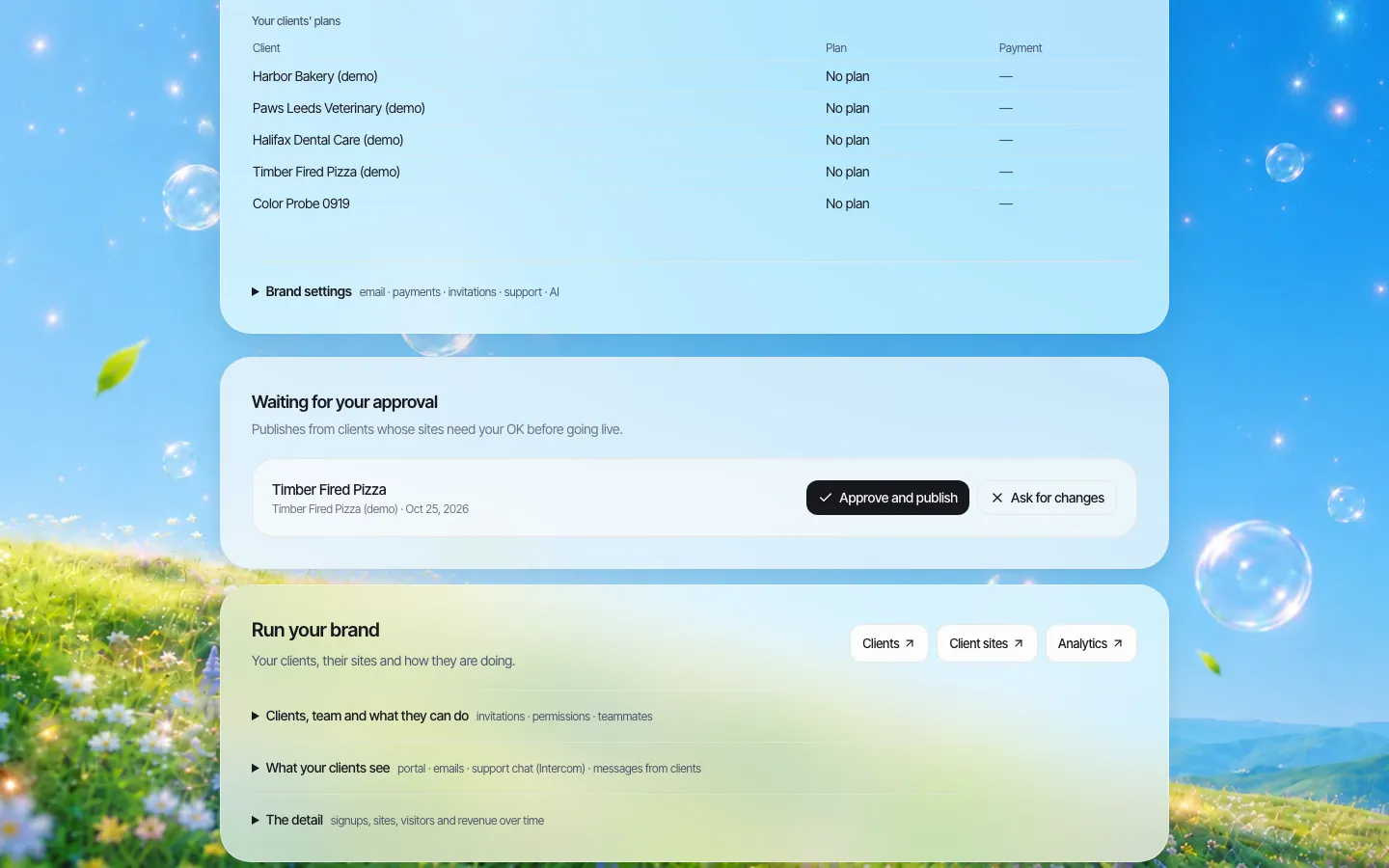
*The approval queue. Pending changes from every firm arrive in one list.*
What it is not: a multi-stage workflow with marketing, then risk, then a partner, each signing in turn. If your process needs several sign-offs, collect them before the final approver presses the button, and keep that record in your own system.
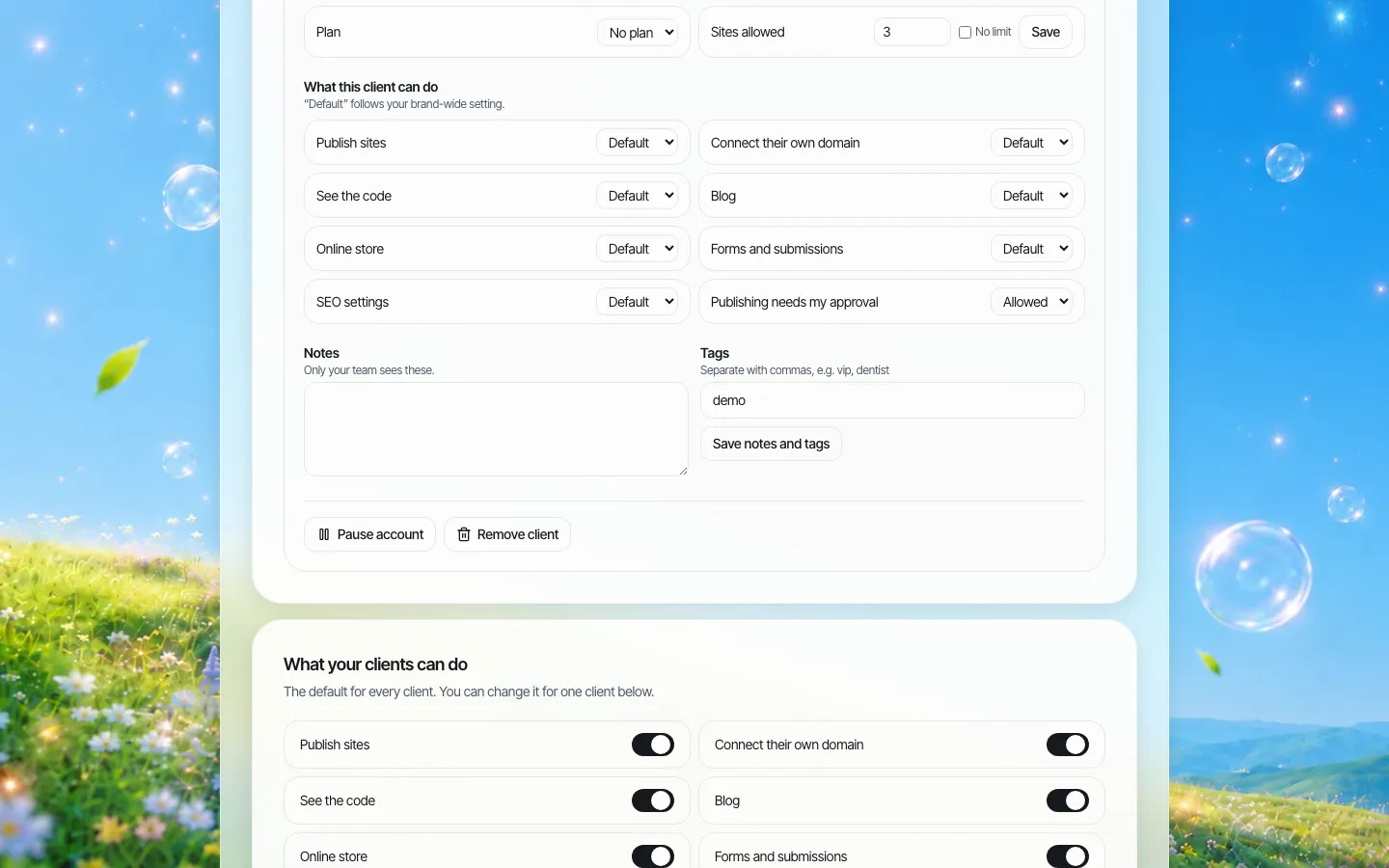
*Switches for one firm. Turn the store off for law firms, keep approval on, and decide whether each firm may run its own blog.*
Contact forms and the accidental client
A contact form that invites people to "tell us everything about your case" collects confidential information from people who are not yet clients, and can create conflicts problems. Most firms do better with:
- A short form: name, contact details, type of matter, and how they heard of the firm.
- A plain notice above the button that sending the form does not create an attorney-client relationship and that they should not send confidential details yet.
- Routing to the person who runs conflicts checks, not a general inbox.
The sites are marketing sites. We do not offer a secure client portal, case intake system or document exchange; link to the one each firm uses.
Under your brand, all the way through
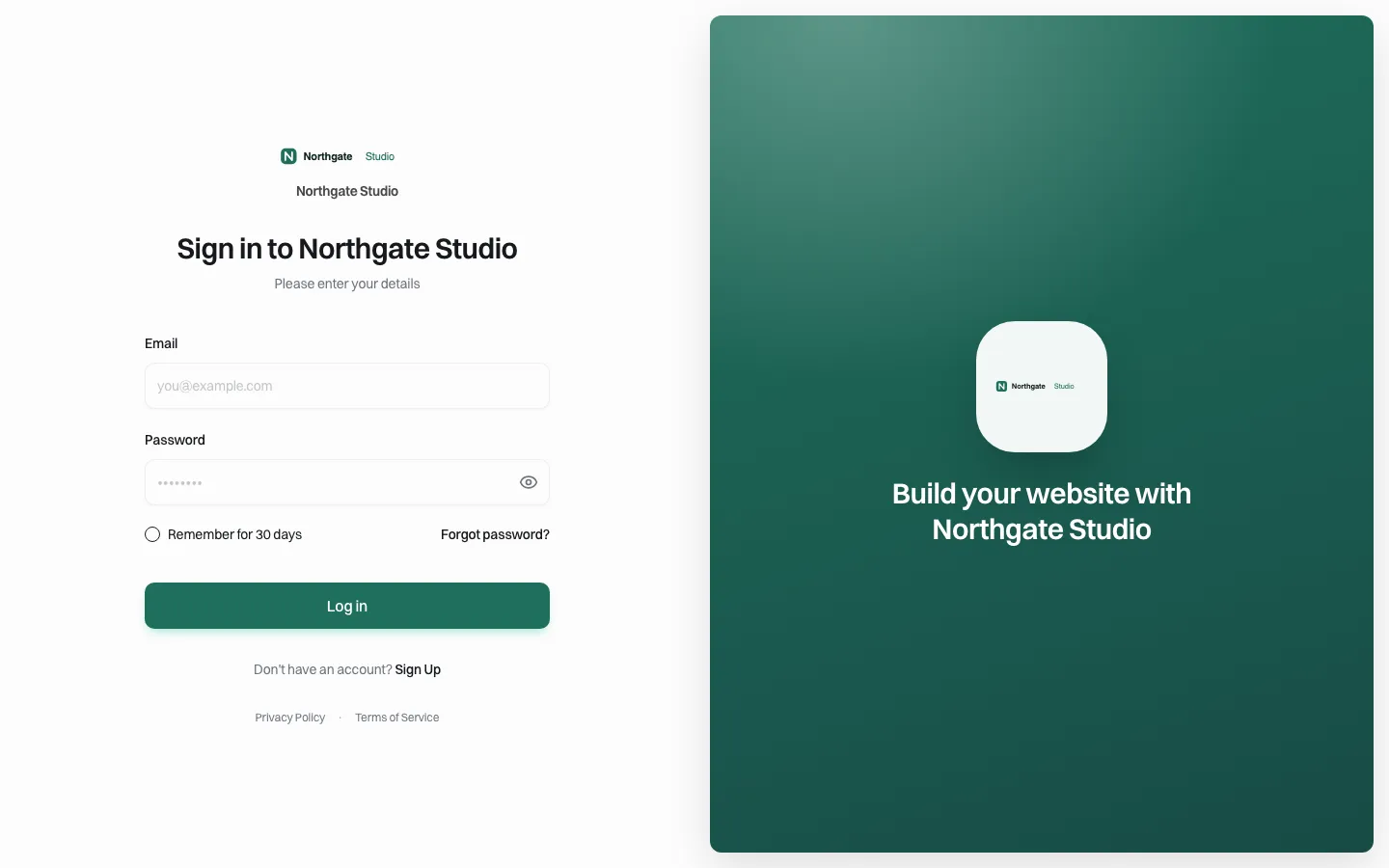
*Firms and offices sign in on a page with your network's brand.*
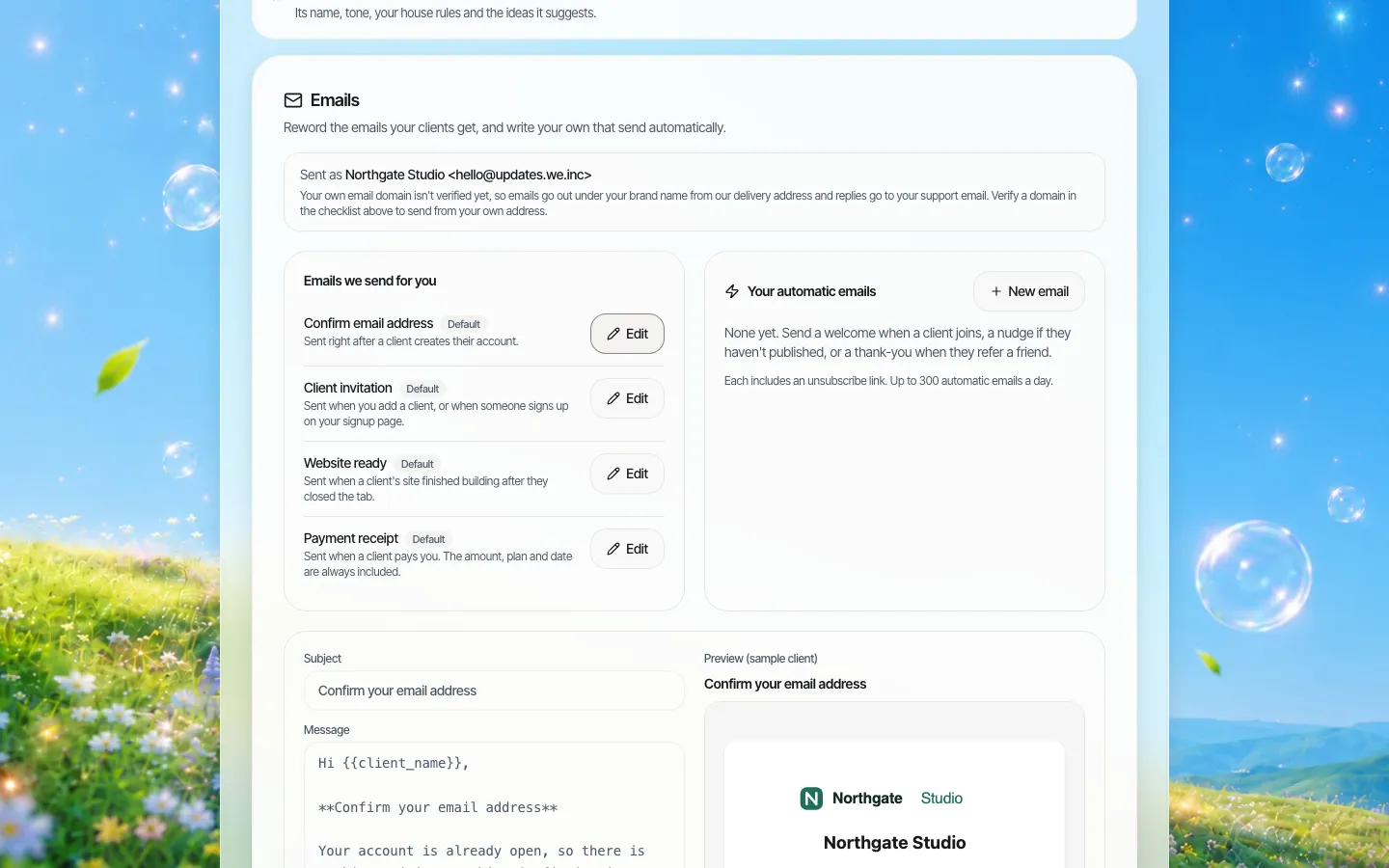
*System emails, such as invitations and "your website is ready", use your brand and can be sent from your own domain once configured.*
Your own staff join as team members with a role: owners and admins manage everything, and there are fixed presets for designers (edit any firm's site, no billing), support and billing. There is no custom role builder.
A record for later questions
Bar complaints and disputes arrive long after the fact. The audit log records account-level actions, such as a firm being invited, paused or removed, or its switches being changed, and owners and admins can filter it by action. It does not keep a version history of every sentence on every page, so keep your own copy of approved advertising if your state requires retention of ads; several do.
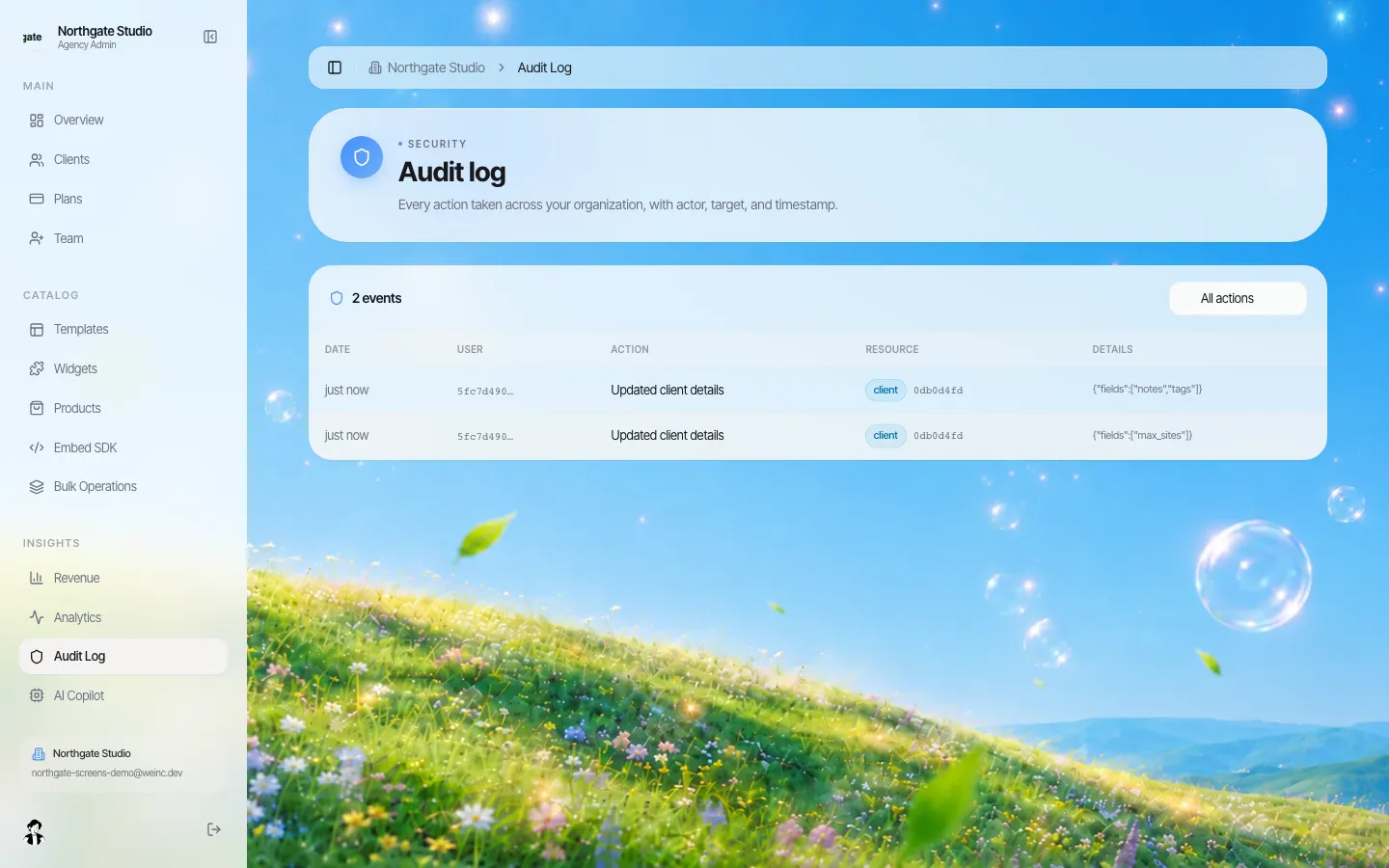
*The audit log of organisation actions.*
Search: a practice area page per firm, not per keyword
Legal search is competitive, and the temptation is to publish dozens of near-identical "car accident lawyer in [town]" pages for every office. Google's spam policies describe doorway abuse as "when sites or pages are created to rank for specific, similar search queries". It is also an advertising problem if it implies offices that do not exist. One honest page per real practice area, per real office, written by the lawyers who do the work, is safer on both counts.
A one-page web policy for member firms
Networks get fewer problems when every firm signs the same short policy before its site goes live. A starting draft to adapt with your own counsel:
- Responsibility. Each firm is responsible for the compliance of its own site with the rules of every jurisdiction where its lawyers practise.
- Named lawyer. Each site names a lawyer responsible for its content where the jurisdiction requires one.
- Review. New sites and changes to results, testimonials, awards or practice area claims go through the network's approval step.
- Offices. Only real, staffed offices are listed.
- Forms. Contact forms carry the no-relationship notice and ask for no confidential details.
- Records. Each firm keeps copies of its approved advertising for as long as its jurisdictions require.
- Departure. On leaving the network, the firm receives its site's code and removes network branding within an agreed period.
Policy beats software here: the approval step only works if reviewers know what they are checking against.
Where We.Inc fits, and where it does not
Good fit: networks and multi-office firms with many small sites, a central reviewer, and lawyers who want to update their own bios and articles.
Look elsewhere if you need intake, client portals or matter management in the website, or an enterprise CMS for a single large firm site with deep integrations.
Book a demo and we will set up a sample member firm with approval on.
Sources
Last checked 2026-10-25. This page is general information, not legal advice.
- District of Columbia Bar, Rule 7.1, Communications concerning a lawyer's services.
- Google Search Central, Spam policies for Google web search: doorway abuse.
Book a demo. Pricing is tailored to your volume and setup, and you get your exact price on the call. 0% transaction fee.
Frequently asked questions
Can our ethics reviewer approve changes before they go live?
Yes. Approval before publishing is a single step you switch on for all firms or chosen ones. Multi-stage sign-off happens outside the platform.
Does We.Inc keep copies of every published version for bar retention rules?
No. The audit log records account-level actions, not every page version. Keep your own copies of approved advertising where your state requires it.
Can sites take client intake or documents?
No. Use short contact forms with a notice, and link to the firm’s own intake or portal for anything confidential.
Keep reading
- White label website builder: the We.Inc platform
- White-label websites for associations and chapters
- Client permissions: what each site owner can do
- Audit log for a white-label website platform
- Brand governance across many websites
- Website vendor exit plan: contract clauses
More in White Label
- Your ad reps already sit with every business in town. Sell them a website.
- Your marketing tool is only as good as the website it points to
- Your listed businesses need websites. You already know who they are.
- Every loan officer wants a website. Every one of them is an advertisement.
- Running fifty websites is a different job from running one
- Affiliate websites when every affiliate has its own board
- Your instructors want a website. Make sure it is yours, not a competitor’s
- Should a payments company give its merchants a website?
We.Inc is an AI-powered website builder you can resell under your own brand. Launch a branded client dashboard, bill on Stripe Connect, and deliver AI-generated websites in minutes. White-label pricing is tailored to your volume and setup: book a 30-minute demo for a quote.
Product
- AI Website Builder: Describe a site in plain English; it's live in minutes
- White Label Platform: Your brand, your domain, your margin
- Enterprise: SSO, custom SLAs, and dedicated support
- Developer API: Embed site generation into your SaaS
Who It's For
- For Agencies: Resell under your brand
- For Freelancers: Your own branded builder
- For Hosting Providers: Add a builder to your stack
- For SaaS Platforms: Embed site creation via API
- For Startups
- For Financial Services
- For Healthcare
Features
- Drag & Drop Editor
- Built-in SEO Tools
- Custom Branding
- Client Dashboard
- Reseller Billing (Stripe Connect)
Resources
- Blog
- Help Center
- Free Business Tools
- Free UI Components
- Website Templates
- Template Collections
- Website Examples
- Guides
- Comparisons
- Alternatives
- Best Lists
- Reviews
- Pricing Guides
- Use Cases
- Glossary & Guides
- Integrations
- Developers
- Benchmark
- Windows App